


P0171 Evil


Thread Starter
|
Member
Joined: Nov 2018
Posts: 71
Likes: 13
From: Las Vegas
 P0171 Evil
Halloween is over; Stephen King is on the shelf, so where does evil reside now? In my ’98 XK8 (88,000 miles) of course. Here in Las Vegas it can get a little warm – 115 degrees and the XK8 runs without skipping a beat. When it cools down, now below 70, dropping to 40 at night, I am getting the evil P0171 fault with Reduced Performance and Check Engine. I have searched all over the forum finding all sorts of great information and possible sources of trouble.
So I am turning to those who know so much more than I as to an opinion as where to start exercising this evil being. Here is where the apparition appears:
Starting, Cold engine – starts, no issues, no fault codes
Mile 1 ~ 3, Warm up – normal running, no lights, no codes
Mile 3+ ~ 6, Normal operating engine temperature, Reduced Performance, Check Engine (P0171) lights
Mile 6+, Reduced Performance terminates, light extinguishes, and Check Engine remains (as it should)
Park and restart within a few hours, runs normal
Park for the day at the office, cold engine, ambient temperature around 65-70, the scenario above repeats
This scenario has repeated over the last two weeks or so. I have owned the car for a bit more than a year. It did this just after I bought it and the outdoor ambient temperature was cooler (for the desert), but by the time summer rolled around and the temperature was in the 90-110, the P0171 codes went away and stayed away. Now that it is in the 70’s it has returned. I did a quick long term fuel trim and both banks were running around 19.5% (sounds high?) at idle, engine at normal operating temperature.
So, one might relate the lean running on bank 1 to the ambient temperature in some way. Is this coincidence or is there some part of the fuel system that relates to ambient air temperature?
Does it have some relationship to the warm-up cycle? Or do I simply turn to Stephen King’s blog?
Thank you all
So I am turning to those who know so much more than I as to an opinion as where to start exercising this evil being. Here is where the apparition appears:
Starting, Cold engine – starts, no issues, no fault codes
Mile 1 ~ 3, Warm up – normal running, no lights, no codes
Mile 3+ ~ 6, Normal operating engine temperature, Reduced Performance, Check Engine (P0171) lights
Mile 6+, Reduced Performance terminates, light extinguishes, and Check Engine remains (as it should)
Park and restart within a few hours, runs normal
Park for the day at the office, cold engine, ambient temperature around 65-70, the scenario above repeats
This scenario has repeated over the last two weeks or so. I have owned the car for a bit more than a year. It did this just after I bought it and the outdoor ambient temperature was cooler (for the desert), but by the time summer rolled around and the temperature was in the 90-110, the P0171 codes went away and stayed away. Now that it is in the 70’s it has returned. I did a quick long term fuel trim and both banks were running around 19.5% (sounds high?) at idle, engine at normal operating temperature.
So, one might relate the lean running on bank 1 to the ambient temperature in some way. Is this coincidence or is there some part of the fuel system that relates to ambient air temperature?
Does it have some relationship to the warm-up cycle? Or do I simply turn to Stephen King’s blog?
Thank you all

Veteran Member


Joined: May 2009
Posts: 27,546
Likes: 4,924
From: Yorkshire, England
It's a 2-trip (2 warm ups) code. But that's irrelevant since your trims are so high.
If you then rev, do the trims drop? If so, you have an air leak and can go troubleshoot for it.
If you then rev, do the trims drop? If so, you have an air leak and can go troubleshoot for it.

Veteran Member


Joined: Nov 2014
Posts: 2,675
Likes: 1,578
From: Eastern USA
I would say start with a cheap ELM327 OBD tool (check ebay and Amazon) and check your long term fuel trims, first at idle, then a bit higher (say, 2500rpm). High trims at idle generally indicate air leaks (VERY common on an aging car), whereas high trims at higher rpm tend to point to the air flow meter. The code trips at 25%, but anything above 5% is not great. Next step would be to do a smoke test to reveal the air leaks. You can have that done, or buy or even make your own machine with an old soldering iron and a bicycle pump.
Best of luck, keep us posted.
Best of luck, keep us posted.
Thread Starter
|
Member
Joined: Nov 2018
Posts: 71
Likes: 13
From: Las Vegas
I will run the short and long term fuel trims this afternoon (work keeps on getting in the way) and see what they are at idle and higher RPM. I am taking the car in next week for a fix on the starter motor and while it is there I will ask for the smoke test.
Thanks
Thanks
Thread Starter
|
Member
Joined: Nov 2018
Posts: 71
Likes: 13
From: Las Vegas
Okay, the readings:
Idle (659 rpm)
No lights or warnings
Bank 1 -
LTFT - 14.8
Bank 2 -
LTFT - 14.8
Ignition Advance - 5
MAF (lb/m) - 0.47
Higher Rev (2495 rpm)
No lights or warnings
Bank 1 -
LTFT - 14.8
Bank 2 -
LTFT - 14.8
Ignition Advance - 33
MAF (lb/m) - 1.50
I watched the real time readings for a while and they were steady.
Idle (659 rpm)
No lights or warnings
Bank 1 -
LTFT - 14.8
Bank 2 -
LTFT - 14.8
Ignition Advance - 5
MAF (lb/m) - 0.47
Higher Rev (2495 rpm)
No lights or warnings
Bank 1 -
LTFT - 14.8
Bank 2 -
LTFT - 14.8
Ignition Advance - 33
MAF (lb/m) - 1.50
I watched the real time readings for a while and they were steady.
Veteran Member
Joined: May 2009
Posts: 27,546
Likes: 4,924
From: Yorkshire, England
How unusual - they're never all the same at both revs...
Not an air leak, it appears.
Is it definitely running Closed Loop?
Maybe a faulty MAF or fuel sensor (check it) or fuel supply issue (blocked filter, bad pump). (See the codes info for the other possibilities.)
Not an air leak, it appears.
Is it definitely running Closed Loop?
Maybe a faulty MAF or fuel sensor (check it) or fuel supply issue (blocked filter, bad pump). (See the codes info for the other possibilities.)
Last edited by JagV8; Nov 1, 2019 at 06:22 PM.
Thread Starter
|
Member
Joined: Nov 2018
Posts: 71
Likes: 13
From: Las Vegas
Yep, reads that both banks are closed. Will clean MAF over the weekend. Will also check again, it is a new Actron 9695, so should be reading it correctly, checked the revs at each reading.
Thanks
Thanks
Trending Topics



Joined: Feb 2014
Posts: 20,532
Likes: 15,307
From: Crossroads of America
I'm tired so please forgive me if I ramble, but here are a few thoughts:
First, with your fuel trims, you could just as easily also have P0174 for Bank 2. For whatever reason, it's common to be lean in both banks but only have a lean code triggered for one bank. The reason I mention this is that, given you're running lean in both banks, the problem is somewhere that affects both banks and not somewhere that affects only Bank 1 (e.g. a leaking VVT solenoid gasket or cracked exhaust manifold). In addition to an air or vacuum leak, I like JagV8's ideas of a problem with the MAFS. Try cleaning it with special MAFS cleaner spray available at any auto parts store (CRC is a popular brand). You can often see dark residue on the thermistor bulb inside the sensor, indicating the hot wire is probably also coated with gunk, which causes the MAFS to under-report intake air flow, leading the ECM to eventually determine the AFR is lean. I also like JagV8's idea of an obstructed fuel filter as a very likely contributor to lean running.
Second, let's assume that either the ECM or your scan tool did not respond immediately to the engine rev and the equal trim readings at idle and 2,500 are an anomaly. Another thought is that a known common point for air leaks is the rubber gasket where the plastic intake pipe meets the metal throttle body. Since aluminum expands and contracts with temperature change far more than plastic and rubber do, it could be possible that in cooler weather the throttle body is contracting enough to open a slight leak at that joint. You can check the mechanical security of the connection and a smoke test may tell you something (you might ask them to test the car out-of-doors to keep the ambient temperature down).
Another common point for air leaks is the accordion section of the air intake pipe along the right side of the engine. Remove the pipe and carefully check for small splits in the valleys of the accordion pleats or flakes of plastic eroding from the peaks of some pleats.
Please keep us informed.
EDIT: I was typing and didn't see your post about cleaning the MAFS over the weekend. Sorry!
Cheers,
Don
Last edited by Don B; Mar 29, 2020 at 10:25 PM.

Thread Starter
|
Member
Joined: Nov 2018
Posts: 71
Likes: 13
From: Las Vegas
Once again I find myself grinning with satisfaction. Great thoughts, and suggestions. They give me a great place to start the hunt and exercising the evil, I just hope the intake doesn't spin around a few times and spew green stuff all over (sorry that one only the slightly older people would recognize). But now I do know what rocks to look under. I will explore and report back.
Veteran Member
Joined: May 2009
Posts: 27,546
Likes: 4,924
From: Yorkshire, England
Remember lean just means there was an unexpected amount of O2 (air) at the O2 sensor(s). A misfire (unburned air/fuel) also counts because the car cannot measure unburned fuel.
Being excess O2, there are lots of possible reasons.
When the trims don't drop at higher revs you pretty much cannot have an air leak or at least it's not the dominant issue if you do, so you may as well hunt the dominant one first. If you find & fix a cause and then re-check trims and at that point find an air leak, meaning you had two or more faults originally, then that's the time to look for air leaks.
Being excess O2, there are lots of possible reasons.
When the trims don't drop at higher revs you pretty much cannot have an air leak or at least it's not the dominant issue if you do, so you may as well hunt the dominant one first. If you find & fix a cause and then re-check trims and at that point find an air leak, meaning you had two or more faults originally, then that's the time to look for air leaks.
Last edited by JagV8; Nov 2, 2019 at 03:30 AM.

Veteran Member
Joined: Jan 2009
Posts: 13,080
Likes: 4,735
From: Raleigh, NC
As Don B mentioned above, check the accordion section in your air intake duct. It is best to completely remove the intake duct and flex it in your hands while looking closely at the accordion section folds on all sides. On my wife's 2006 XK8, I had to replace that intake duct with a new one in September 2012 due to cracks in the accordion section. The new duct had cracked again by April 2019 and rather than buying yet another lousy plastic duct that would crack again, I replaced it with the Mina Gallery aluminum tube duct kit. That permanently solves the issue and I highly recommend it....

Senior Member
Joined: Jul 2012
Posts: 143
Likes: 30
From: Ellijay, Georgia
Coincidentally, I just replaced my air intake duct yesterday. I had removed the original one to check it and found that several of the ridges on the bellows section had deteriorated and crumbled into dust, leaving several holes.
I obtained a Jaguar/Land Rover OEM replacement, and was disappointed by the poor quality of it. I had to file and smooth inside both ends before I could fit it onto the air filter box and the throttle body. I had a hard time inserting the two bolts to the throttle body due to a variation in the thickness of the wall of the duct at that end leading to a misalignment.
I doubt this replacement will last long, so I too might be looking for a nice shiny aluminum in the near future!
I obtained a Jaguar/Land Rover OEM replacement, and was disappointed by the poor quality of it. I had to file and smooth inside both ends before I could fit it onto the air filter box and the throttle body. I had a hard time inserting the two bolts to the throttle body due to a variation in the thickness of the wall of the duct at that end leading to a misalignment.
I doubt this replacement will last long, so I too might be looking for a nice shiny aluminum in the near future!
Senior Member


Joined: Aug 2016
Posts: 382
Likes: 251
From: North Myrtle Beach
Another way to do it

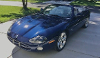
After I inspected mine I knew it wasn't long for this life and the replacement wasn't much better and pricey. Got this 3.25" silicone hose and clamps from Ebay think it was around $25. Never have to worry about it again.


Thread
Thread Starter
Forum
Replies
Last Post
Chuck Schexnayder
XJ XJ6 / XJ8 / XJR ( X350 & X358 )
20
Jan 18, 2026 09:40 PM
dvsadam
S-Type / S type R Supercharged V8 ( X200 )
11
Dec 31, 2015 08:27 AM
Currently Active Users Viewing This Thread: 1 (0 members and 1 guests)