


Standard brakes, why is rear caliper so small?


Thread Starter
|
Banned
Joined: Dec 2015
Posts: 952
Likes: 130
From: State of New Jersey
 Standard brakes, why is rear caliper so small?
Hi guys,
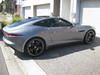
I was out last evening and a auto enthusiast who saw my car gave me a compliment about my car. But then he took notice of the red color brakes. He said front calipers are nice and huge but the rear calipers were tiny in comparison. I always thought this too, since getting my car. Why did Jaguar make the rear calipers so small. I think it takes away from the cars look. The carbon ceramic brake calipers are huge front and rear calipers. Why didn't they make the standard brake calipers big on rear like the ceramic brakes. Did they simply skimp out on this detail?
You thoughts please.
I was out last evening and a auto enthusiast who saw my car gave me a compliment about my car. But then he took notice of the red color brakes. He said front calipers are nice and huge but the rear calipers were tiny in comparison. I always thought this too, since getting my car. Why did Jaguar make the rear calipers so small. I think it takes away from the cars look. The carbon ceramic brake calipers are huge front and rear calipers. Why didn't they make the standard brake calipers big on rear like the ceramic brakes. Did they simply skimp out on this detail?
You thoughts please.

Senior Member

Joined: Dec 2015
Posts: 656
Likes: 202
From: People's Republik of MD
Maybe because the vast majority of the stopping power needed is in the front. When you apply the brakes, the first thing that happens is that weight transfers forward (momentum). This unloads the rear suspension - less weight on the rear. Less weight means less braking force needed.
JLR could have used larger discs and adjusted proportioning to compensate. All that would mean is that the rear might look a bit cooler but would have more unsprung weight.
As an example, on my last bike front and rear brakes were separate. (Current bike has ABS so I only need to pull the front handle.) At any rate, the only time that I used the rear was on grass or gravel or if I was stupid enough to actually need that addl. 10% stopping (only once). On a bike when you stop hard the rear really unloads and anything other than a very light touch on the rear causes lockup which can easily cause loss of control.
JLR could have used larger discs and adjusted proportioning to compensate. All that would mean is that the rear might look a bit cooler but would have more unsprung weight.
As an example, on my last bike front and rear brakes were separate. (Current bike has ABS so I only need to pull the front handle.) At any rate, the only time that I used the rear was on grass or gravel or if I was stupid enough to actually need that addl. 10% stopping (only once). On a bike when you stop hard the rear really unloads and anything other than a very light touch on the rear causes lockup which can easily cause loss of control.
Thread Starter
|
Banned
Joined: Dec 2015
Posts: 952
Likes: 130
From: State of New Jersey
Dogman ....
Maybe because the vast majority of the stopping power needed is in the front. When you apply the brakes, the first thing that happens is that weight transfers forward (momentum). This unloads the rear suspension - less weight on the rear. Less weight means less braking force needed.
JLR could have used larger discs and adjusted proportioning to compensate. All that would mean is that the rear might look a bit cooler but would have more unsprung weight.
As an example, on my last bike front and rear brakes were separate. (Current bike has ABS so I only need to pull the front handle.) At any rate, the only time that I used the rear was on grass or gravel or if I was stupid enough to actually need that addl. 10% stopping (only once). On a bike when you stop hard the rear really unloads and anything other than a very light touch on the rear causes lockup which can easily cause loss of control.
JLR could have used larger discs and adjusted proportioning to compensate. All that would mean is that the rear might look a bit cooler but would have more unsprung weight.
As an example, on my last bike front and rear brakes were separate. (Current bike has ABS so I only need to pull the front handle.) At any rate, the only time that I used the rear was on grass or gravel or if I was stupid enough to actually need that addl. 10% stopping (only once). On a bike when you stop hard the rear really unloads and anything other than a very light touch on the rear causes lockup which can easily cause loss of control.
"JLR could have used larger discs and adjusted proportioning to compensate. All that would mean is that the rear might look a bit cooler"
From a cosmetic point of view, I think rear calipers should match in size with the front brakes.
Thanks....
Veteran Member


Joined: Feb 2014
Posts: 9,021
Likes: 3,658
From: Adelaide, South Australia
One of the options on the F-Type is "super performance" brakes, which are the same as those on my XFR - 380 mm front and 376 mm rear - although even then the rear calipers aren't all that big and they still look a bit feeble compared to the front calipers. The rotors themselves, even though they are 376 mm in diameter, have a large central area which is "blank" and not touched by the pads. The pads are hardly any bigger than the stock 326 mm rear pads.

One of the options on the F-Type is "super performance" brakes, which are the same as those on my XFR - 380 mm front and 376 mm rear - although even then the rear calipers aren't all that big and they still look a bit feeble compared to the front calipers. The rotors themselves, even though they are 376 mm in diameter, have a large central area which is "blank" and not touched by the pads. The pads are hardly any bigger than the stock 326 mm rear pads.
One of the options on the F-Type is "super performance" brakes, which are the same as those on my XFR - 380 mm front and 376 mm rear - although even then the rear calipers aren't all that big and they still look a bit feeble compared to the front calipers. The rotors themselves, even though they are 376 mm in diameter, have a large central area which is "blank" and not touched by the pads. The pads are hardly any bigger than the stock 326 mm rear pads.

Junior Member
Joined: Aug 2016
Posts: 24
Likes: 7
From: Maryland
After owning numerous performance vehicles the F type ranks last in breaking feel and power. When breaking in my other vehicles I felt confident applying the brakes in a short distance. Again my opinion.
Trending Topics
Which of the 4 brake options do you have?

Thread
Thread Starter
Forum
Replies
Last Post
themorningman
XK / XKR ( X150 )
14
Jan 22, 2017 11:02 AM
Tink
S-Type / S type R Supercharged V8 ( X200 )
4
Aug 31, 2016 07:41 PM
powerhouse
XK / XKR ( X150 )
7
Aug 30, 2016 01:23 PM
Currently Active Users Viewing This Thread: 1 (0 members and 1 guests)