When you click on links to various merchants on this site and make a purchase, this can result in this site earning a commission. Affiliate programs and affiliations include, but are not limited to, the eBay Partner Network.
I think I have managed to answer my own question. Just took a good look at the cylinder head and it looks like a straight port head to me. There is no blank plug in front of the spark plug at the front of the engine.
To use an XJ or 420 manifold requires a straight port cylinder head as the inlet ports are positioned differently from the Mk2's usual B type head. If you have a SP head, the spark plugs on the outermost cylinders (1 and 6) will be towards the ends of the engine sides of the cylinders (rather than towards the middle of the engine as on the B type). Also, I think most SP heads don't have an engine number stamped on them (on the valley side of the timing chain box).
I searched for the engine serial number on the head and there is none.
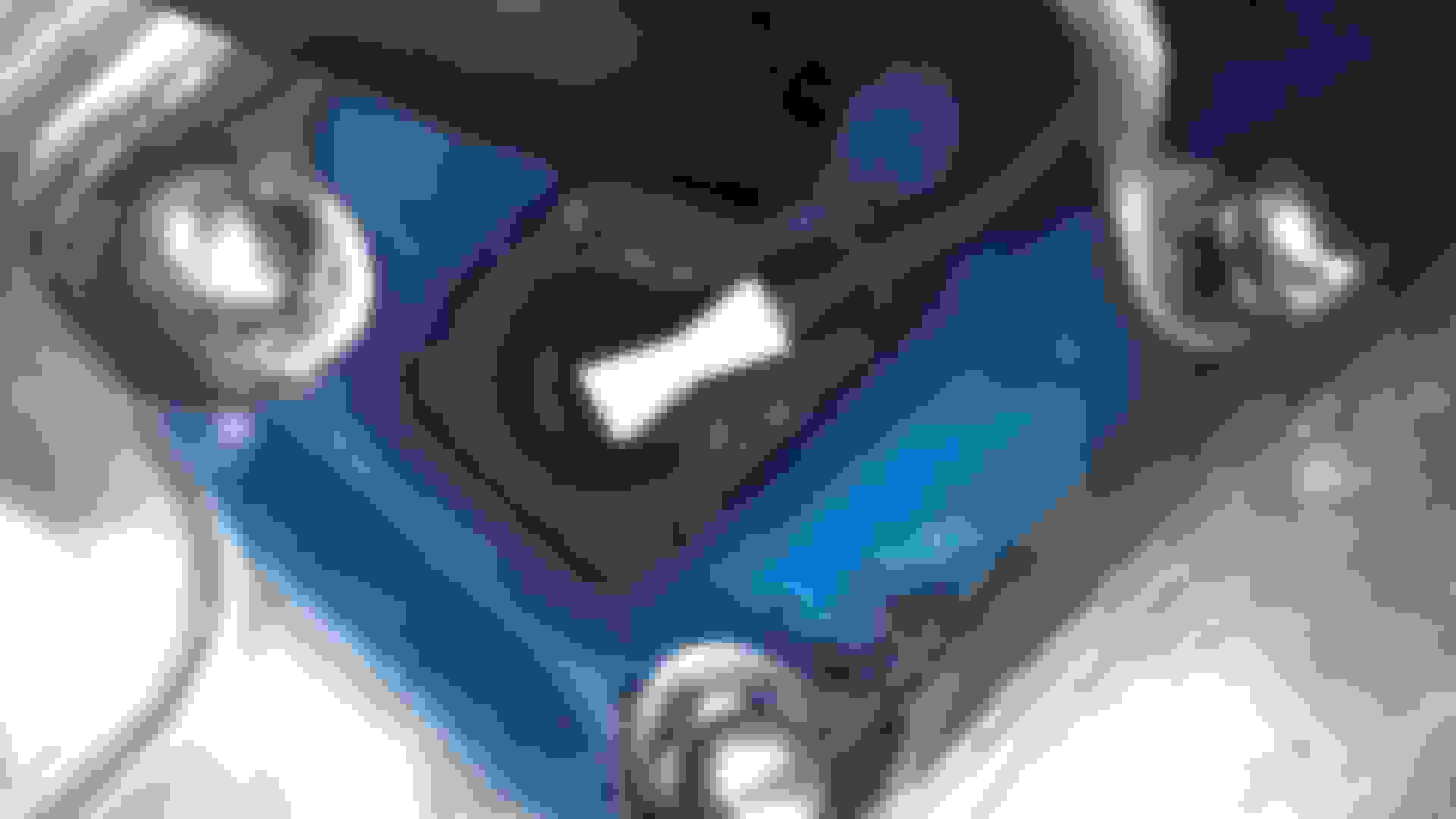
The first photo is the plug at the front of the engine and the second one is the plug at the back.
I feel a bit like an archaeologist.
That's a question I have been trying to ascertain for a while. I have looked for the serial number by the oil filter but it is so faint it is really difficult to see. The original engine was LE2200-9 which is on the plate and confirmed by Jaguar heritage. The engine has 3.8 Litre stamped on it. This is the best picture I have of the serial number and I am pretty sure I can see LE 220.... and on another picture I can pretty clearly see -9 so I think it is the original.
LE.... is correct for a 3.8 Mk2. The -9 would indicate a 9:1 compression ratio. In your photo of the rear end of the head, it's just possible to see a number stamped on a raised area at the end of the casting. It's a sequence number from the Jaguar machine shop. From what I understand, they reached GC... and GX... about late 1969 to early 1970.
My best guess would be that the cylinder head and manifold came from a 420. I don't know how to prove it or take the archaeology any further. Hopefully, someone else will have a few ideas?