When you click on links to various merchants on this site and make a purchase, this can result in this site earning a commission. Affiliate programs and affiliations include, but are not limited to, the eBay Partner Network.
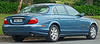
My wife and I own a 2004 Jaguar S-type with the 4.2L V-8 base engine. I'm facing a perplexing issue that's left us stranded on the side of the road several times in the last 2 months. I'm hoping someone can point me in the right direction, because my diagnostic and repair ability (slight to begin with) is at an end.
Apr 5, 2023 - Car had difficulty starting and needed jump starting, so we bought a new battery.
On the way home, car suddenly ran very rough and significantly lost power. Within 30 seconds, engine died. Cranked strong, but wouldn't restart.
Car towed to shop. We were told it was a bad battery. Replaced battery. Problem solved.
Car driven several times
May 1, 2023 - Car again lost power and then died. Towed back to shop. We were told our new battery was a dud. Replaced with a new battery. Problem solved.
Car driven twice
May 4, 2023 - Car died again. Towed back to shop (at their expense). This time we were told it was the fuel pump, and it would be $1,300 to fix. Had car towed home.
May 7 ,2023 - I ordered a replacement fuel pump and installed it myself. Problem solved!
Car driven several times
May 16, 2023 - Car died again. Towed car back home. I removed the fuel pump, checked the electrical connection and reassembled. Problem solved!
Car driven several times (short trips only)
June 7, 2023 - Car died again, really close to home! I could hear the fuel pump running when the key was turned. Managed to get it started and driven 300 feet to our driveway.
What in the world could cause such a catastrophic but intermittent problem? And how can I diagnose it when I can't predict when it will happen? I've checked for OBDII fault codes twice, and haven't seen any. The check engine light is not on. The gas tank was full when this started, and is now down to almost half-full. The car drives perfectly normally until it suddenly and unpredictably runs rough, loses power and dies. It usually cannot be restarted, but sometimes can but runs very rough and dies when shifted into gear. And this last time, within 30 minutes of dying, she started right up and drove down the street to our home.
Have you scanned for diagnostic trouble codes (DTCs) with an OBD-ii code reader? Some OBD units will pull the codes, but assign incorrect descriptions to them. If you have pulled codes, please post them here.
I have scanned for fault codes with the OBDII reader that I have (cheap Bluetooth adapter and Torque Pro on my Android tablet), and there have never been any.
To clarify, when I say the car lost power, I don't mean the battery losing power. I mean the car suddenly will not accelerate (in fact, when it runs rough, it will not maintain a speed above 5 mph) and has no engine power.
No, I did not change the fuel filter.
I don't have any Torque Pro data during the "episodes". Because they happen seemingly at random, I'm not sure how I could, other than to have my tablet on and monitoring it all the time I'm driving the car. This is an interesting idea and perhaps I'll try it (although I'm now reluctant to drive the car so it is so unpredictably unreliable).
I have scanned for fault codes with the OBDII reader that I have (cheap Bluetooth adapter and Torque Pro on my Android tablet), and there have never been any.
There is ALWAYS either P1000 or P1111 so look how to get the data out of the tool.
I'm sorry, I was not clear (or in this case, a bit misleading!). I meant that there were no useful, diagnostic scan codes. You are correct, I always get a P1000. But nothing else.
I meant that there were no useful, diagnostic scan codes...
What were they? Might be a little clue buried in there somewhere. Getting any faults for the parking brake, DSC, or cruise control? Those are fairly common side effects of low prestart voltage.
Any idea why so many bad batteries? Where are you getting them? All the same or different brands from different vendors?
Nothing is jumping out as an obvious root cause. I'd certainly keep an eye on fuel pressure and drive around the block in hopes of getting the engine to die again. I've got a Bluedriver OBD doohickey that works with my phone:
Unfortunately it only does engine related stuff, so no ABS, etc. But it's pretty decent for engine faults. It will record live data when in Scan mode, so you can review it later. This will save you from having to watch the screen as you coast to the side of the road.
I'd also give the charging system a good checkout. On a 2003+ model, you should see approximately 14.5V after engine start, slowly tapering around 13.7 after a few minutes.
Kind of a long shot, but also check the charging system for AC ripple. Any place that sells batteries should be able to do it for free. It's just another button on the tester they use on your battery. A bad diode in the alternator can put out spikes that mess with the various computer modules. An AC ripple test will catch this. If you'd like to do the test yourself, here's what I have and it works great:
Just to repeat, I do not get any fault codes except for the P1000.
There was only one "bad" battery. The first battery that I replaced was years old, and is unused for 5 months each year (we go to Florida for the winter, and leave this car at home). The only bad battery was the one that I was first sold. Don't know why I got a dud, but I'm following up with the store to find out.... The new replacement battery is the same make and model as the previous one that was in there for the past 7 or so years.
I'm a bit nervous about driving this car now. We've had to have it towed 4 times (The first 2 were covered by my insurance, and one was covered by the repair shop. But the fourth, and all subsequent times will cost me $95.). I'm not confident that I'll get lucky and magically get the car to restart and able to make it back home. I suppose I could just let it idle in the driveway, but that's certainly not the same conditions as actual driving.
For this same reason, I'm not able to take the car to an auto parts store for battery or charging system testing. I can say that when the car was in the shop with the one bad battery, they did test the charging system and reported no faults.
Honestly, I was hoping someone might have experienced a very similar situation and could tell me where I should focus my efforts. I'm at a complete loss as to why the car drives perfectly fine for days (or weeks), and then dies. The weirdest one was when it died so close to home yesterday. I came back after 30 minutes or so, and for some reason decided to try to start it again. It started right up, and drove the rest of the way home! I left it in the driveway, but this morning I started it and pulled it into the garage. So this is definitely an episodic problem, which I know will be very difficult to diagnose. Sigh.
P1000 means you have at least one supported OBD monitor that's unhappy. You can get the status of each via OBD as a clue to what's not happy.
Also, when your car dies you would usually get a P1582 - see the DTC guide for all the things that make it flag because if you definitely don't get it then you can rule all those out. Be sure, though, or you'll be heading in the wrong diagnostic directions.
Reading all this, my initial idea was that it might be helpful, if you could measure the quiescent current, i.e. with the car parked, engine off, plug your multimeter in 10A current measuring mode and place it between one of the battery terminals and the removed connector to that terminal. But since you insist that that "low battery" on a new battery is no longer your problem (it sounded like that for a while), I have another idea of what the issue cold be, but that would be had to find:
The issue sounds like an intermittent contact on one of the modules, which control the engine, like a "cold weld", i.e. a cracked solder point inside of the module, possibly on the power supply points of the PCB. Alternatively a broken-off bit of wire insultation... Yes, this could be it as well. I would start with looking at all wires, especially in the engine compartment (as heat destroys wires) and especially at the ends, where the wires connect to the connectors. It sounds like you got an intermittent problem, and intermittent shorts would fit that profile. I actually wrote something about that:
Honestly, I was hoping someone might have experienced a very similar situation and could tell me where I should focus my efforts.
Well, unfortunately, it seems you are in uncharted territory. Nobody has chimed in to say they had this exact problem and it was caused by (insert name of part). I think you've got three basic options:
1) Set up to duplicate the problem, such as driving around the block a few hundred times, tools handy in the trunk, and then diagnosing the fault while it is still active.
2) Pay a professional to diagnose and fix it. This could get very expensive and frustrating.
3) Give up, sell the car, and turn in your man card.
Your call. Cheap and stubborn as I am, #2 and #3 are not an option for me. Given a chance to spend your time and money, here's how I'd proceed:
Round up some basic diagnostic tools and keep them in the car:
A scanner that can read live data.
A multimeter for checking voltage.
A doohickey that plugs into the cigarette lighter and displays voltage. If you can't find one, use the multimeter but the plug-in device is a lot more convenient.
Spray can of starter fluid.
Good walking shoes.
Years from now, forum members will look back in awe at how the legend at the tip of the spear figured out this vexing problem. Your name will be spoken in hushed, reverent tones.
A few things I'd try before doing a lick of work. Think back to each time the engine died and look for any connections. For example, where you exiting the freeway at the time? Or maybe navigating stop and go traffic? Hot day? Or colder than Nancy Pelosi's heart? Long drive? Barely warmed up? How much fuel in the tank? If you can think of any common thread, duplicate those conditions as much as possible.
Charge that poor battery. This is a basic prerequisite for any electrical troubleshooting, so please don't skip this important step. Don't count on the alternator to have kept the battery charged. Don't waste your time with a trickle charger. It won't cut it. I highly recommend an automatic charger with at least a 10 amp out output.
Connect your scanner, select live data, and make sure you're seeing approximately 40 PSI fuel pressure with the engine running. I don't think the 2003+ models have a test port at the injector rail to physically measure fuel pressure with a mechanical gauge. Can anybody confirm this? If a test port is present (it will look like a tire valve stem), beg, borrow, or steal a gauge and confirm the pressure agrees with the scanner live data. Some auto parts stores have free loaner tools, so no need to buy one.
At the fuse panel under the hood, inspect the prongs on relays R3 and R5 for any signs of discoloration due to overheating. If you see any bluish tint, the contacts inside the relay are probably arcing and creating heat. If good, swap out R3 and R5 with other known-good relays of the same size. R3 controls all sorts of engine stuff, and R5 controls the ignition coils. If either one acted up, the engine would die and may not necessarily set any fault codes. R2 (oxygen sensor heater relay) and R20 (starter relay) would be good donors.
Notice we haven't done anything major yet, nor left the driveway.
Disconnect the battery charger, turn on the headlights for about 10 seconds to dissipate any surface charge, and then read voltage at the battery. You should see a minimum of 12.6V, which is a very high standard.
Start the engine and you should see approximately 14.5V for a few minutes, slowly tapering down around 13.7V. I know you said the charging system was previously tested, but do it again to be sure. They may not used the correct limits, either.
Fill the tank with fresh premium fuel. The tank is shaped like a saddle. There's an electric pump on the right. The left side has a venturi arrangement that continually transfers fuel to the electric pump on the right. If fuel is not transferring properly, the electric pump can run dry even though the gauge will still show half full. The pump will still run, but isn't moving any fuel. If you fill the tank, regardless of what the gauge says, you've now got about half a tank available to the electric pump even if the venturi is not doing its job.
Replace the fuel filter. Cut the old one open to look for debris that could have restricted fuel flow.
Now comes the hard part: Waiting for the fault to happen. You can try running at idle in your driveway if you think that might do it. Or you may have to drive around your neighborhood for a while. As soon as the engine dies, turn the key off and then back to on, but not start yet. Listen for the sound of the fuel pump. It should run for about 2 seconds to pressurize the injector rail. Even if you hear the pump, it may not be moving fuel, but you need to know if it's trying. Next, try to restart the engine. Even if it won't run, the starter should get the cranskshaft spinning at a good clip. If it won't, that's an entirely different troubleshooting path, so please let us know.
If the starter cranks properly but the engine won't run, quickly pop off the cover from the air filter. Shoot a 3 second burst of starting fluid into the intake tube. No more than 3 seconds' worth, it's only for troubleshooting purposes. Try to start the engine. If it runs briefly on the starting fluid, that tells us the ignition is good but fuel wasn't being delivered. If no response to the starting fluid, you've got an ignition problem. Don't keep spraying starting fluid, you're just doing it once to look for a response.
Can't say for sure if this particular example would fit your car. On my '02, the lighter is recessed and this probably wouldn't fit. I found one several years ago with a longer neck, but it is no longer available.
If you do find one, get one with an alarm for low voltage. That way, you don't have to monitor it all the time, but it will let you know if voltage dips low.
Did we lose you already? Was searching the forum for something else, and was saddened to see how many unresolved zombie threads we have.
Anyways, if you're still playing along, I have one more relay worth checking. In the trunk, please check relay R15. This is the power for the fuel pump. As with the other suspect relays, inspect the prongs for signs of overheating. Try swapping it with a known-good relay in the same panel, such as R1 (rear window defroster) or R7 (blower motor).
If you feel absolutely compelled to throw a part at the problem, consider the CKP (Crankshaft position) sensor. If bad, and the computer doesn't get feedback the crankshaft is turning during a start attempt, it will shut off the fuel pump as a safety precaution, generally without setting a code. I do NOT know if it will also do this once the engine is running, so maybe somebody else can chime in. But if you do want to try a part, that would be a worthwhile gamble. It's not expensive and I think it's easy to access at the front of the engine. Could be it's acting up when warm, but behaving itself when cool.




 2004 S-type Occasionally Dies