When you click on links to various merchants on this site and make a purchase, this can result in this site earning a commission. Affiliate programs and affiliations include, but are not limited to, the eBay Partner Network.
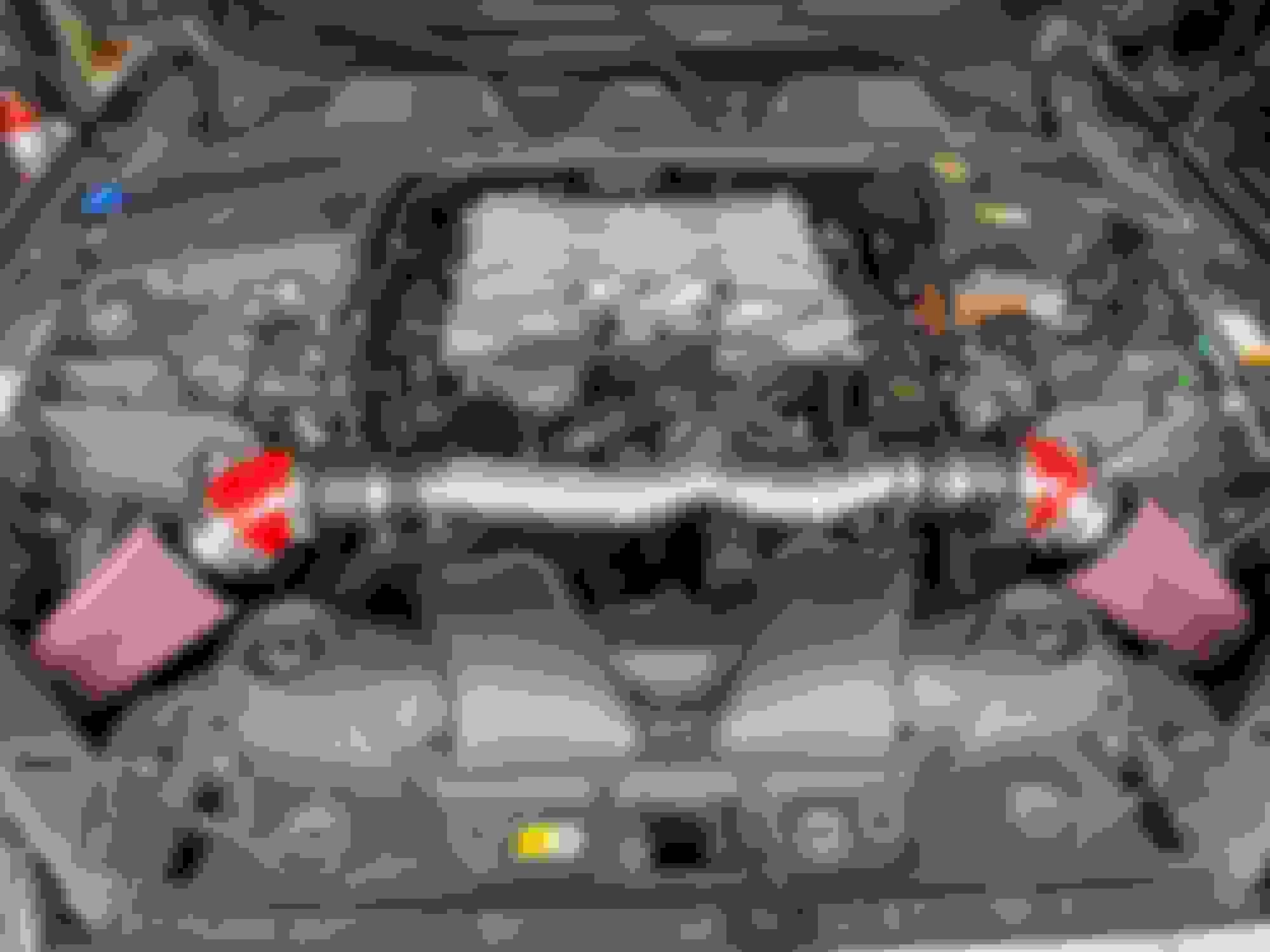
Hello, I asked a question in this forum about a year ago asking if anyone has switched to dual cone air filters. I didn't get any responses so this weekend I did the swap. I ordered(2) K&N cone filters, (2) 3.5" silicone 45 degree elbows, (12") of straight 3.5" polished aluminum pipe,(4) 3.5" quality hose clamps. I already had the Mina Gallery intake pipe installed several months ago. Vieuzu claims the mina pipe actually makes less power then the crinkled accordion stock plastic pipe but I don't see how unless there is heat soak. Took some fitting and planning and also had to trim down the Mina pipe due to length of maf sensor. I thought I was going to lose the crankcase breather tube where it connects to mina pipe but it just made it. Everything is a smooth transition now. The factory setup had quite a few rough surfaces and bottlenecks , like the top of the air box and transition from box to intake tube. The factory did have somewhat of a ram air setup which now just becomes a cold air setup to the cones. The purpose of this was hopes to hear the supercharger and maybe even pick up a few hp. I also have the mina gallery supercharger pulley installed. All I can say is WOW! Under normal driving everything is quiet as stock, but anything over 1/4 throttle and you can hear this baby sign. So amazing. I cant tell if I gained any power but even if I didn't it was well worth it.
Given the position of the aftermarket air cleaners, not sure if there's any benefit to be had as they now draw in air behind the radiator and condenser.
Consider replacing the water outlet pipes with the aluminium versions as they can only withstand a finite number of cold to hot to cold cycles before failing.
If the vehicle has more than 62,000 miles (100,000 km) the gearbox fluid should also be changed and the pan/filter replaced.
Consider replacing the water outlet pipes with the aluminium versions as they can only withstand a finite number of cold to hot to cold cycles before failing.
If the vehicle has more than 62,000 miles (100,000 km) the gearbox fluid should also be changed and the pan/filter replaced.
If you ever take the supercharger off, change the PCV diaphragm as a maintenance item. Also replace the supercharger snout coupler with an aftermarket design and the supercharger oil.
I may be wrong, but from what I see it looks like what would be a hot air intake modification that pulls warm/hot air directly from the engine compartment. I've never seen a hot air intake system.
I am interested to read how it works out though.
I may be wrong, but from what I see it looks like what would be a hot air intake modification that pulls warm/hot air directly from the engine compartment. I've never seen a hot air intake system.
I am interested to read how it works out though.
In this setup, OP has left the airbox feeds which are now his "cold air intakes" as in they funnel cold air from outside to the new filters. This cold air will mix with the engine bay air, but without knowing how the air flows in the engine bay we can't really be sure how it affects things... it's possible that there's enough airflow that the pod filters are sucking fresh air from outside without any of the engine bay air being mixed in - it's also possible they're pulling stagnant air and temps went up loads. Only way to truly know is to bung a thermocouple into the old setup and measure intake temps, then bung in a thermocouple in the exact same spot in the new setup and measure again. Engine and ambient temperatures would need to be consistent between the two tests, which is easy enough.
I plan to buy a Mina Gallery intake and do this exact test in the next few months, along with dyno pulls on both setups. "Racer 69" on youtube has done tests on his car and demonstrated the Mina intake lost power, but the tests were a bit all over the place and mixed in a pulley and tune as well. Will be on my XE so results will end up in the XE forum.
In this setup, OP has left the airbox feeds which are now his "cold air intakes" as in they funnel cold air from outside to the new filters. This cold air will mix with the engine bay air, but without knowing how the air flows in the engine bay we can't really be sure how it affects things... it's possible that there's enough airflow that the pod filters are sucking fresh air from outside without any of the engine bay air being mixed in - it's also possible they're pulling stagnant air and temps went up loads. Only way to truly know is to bung a thermocouple into the old setup and measure intake temps, then bung in a thermocouple in the exact same spot in the new setup and measure again. Engine and ambient temperatures would need to be consistent between the two tests, which is easy enough.
I plan to buy a Mina Gallery intake and do this exact test in the next few months, along with dyno pulls on both setups. "Racer 69" on youtube has done tests on his car and demonstrated the Mina intake lost power, but the tests were a bit all over the place and mixed in a pulley and tune as well. Will be on my XE so results will end up in the XE forum.
It’s possible the ECU knows the intake air temperature.
It’s possible the ECU knows the intake air temperature.
You're right - a search of my workshop manual for "intake air temperature" turned up a few references to an intake air temp sensor and/or a charge air temperature sensor. I haven't started hacking the electronics yet so right now it's easier for me to plumb in a couple of thermocouple clamps than it is to read ECU data
Last edited by dangoesfast; Oct 24, 2023 at 12:14 AM.
You're right - a search of my workshop manual for "intake air temperature" turned up a few references to an intake air temp sensor and/or a charge air temperature sensor. I haven't started hacking the electronics yet so right now it's easier for me to plumb in a couple of thermocouple clamps than it is to read ECU data
A good ODBII scanner should give you that info in the live data readings screen. The intake temp is a critical input into the ECU for the fuel injection, so it's critical for troubleshooting.
My $20 OBDII wifi adapter and iPhone app lists support for intake air temp.
Last edited by lotusespritse; Oct 24, 2023 at 02:27 AM.
Just my few pennys: Newer seen "Open Air" filters that actually improves anything else than noise when added alone. (sure induction noise is a gain, if that is desired) Factory filters do have more flow capasity than engine can suck in on max rpm. Also the factory piping are designed for optimum airflow. (in most cases. There are "just piping" as well, but emission controls have been forced even the city car manufacturers looking an optimum intake) Some corners and wedges what first looks that they are resctrictions, are there to made designed whirls or backshock pulses etc for the airflow. (yes, you can see something on dyno, but in practise lose in laptimes on track. Typically customs setups are worth (exept for the noise) when engine airflow are increased over the capasity of factory filters (rpm, stroke volume, can timing..) or when the vehicle need more robust setup (rally, rallycross, folkracing... )
Note: Most of K&N filters are oiled: The Mass Air Flow sensors what are in x351 are the type what don´t like oil in the air, so clean your MAF:s often to keep your mixture level correct. As far i know each MAF:s have air temp sensor inbuild, so you have intake air temperature sensors right after filters.
(Been build some race setups: Your new setup dosent look cold air intake. You need to make an protecting walls for radiator air flow and against engine side -> Airflow thru front grille/bumber are so high volume that it easyly overcome the airflow of original cold air scoops. The more speed you have the more the air pressure will raise in that area, since air hit to the front of the engine and need to found its way out to the opening around transmission and sides of the hood)
You need to make an protecting walls for radiator air flow and against engine side
Hint for that job: Take piece of cardboard and start cutting it in suitable shape to the place you want to have an heat insulating wall. Toughtest part are the hood, since you have to close it and same time see that you have correct shape. (external OTG camera for phone aeses a lot) Next purchase few meters of an vehicle door seal. (auto partshops sell that in meters) Check how much seal will eat space from the edge of your carboard model. Now take approx 1.5mm thick sheet alumium and use carboard model as a template miinus the seal edge. Voilá: You have made an piece of wall with ease. (wedges and bumbs can be made for alumium sheetmetal with some practise) Now you need heat insulator mat over one side of it and find out how you can fix it in place so it dosent run around engine bay if getting loose.
Another way: Take an plastic bucket (colour your choise) and start cutting that on shape that its sits nicely around airfilter and top of the bucket follows hood line. Again use door seal for the edges and find way to fix it secure in place.
... it's easier for me to plumb in a couple of thermocouple clamps than it is to read ECU data
Or you could just look at the air intake temp from OBD data...
But depending on where that sensor is (I forget if it's on the throttle body or before), this modification may take the validity of that out of the loop.
And if it is out of the loop, that will really screw-up the fuel mixture, make it pretty random.
I've used K&N filters since the '80's on different vehicles, but personally haven't seen any added benefit on our JLR or BMW-based Range Rover. They actually caused more problems than benefits.
Last edited by 12jagmark; Oct 24, 2023 at 12:27 PM.
Sorry haven’t been able to post due to vacation.
Many good points mentioned above. I agree with the above statement about leaving the fresh air piping intake intact and thus having more of a cold air setup vs factory ram air. I could fab a divider from the engine bay to minimize mixing as much engine bay heat in with fresh air.The piping runs directly at the the filter, inches away. I do have a cheap scanner and will try to see if I can get intake temps. The sound gain is what I was after and am super happy with the result . It now sounds like a Supercharged car should sound . Coming from a casual drag racing background I have always found that smoothing out the intake track equaled more power. The factory air setup was not designed for maximum potential. As far as oiled filters , my previous maf cars didn’t have issues with them as long as you don’t over oil. The butt meter might be lying but feels like it gained but I’m not willing to spend 400-500 on dyno testing . My next mod will be exhaust. Looking for some 200 cell cats and maybe get rid of resonators. I love the Vieuzu sound.
jay
The sound gain is what I was after and am super happy with the result . It now sounds like a Supercharged car should sound . Coming from a casual drag racing background I have always found that smoothing out the intake track equaled more power. The factory air setup was not designed for maximum potential. As far as oiled filters , my previous maf cars didn’t have issues with them as long as you don’t over oil.
Its for your enjoyment and if you are happy for the sounds, its what matters. (no matter what ever the dyno would say for the results, it have plenty anyway)
Been tuned quite many engines (for track use, not for strip) and i highly recommend to insulate air intake from engine bay air. It can be quite descructive for engine.
The factory inlet are designed for maximum output for factory engine setup. (JLR used it up to 575HP) Most cases if only input are changed there are only losing (exept sounds), not so much effect in forced induction engines than naturaly aspired engines, where inlet airflow are extremely sensitive, but if engine are tuned further from factory setup, naturaly things change.
Its also what kind of engine you are building up. If you look only engine roaring top rpm:s with high output, you need short and straight intake. If you need driveability where you need to contol rear wheel traction grip mid rpm:s with right foot, without your engine kicking all in on middle of corner and ending you in the barriers. (need of fast and accuracy response of power output). Then you play longer intake with setting swirling airflow.
On street vehicle, with street transmission, i would focus on driveability.
I have been read that Mina gallery have great exhaust parts for V8 and also pulley kits to improve engine performance.
Been quite some time but made it back in here. I used my scanner to check intake temps a while ago. The temps averaged around 7-8 degrees higher than the current ambient temps. I ended up getting an O2 sensor code Bank 1 sensor 3 so I swapped it for an aftermarket one and reset the code. It came back on, sensor was showing stuck lean. It then started to get a rough idle at times and elevated idle in stop and go traffic where I had to let off brake to get it to drop back down. I returned the intake back to stock and reset codes but o2 code came back and idle issue remains. I have it booked into dealer for the sensor swap which I hope is the idling issue as well and a wheel painting that the clear coat is peeling. I bought the wheel warranty when I bought it and this is the second time for a wheel repaint.
Honestly the car feels faster in this form but miss the supercharger whine. I think my setup may have been leaning it out too much and would require some tuning to remain on but not going there yet . Next step will be an x-pipe and maybe some mufflers in the rear for a bit more sound. I just can't leave well enough alone.



 Modded the XJ this weekend.