


Thermostat Housing Woes


Thread Starter
|
Senior Member
Joined: Jun 2014
Posts: 196
Likes: 31
From: Larkspur, CO
 Thermostat Housing Woes
I think I should have left this alone, but I did notice a very slight leak (I mean really really slight) from the lower left (as you look at it) bolt on the thermostat housing last week. The tower had been replaced at some point because it is the aluminium type. I decided to take it apart to see what was going on and put in a new thermostat, something that I am regretting now.
I couldn't see anything obviously wrong once it was all apart (no cracks etc) so I cleaned it all up, put the new thermostat in and put the cover back on. Hose reconnected and top up anti-freeze etc - now it leaks like a sieve from that same spot. All 3 bolts tightened up correctly so the bolt isn't stripped or anything.
Does anyone recognize this issue and what might be wrong here, or am I looking at replacing the entire tower assembly?
I couldn't see anything obviously wrong once it was all apart (no cracks etc) so I cleaned it all up, put the new thermostat in and put the cover back on. Hose reconnected and top up anti-freeze etc - now it leaks like a sieve from that same spot. All 3 bolts tightened up correctly so the bolt isn't stripped or anything.
Does anyone recognize this issue and what might be wrong here, or am I looking at replacing the entire tower assembly?

Veteran Member


Joined: Oct 2008
Posts: 1,837
Likes: 458
From: Virginia Beach, VA
I believe mine had an o-ring seal. What did the seal look like ? It's all very light weight, so you need to be sort of gentle (?) Make sure the thermo is in straight with the jiggle pin at 12:00. I'm sure you know this, but it looks like another disassembly is in the cards.
Thread Starter
|
Senior Member
Joined: Jun 2014
Posts: 196
Likes: 31
From: Larkspur, CO
The O-ring seal was actually pretty substantial, and yes, I did eventually realize that there was a recess for the jiggle pin so it is in the right spot. I agree that another dismantling is called for, but given that it is all buttoned up tightly I am at a loss as to why it is leaking so badly.
Thread Starter
|
Senior Member
Joined: Jun 2014
Posts: 196
Likes: 31
From: Larkspur, CO
O-ring
I believe mine had an o-ring seal. What did the seal look like ? It's all very light weight, so you need to be sort of gentle (?) Make sure the thermo is in straight with the jiggle pin at 12:00. I'm sure you know this, but it looks like another disassembly is in the cards.
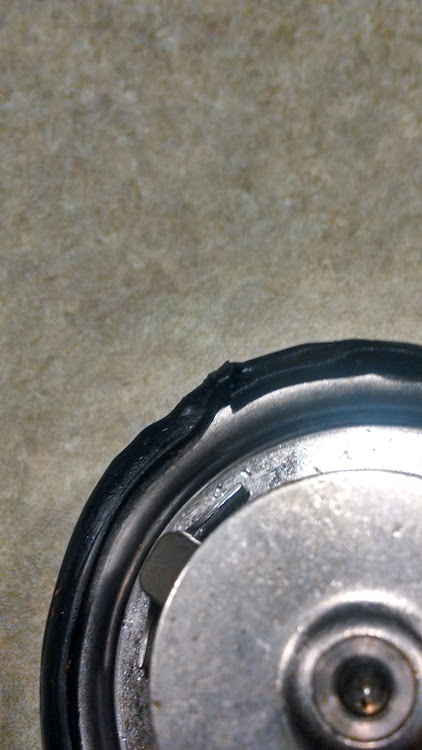
So the questions I have now are:
1. Can I buy the o-ring separately or am I looking at another new 'stat? (never mind - found o-ring at PartsGeek)
2. Are there torque settings for bolting up this housing (couldn't find any by searching here)?
3. Is there supposed to be a gasket on the housing, or does it rely solely on this o-ring?
Appreciate any additional info.
Last edited by badger2196; Jul 9, 2014 at 07:20 PM.


Joined: Dec 2009
Posts: 13,697
Likes: 9,645
From: Wise County,TX
I wish you were right down the street and could stop by as I have a few dozen new ones from all the years at the dealer living through the faulty thermostats in the late 1990s. (I would give you a few)
They sometimes come with the new GATES T-mostats but the dealer has them listed as a separate part.
bob gauff
They sometimes come with the new GATES T-mostats but the dealer has them listed as a separate part.
bob gauff




Joined: Feb 2014
Posts: 20,512
Likes: 15,284
From: Crossroads of America
Hi badger2196,
I don't have the specs for the X308, but the torque specs for thermostat housing screws tends to be low, so they are easy to over-tighten. On the XJ40 with an aluminum thermostat housing, the torque spec is 22-28 Nm/16-21 lb ft. On the X350 with a plastic thermostat housing, the torque spec is 10 Nm/7 lb ft. I would assume the torque specs for an X308 would be in a similar range depending on whether the housing is aluminum or plastic.
Regarding the use of sealant, for the XJ40 the Jaguar Service Manual and the Haynes Service Manual both recommend the use of sealant (RTV silicone) in addition to the O-ring. The X350 Jaguar Workshop Manual mentions only the O-rings but no sealant.
Hopefully someone with the X308 Service Manual will chime in.
P.S. I haven't had a chance to open the CD changer yet because we've had family visiting for the past few weeks and my "car time" has been spent on their cars, but I hope to get to the changer next week!
Cheers,
Don
Last edited by Don B; Jul 9, 2014 at 10:02 PM.

Veteran Member
Joined: Mar 2011
Posts: 1,175
Likes: 258
From: Tasmania, Australia
I think I should have left this alone, but I did notice a very slight leak (I mean really really slight) from the lower left (as you look at it) bolt on the thermostat housing last week. The tower had been replaced at some point because it is the aluminium type. I decided to take it apart to see what was going on and put in a new thermostat, something that I am regretting now.
I couldn't see anything obviously wrong once it was all apart (no cracks etc) so I cleaned it all up, put the new thermostat in and put the cover back on. Hose reconnected and top up anti-freeze etc - now it leaks like a sieve from that same spot. All 3 bolts tightened up correctly so the bolt isn't stripped or anything.
Does anyone recognize this issue and what might be wrong here, or am I looking at replacing the entire tower assembly?
I couldn't see anything obviously wrong once it was all apart (no cracks etc) so I cleaned it all up, put the new thermostat in and put the cover back on. Hose reconnected and top up anti-freeze etc - now it leaks like a sieve from that same spot. All 3 bolts tightened up correctly so the bolt isn't stripped or anything.
Does anyone recognize this issue and what might be wrong here, or am I looking at replacing the entire tower assembly?
This is a 'flange seal' gasket that fits over the edge of the stat.
centre the stat and seal in the cover, then mount to the tower mounting face.
The screws should be no more than 10Nm 7.3 lbs/ft. or 88.5 inch/lbs.
No sealant is necessary as the flange rubber gasket around the stat does the sealing by compression....all very light and efficient...when done correctly.
Trending Topics
Thread Starter
|
Senior Member
Joined: Jun 2014
Posts: 196
Likes: 31
From: Larkspur, CO
O-Ring
Based on these replies then I definitely overtightened the bolts. I will try again this weekend once I have the new o-ring and see how it fairs with 7lbs/ft - it's an aluminium housing, but I'll statr at 7 and work up to 12.5 to see how it goes leak-wise.
Interesting feedback on the use/don't use high temp sealant issue. My mechanic friend has always been pretty adamant about never ever under any circumstances using that stuff, so I find it intriguing that Jaguar recommend it for the X308. I'm going to go with just the o-ring and light torque settings for now, otherwise he'll just yell at me (again).
Thanks for all the input.
Interesting feedback on the use/don't use high temp sealant issue. My mechanic friend has always been pretty adamant about never ever under any circumstances using that stuff, so I find it intriguing that Jaguar recommend it for the X308. I'm going to go with just the o-ring and light torque settings for now, otherwise he'll just yell at me (again).
Thanks for all the input.
Joined: Feb 2014
Posts: 20,512
Likes: 15,284
From: Crossroads of America
Interesting feedback on the use/don't use high temp sealant issue. My mechanic friend has always been pretty adamant about never ever under any circumstances using that stuff, so I find it intriguing that Jaguar recommend it for the X308. I'm going to go with just the o-ring and light torque settings for now, otherwise he'll just yell at me (again).
Thanks for all the input.
Thanks for all the input.
If I understood xjay8 correctly, he said that Jaguar does not specify sealant for the X308.
For the XJ40, Jaguar did recommend sealant (this recommendation may have come at some point after the initial model introduction - I seem to recall a TSB on this - perhaps there were lots of reported leaks and sealant was the easy fix). For the record, Chrysler also specifies sealant for the 'stat in our '05 minvan. BMW does not specify sealant for the 'stat housing on our 3-series (plastic housing). The use of sealant apparently varies by manufacturer and model, so it's important to consult the manufacturer's specs. Mechanics who insist sealant never be used are uninformed or misinformed.
Cheers,
Don
Thread Starter
|
Senior Member
Joined: Jun 2014
Posts: 196
Likes: 31
From: Larkspur, CO
Yes Don, I was referring to your comment on the use of sealant as recommended for the XJ40 - should have made that clear. As to my mechanic friend, I'm not sure if his opinion comes from being misinformed or uninformed, but he sure is adamant about it. That's the problem with opinions right - everyone has one?
Veteran Member
Joined: Mar 2011
Posts: 1,175
Likes: 258
From: Tasmania, Australia
....>>>> My mechanic friend has always been pretty adamant about never ever under any circumstances using that stuff, so I find it intriguing that Jaguar recommend it for the X308. I'm going to go with just the o-ring and light torque settings for now, otherwise he'll just yell at me (again).
Thanks for all the input.
Thanks for all the input.
They do not recomend the use of any sealant around the cooling system.
There are very few places on the entire engine that use sealants of any kind....that's how well designed they are ;o)
We are referring to the X308 V8.
Last edited by xjay8; Jul 11, 2014 at 06:02 AM.
Veteran Member
Joined: Mar 2011
Posts: 1,175
Likes: 258
From: Tasmania, Australia
If I understood xjay8 correctly, he said that Jaguar does not specify sealant for the X308.
For the XJ40, Jaguar did recommend sealant (this recommendation may have come at some point after the initial model introduction - I seem to recall a TSB on this - perhaps there were lots of reported leaks and sealant was the easy fix). For the record, Chrysler also specifies sealant for the 'stat in our '05 minvan. BMW does not specify sealant for the 'stat housing on our 3-series (plastic housing). The use of sealant apparently varies by manufacturer and model, so it's important to consult the manufacturer's specs. Mechanics who insist sealant never be used are uninformed or misinformed.
Cheers,
Don
For the XJ40, Jaguar did recommend sealant (this recommendation may have come at some point after the initial model introduction - I seem to recall a TSB on this - perhaps there were lots of reported leaks and sealant was the easy fix). For the record, Chrysler also specifies sealant for the 'stat in our '05 minvan. BMW does not specify sealant for the 'stat housing on our 3-series (plastic housing). The use of sealant apparently varies by manufacturer and model, so it's important to consult the manufacturer's specs. Mechanics who insist sealant never be used are uninformed or misinformed.
Cheers,
Don
The XJ40 is back in the XJ6 era as far as jointing goes.
If you study carefully the substructure and jointing methods utlised on X308's, you will see that practically everything relies on silicon rubber gaskets under compression.
That is why the vast majority of jointing on the engine is low value torqueing.
Thread Starter
|
Senior Member
Joined: Jun 2014
Posts: 196
Likes: 31
From: Larkspur, CO
Yes, I believe that I already clarified that I was referring to the previous comment on the use of sealant on the XJ40. Enough already.
Joined: Feb 2014
Posts: 20,512
Likes: 15,284
From: Crossroads of America
Hi xjay8,
Yes, I assumed there might be significant differences in the engine cooling componentry between an X308 and XJ40, but a possible similarity between the X308 and X350, thus my expressed hope that someone with an X308 service manual (you!) would come to the rescue. (note that much of the X308 architecture is based on the XJ40 and they share a surprising number of parts)
From your description, it sounds as though the X308 engine is closer in design to the X350, and the X300 is closer in design to the XJ40, and it makes sense that these sorts of changes in the interest of "modernization" would have occurred with the introduction of the V8s.
Thanks for clarifying all this!!!
Cheers,
Don
Veteran Member
Joined: Mar 2011
Posts: 1,175
Likes: 258
From: Tasmania, Australia
Hi xjay8,
Yes, I assumed there might be significant differences in the engine cooling componentry between an X308 and XJ40, but a possible similarity between the X308 and X350, thus my expressed hope that someone with an X308 service manual (you!) would come to the rescue. (note that much of the X308 architecture is based on the XJ40 and they share a surprising number of parts)
From your description, it sounds as though the X308 engine is closer in design to the X350, and the X300 is closer in design to the XJ40, and it makes sense that these sorts of changes in the interest of "modernization" would have occurred with the introduction of the V8s.
Thanks for clarifying all this!!!
Cheers,
Don
Yes, I assumed there might be significant differences in the engine cooling componentry between an X308 and XJ40, but a possible similarity between the X308 and X350, thus my expressed hope that someone with an X308 service manual (you!) would come to the rescue. (note that much of the X308 architecture is based on the XJ40 and they share a surprising number of parts)
From your description, it sounds as though the X308 engine is closer in design to the X350, and the X300 is closer in design to the XJ40, and it makes sense that these sorts of changes in the interest of "modernization" would have occurred with the introduction of the V8s.
Thanks for clarifying all this!!!
Cheers,
Don
The X300 and 308 are bodily extensions of the original XJ40 design which nearly sent Jaguar to the wall because of it's advanced design.
I have a brilliant ex factory dvd dealing with the XJ40's development and extraordinary lengths they went to during testing...everywhere from the Arctic Tundra to the deserts of Australia.
The big change came with the X308 which is really the pinnacle of that family andyes, the X350 engine shares a lot with it's X308 cousin but that's about all
as Jaguar took another quantum leap into all alloy body structure and new design underpinnings.
Too many people get confused witht he fact that most modern makes and engines use very little 'Gorilla snot' in their builds ;o)
Not like the old daze where you needed all sorts of gaskets and snot to hold the plot together ;o)=)
Thread Starter
|
Senior Member
Joined: Jun 2014
Posts: 196
Likes: 31
From: Larkspur, CO
Mystery Solved
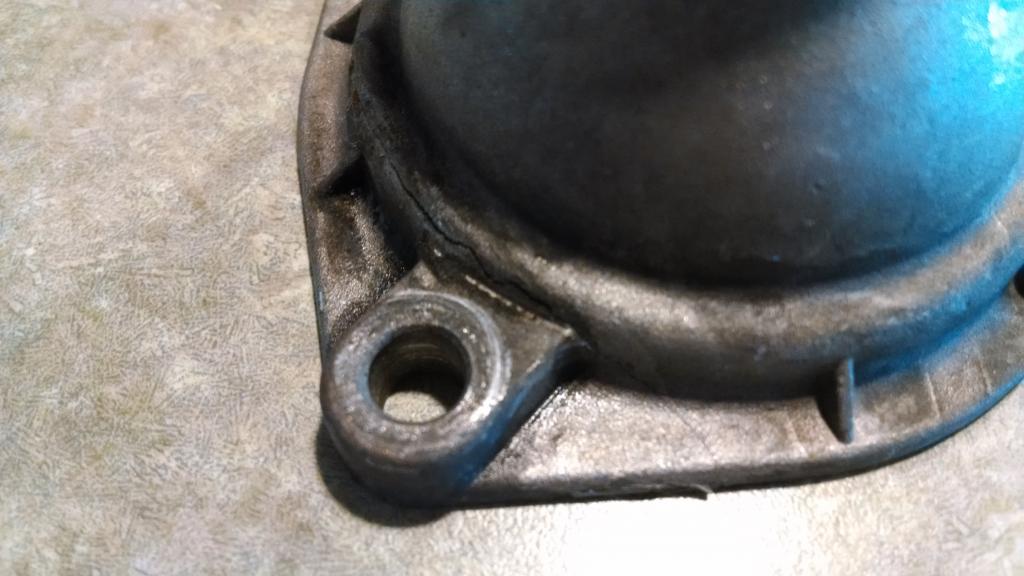
I finally figured out what is causing the leak here - after a 3rd attempt to install the thermostat without it leaking (and my 3rd o-ring) I noticed a crack in the housing, which must have been the root cause of the original minor leak. I guess removing and re-installing it just made the crack progressively worse (to the point where I can now actually see it!).
Anyone know where I can get a replacement housing - all I can find is the complete aluminum upgrade kits?

Thread
Thread Starter
Forum
Replies
Last Post
mikiep
XK8 / XKR ( X100 )
14
Dec 20, 2019 07:37 PM
Currently Active Users Viewing This Thread: 1 (0 members and 1 guests)