


XJR Crossdrilled rotors

Thread Starter
|
Senior Member
Joined: Nov 2014
Posts: 123
Likes: 29
From: Los Angeles CA
 XJR Crossdrilled rotors
Hello,
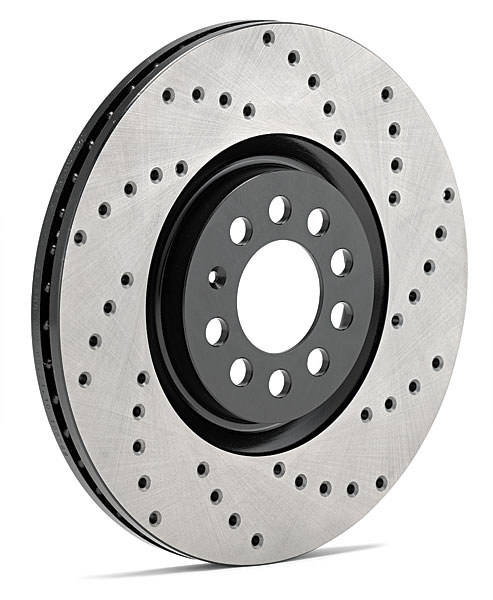
It is time for me to do the front brakes on the XJR (pads and rotors) I was looking at the Stoptech crossdrilled rotors with perhaps the EBC low dust pads or akebono pads
Is anyone out there running crossdrilled rotors? Do you have any pics with asteroid wheels? Any reason why I should not do it? Or alternative suggestions?
Thank you,
http://www.tirerack.com/brakes/brake...0&autoModClar=
It is time for me to do the front brakes on the XJR (pads and rotors) I was looking at the Stoptech crossdrilled rotors with perhaps the EBC low dust pads or akebono pads
Is anyone out there running crossdrilled rotors? Do you have any pics with asteroid wheels? Any reason why I should not do it? Or alternative suggestions?
Thank you,
http://www.tirerack.com/brakes/brake...0&autoModClar=



Drilled are (mostly) for show, yes that's true. Although many high performance vehicles used to come with drilled rotors from the factory (and a number still do) but they are typically designed to be drilled from the beginning, not just a standard rotor with holes drilled in them.
There is always a risk with "cheap" drilled rotors that they can lead to cracking in between the holes. But they do look cool...
Slotted do have some real benefits though, but you'd be struggling to notice the benefits from regular street driving. I have slotted rotors on my XJR along with ceramic pads & they did really well on the racetrack.
The negatives are noise (whooshing sound while braking) and they can generate more brake dust as they are a bit harder on the pads.
There is always a risk with "cheap" drilled rotors that they can lead to cracking in between the holes. But they do look cool...
Slotted do have some real benefits though, but you'd be struggling to notice the benefits from regular street driving. I have slotted rotors on my XJR along with ceramic pads & they did really well on the racetrack.
The negatives are noise (whooshing sound while braking) and they can generate more brake dust as they are a bit harder on the pads.
Last edited by Cambo; Nov 18, 2014 at 05:18 PM.


Joined: Oct 2009
Posts: 11,057
Likes: 2,272
From: Perth Ontario Canada
The benefit of drilling or slotting is strictly to provide an escape path for gasses produced from the pads. Such conditions exist on the race track, not on the street.
Wilwood High Performance Disc Brakes
Wilwood High Performance Disc Brakes

Senior Member
Joined: Jul 2013
Posts: 213
Likes: 41
From: Sacramento
Nothing prevents a cast rotor from being drilled - but as with anything it must be done properly. Just taking a DeWalt to your Autozone rotors is not going to end well. But (properly) cross-drilled rotors and slotted rotors are designed for the exact same purpose - to vent hot gas that forms between the pad and rotor, thus improving brake performance.
Cross-drilled rotors tend to be more effective in this aspect, but come with the penalty of shorter typical rotor life as heat stress can cause cracking in/around the holes. Properly drilled rotors will minimize this tendency (and improperly drilled ones will have very short lifespans), but no cross drilled rotor is immune. Slotted rotors prevent the cracking that can come with cross-drilling but are less effective at venting - though they do tend to a fine job keeping the pads clean and that can be its own reward (at the expense of faster pad wear and more dust).
As you say, these technologies are probably not necessary on the street - if you're pushing your brakes that hard that often you're probably not driving all that safely. That's all well and good, but to suggest that these useful and valuable technologies are for looks only is unequivocally false.
Cross-drilled rotors tend to be more effective in this aspect, but come with the penalty of shorter typical rotor life as heat stress can cause cracking in/around the holes. Properly drilled rotors will minimize this tendency (and improperly drilled ones will have very short lifespans), but no cross drilled rotor is immune. Slotted rotors prevent the cracking that can come with cross-drilling but are less effective at venting - though they do tend to a fine job keeping the pads clean and that can be its own reward (at the expense of faster pad wear and more dust).
As you say, these technologies are probably not necessary on the street - if you're pushing your brakes that hard that often you're probably not driving all that safely. That's all well and good, but to suggest that these useful and valuable technologies are for looks only is unequivocally false.
Senior Member
Joined: Jul 2013
Posts: 213
Likes: 41
From: Sacramento
The benefit of drilling or slotting is strictly to provide an escape path for gasses produced from the pads. Such conditions exist on the race track, not on the street.
Wilwood High Performance Disc Brakes
Wilwood High Performance Disc Brakes
I'd suggest:
a) Read your own link as to the value and benefit of slotting
b) Not make general statements "for appearance only" and then immediately revise your statement to be "for race track only."
Trending Topics
Drilled are really for track use only.... Sure you can use them on the road but take looking after like clearing the holes out from brake dust quite regularly.... The continuous heating and cooling will cause cracks between the holes but mainly on multi holed discs like the Brembos, further apart holes are not so bad but no where near as effective at releasing gases between the pad and disc...... On the track a set of crossed drilled discs will only do a few races before being thrown in the scrap bin.....
For road use you are better off with dimpled or grooved..... However you do suffer more from brake noise and a slight vibration through the steering wheel as the pad goes over the grooves..... Another downside is the discs act as cheese graters removing a small amount of pad surface each time you brake to prevent glazing......
Nothing prevents a cast rotor from being drilled - but as with anything it must be done properly. Just taking a DeWalt to your Autozone rotors is not going to end well. But (properly) cross-drilled rotors and slotted rotors are designed for the exact same purpose - to vent hot gas that forms between the pad and rotor, thus improving brake performance.
Cross-drilled rotors tend to be more effective in this aspect, but come with the penalty of shorter typical rotor life as heat stress can cause cracking in/around the holes. Properly drilled rotors will minimize this tendency (and improperly drilled ones will have very short lifespans), but no cross drilled rotor is immune. Slotted rotors prevent the cracking that can come with cross-drilling but are less effective at venting - though they do tend to a fine job keeping the pads clean and that can be its own reward (at the expense of faster pad wear and more dust).
As you say, these technologies are probably not necessary on the street - if you're pushing your brakes that hard that often you're probably not driving all that safely. That's all well and good, but to suggest that these useful and valuable technologies are for looks only is unequivocally false.
Cross-drilled rotors tend to be more effective in this aspect, but come with the penalty of shorter typical rotor life as heat stress can cause cracking in/around the holes. Properly drilled rotors will minimize this tendency (and improperly drilled ones will have very short lifespans), but no cross drilled rotor is immune. Slotted rotors prevent the cracking that can come with cross-drilling but are less effective at venting - though they do tend to a fine job keeping the pads clean and that can be its own reward (at the expense of faster pad wear and more dust).
As you say, these technologies are probably not necessary on the street - if you're pushing your brakes that hard that often you're probably not driving all that safely. That's all well and good, but to suggest that these useful and valuable technologies are for looks only is unequivocally false.
I think we pretty much said the same thing at the same time lol
Joined: Oct 2009
Posts: 11,057
Likes: 2,272
From: Perth Ontario Canada
A: PSlots or grooves in rotor faces are partly a carryover from the days of asbestos pads. Asbestos and other organic pads were prone to “glazing” and the slots tended to help “scrape or de-glaze” them. Also, cross-drilling and/or slotting the rotor for racing purposes was beneficial by providing a way to expel the gasses created when the bonding agents employed to manufacture the pads began to break down at extreme temperatures. This condition is often referred to as “outgassing.” When it does occur, the driver still has a good firm brake pedal, but a significant reduction in friction. Normally this only happens at temperatures witnessed in racing. However, with today’s race pad technology, “outgassing” is no longer a concern with pads designed for racing.
So in the final analysis, drilling and slotting rotors has become popular in street applications for their pure aesthetic value. Wilwood provides rotors slotted, drilled or plain. For most performance applications, slotted is the preferred choice. With certain pad material, slotting can help wipe away debris from between the pad and rotor as well as increasing the coefficient of friction between the rotor and the pad. A drilled rotor provides the same type of benefit, but is more susceptible to cracking under severe usage; however, for street and occasional light duty track use, they will work fine. For more severe applications, we recommend slotted rotors.
What do they say that disagrees with what I said?
Senior Member
Joined: Jul 2013
Posts: 213
Likes: 41
From: Sacramento
 Then it must be true!
To respond to the OP, I run Stoptech slotted rotors on my (don't laugh) '87 Fiero - but it has some sizeable brakes on it -
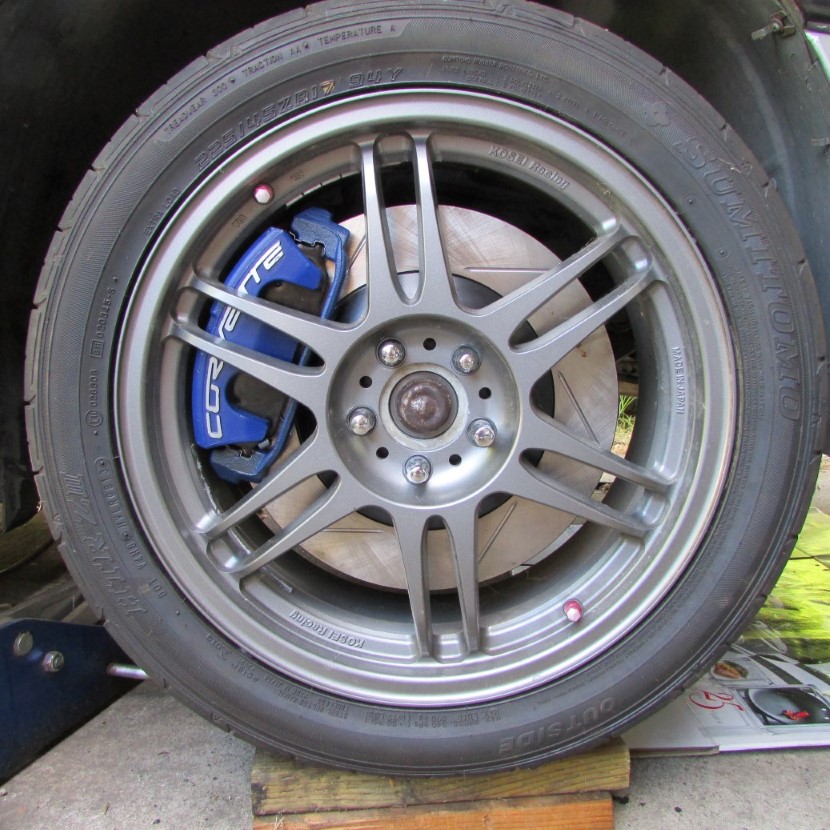
Been very happy with their performance and would definitely recommend them. The pads are stock C6 pads, whatever GM supplies. Stops a 2700lb car readily, over and over again. The crossdrilled ones you pictured appear to be a quality part with properly chamfered holes - those will help resist cracking. I would personally urge sticking with slotted rotors, though, as you'll get a better life out of them on the street without giving up any performance (if you find yourself on a wide open stretch of PCH.
Senior Member
Joined: Jul 2013
Posts: 213
Likes: 41
From: Sacramento
With certain pad material, slotting can help wipe away debris from between the pad and rotor as well as increasing the coefficient of friction between the rotor and the pad.
Slots are not "strictly to provide an escape path for gasses produced." They also help keep pads clean and improve pad:rotor contact.
Slotting is a very good technology and has clear and useful benefits, even in street applications. Every day? Probably not. But if you're going to use your XJR in anything approaching the way Jaguar intended, you very well may find it coming in handy time to time.
The old topic of drilled, slotted or blank, which is best is an old one and been done to death on many forums.... A lot will also say not to use cross drilled on the track but just the street.... There is only one I may say the fancy rotors won't improve much is if you are using ceramic based pads, they dont have the gassing issues.... However cross drilled are not just for outgassing but also for heat disapation..... You can find tons of info on the pros and cons for all types......
Easiest thing to do..... Look at what the big boys are doing.... Ferrari, Pagani, Lamborghini, McLaren..... 9/10 they are running cross drilled or grooved, admittedly most of these have carbon ceramic rotors which is a whole another ball game.....
So does having grooved or drilled discs give you any benefits, sure they do and they look cool....... Are they going to be a big improvement over a blank disc..... Debateable...... That is a contradiction but some improvement is better than none.....
I have slotted on my car, I love the look of cross drilled by too temperamental, they need maintenance, they squeal, they crack, they warp...... Are they worth it?.... I want to say no but so many of my customers have them and I can count on one hand how many have gone over to blank rotors, I would need a football team to count how many went for cross drilled.....
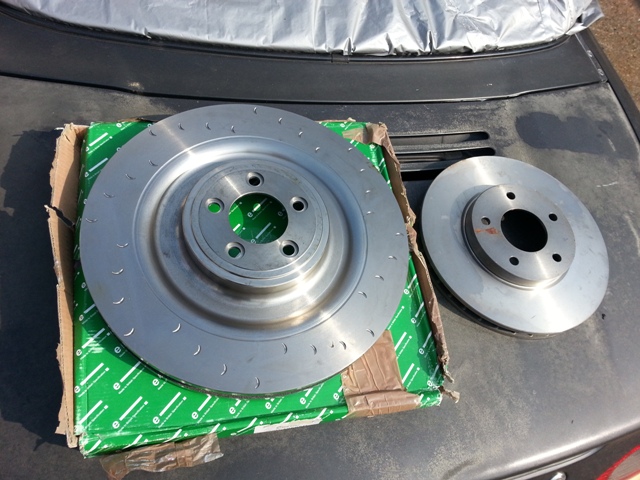
Just because I love this pic I thought i would add it on...... On the right is a standard XJR brake disc..... On the left is what I am using...... Thats big!
Easiest thing to do..... Look at what the big boys are doing.... Ferrari, Pagani, Lamborghini, McLaren..... 9/10 they are running cross drilled or grooved, admittedly most of these have carbon ceramic rotors which is a whole another ball game.....
So does having grooved or drilled discs give you any benefits, sure they do and they look cool....... Are they going to be a big improvement over a blank disc..... Debateable...... That is a contradiction but some improvement is better than none.....
I have slotted on my car, I love the look of cross drilled by too temperamental, they need maintenance, they squeal, they crack, they warp...... Are they worth it?.... I want to say no but so many of my customers have them and I can count on one hand how many have gone over to blank rotors, I would need a football team to count how many went for cross drilled.....
Just because I love this pic I thought i would add it on...... On the right is a standard XJR brake disc..... On the left is what I am using...... Thats big!
Last edited by XKRacer; Nov 18, 2014 at 06:55 PM.

Senior Member
Joined: Oct 2009
Posts: 558
Likes: 197
From: Paso robles
The number one issue with brakes in a racing situation, or very high speed driving ( as on the autobahn) is heat, that's the main reason for rotors with holes in them
They do run cooler but "good" rotors with holes in it are cast with the holes, not cross drilled after the fact.
Cross drilled rotors are for show and no serious racer ( been racing for most of my life) would use them.
They always cracks from holes to holes.
As for helping in releasing trapped gas , it's a non-issues with modern pads and slotted rotors.
They do run cooler but "good" rotors with holes in it are cast with the holes, not cross drilled after the fact.
Cross drilled rotors are for show and no serious racer ( been racing for most of my life) would use them.
They always cracks from holes to holes.
As for helping in releasing trapped gas , it's a non-issues with modern pads and slotted rotors.
Last edited by luc; Nov 18, 2014 at 08:10 PM.

Veteran Member


Joined: Oct 2010
Posts: 1,438
Likes: 169
From: New York
I have cross drilled rotors and steel brake line and blue brake fluid.
Definitely can tell the braking performance improvement immediately.
Also please consider good tire set counts a good part of braking also.
I had asteroid but changed to chrome senta wheels
Definitely can tell the braking performance improvement immediately.
Also please consider good tire set counts a good part of braking also.
I had asteroid but changed to chrome senta wheels
Last edited by vincent661983; Nov 19, 2014 at 05:49 PM.
Thread Starter
|
Senior Member
Joined: Nov 2014
Posts: 123
Likes: 29
From: Los Angeles CA
Haha! I should have known that this would spark up the old drilled vs. solid debate.
Let me be clear as to what my intentions are. My XJR is a weekend driver since I do not use it to commute to work. My driving style is spirited, but not reckless. I do not intend on driving on a track with this car. My main intention asking about crossdrilled rotors is based solely on looks. I figured they might give the big cat a bit more of a sporty look, hence why I asked for pictures. I know that they will not necessarily improve my braking capabilities. I do know that some crossdrilled rotors are prone to cracking, but I figure that Stoptech's are not that bad of quality to take a chance on.
Cheers!
Let me be clear as to what my intentions are. My XJR is a weekend driver since I do not use it to commute to work. My driving style is spirited, but not reckless. I do not intend on driving on a track with this car. My main intention asking about crossdrilled rotors is based solely on looks. I figured they might give the big cat a bit more of a sporty look, hence why I asked for pictures. I know that they will not necessarily improve my braking capabilities. I do know that some crossdrilled rotors are prone to cracking, but I figure that Stoptech's are not that bad of quality to take a chance on.
Cheers!

Thread
Thread Starter
Forum
Replies
Last Post
Ipc838
PRIVATE For Sale / Trade or Buy Classifieds
1
Sep 13, 2015 03:27 PM
Currently Active Users Viewing This Thread: 1 (0 members and 1 guests)