When you click on links to various merchants on this site and make a purchase, this can result in this site earning a commission. Affiliate programs and affiliations include, but are not limited to, the eBay Partner Network.
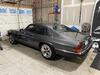
Installing a lower grill on my 1986, it hasnt been there as long as I have had the car.
definitely not a precision fit by any means.
the fasteners are giving me a challenge.
On my 1986 car, there is only 1 hole through the lower valence, right in the middle.
on the grill i got from ebay there is a center peg and 2 threaded studs on each side.
I drilled my lower valence to accept the 2 additional threaded studs but I now realize there is no way to access these studs once the grill is in place.
Were these threaded studs simply sitting there with no nut on the other end??
any ideas?
found details in service manual but it makes no mention of lower mounting points.
Got it on. Seems as though these things fit differently on every car. Had to make new holes on the sides as the self tapping screws werent even close to the oroginal holes.
Nice chin spoiler, is that factory and mine is missing, or was it added?
The only way the two studs can acquire nuts is if the radiator and AC condenser, or possibly bumper is removed. My grill just had threaded studs, no nuts, I didn't worry about it.
Nice chin spoiler, is that factory and mine is missing, or was it added?
The only way the two studs can acquire nuts is if the radiator and AC condenser, or possibly bumper is removed. My grill just had threaded studs, no nuts, I didn't worry about it.
Doug
Factory I do believe. I heard telling somewhere that it greatly helps to direct air into the radiator. Might want to add one to yours if you don't have it. This is all anecdotal though.
The spoiler was fitted on all XJ-Ss and XJSs (apart from XJR-Ss) from 1975 up until the intro of big-bumpers in 1993. Perhaps yours had been removed for paintwork etc?
Wow really Greg? I really wonder how that all works. Some not-negligible downforce? I always thought just for ramming air into the rads.
The air dam creates a low pressure area behind it that, the faster a car goes, the more negative pressure is generated. On the XJS the undertray is an integral part of the aerodynamic system, preventing the low pressure from dissipating until further back, thus creating a decent low pressure area. An air dam prevents a bubble of high pressure air forming under the front of a car and thus lifting the front. Incidentally, Rolls Royce were the first maker to fit an air dam to a production model.
This low pressure area on the XJS is such that air exiting the radiator actually flows downwards into the (decaying) low pressure area just behind the undertray. This airflow fact I happen to have proved with temperature readings from my own car. When I bought mine, it had no air dam or undertray and wandered about a bit at 120mph plus, particularly on lift-off of the accelerator (I assume as the high pressure air bubble lifting the front collapsed and the suspension re-compressed). Once the bits were fitted, it absolutely transformed the high speed stability.
True story: Phil Hill (the great US racing driver of the 1960s and first US driver to win the Formula 1 drivers world championship) was hired by Jaguar to help in the US launch of the XJS. He wanted to test the car and it was set up for him at Daytona. He had been told that the XJS high speed stability was superb; but he thought, and I quote 'that this was 2/3rds B/S and 1/3 wishful thinking'.
Well he found, and I quote again, that he could steer the car using one hand up and down the Daytona banking at 120+ mph with no bother at all.
The air dam and undertray were added during final product development, not that long before the launch.
Looking at that parts diagram, I see why my PN 15 and 16 have zip ties on the bottom connecting them to the lower valance. Obviously they used to connect to the under tray that is no longer there.
The C2 Corvette, 1963-1967, had a bad tendency to get really light in the front end at high speed, over 120 MPH, unless a chin spoiler was fitted by racers. The side view of the C2 body bears a resemblance to an airplane wing, the XJS probably has the same aero deficiency without the spoiler to disrupt the flow under the car, and also create a negative pressure under the car.
Most people would never notice as speeds beyond 90 MPH are usually not attempted.
Thank you for bringing both part deficiencies to my attention
A contemporary Jaguar Press release said:
“It is a roomy two-door with an all-steel monocoque body having entirely new aerodynamic styling including a front air dam (located under and just behind the front bumper) and an under-engine streamlining shield.”“The XJ-S was developed with the aid of wind tunnel tests on full sized cars and the air dam reduces front end lift tendency by 50 per cent. The under-engine shield cuts drag by 10 per cent. This contributes to faster acceleration, higher top speed, increased stability and better handling.”
I don't know that those are necessary, the grill doesn't move once the side screws are installed. I don't see them on the parts diagram. They won't hurt if you can make them fit.
I found an air dam/spoiler and under tray with brackets that are in good shape, those should be on their way to me tomorrow. I am glad I found out about those piece I didn't know i was missing.





 Lower grill - fasteners


