


Manual Trans Swap - is it worth it?


Thread Starter
|
Senior Member
Joined: Nov 2022
Posts: 214
Likes: 22
 Manual Trans Swap - is it worth it?
Hi everyone,
I often feel like our beautiful V12 is being held back by the automatic transmission. I've always wondered how it would perform with a manual swap. From what I’ve seen, it’s a $10k+ project using the simply performance TREMEC kit.
Does anyone here have experience with this kind of conversion? Is it truly worth the investment in terms of driving experience and performance? I'd love to hear your thoughts!
I often feel like our beautiful V12 is being held back by the automatic transmission. I've always wondered how it would perform with a manual swap. From what I’ve seen, it’s a $10k+ project using the simply performance TREMEC kit.
Does anyone here have experience with this kind of conversion? Is it truly worth the investment in terms of driving experience and performance? I'd love to hear your thoughts!


Veteran Member


Joined: Apr 2012
Posts: 2,291
Likes: 1,466
From: New York City
I've manual swapped all kinds of cars including Jag V12's and Supercharged inline 6's and all sorts of LS and SBC V8's. Yes, worth it to me, nothing beats a V12 and a manual. The v12 manual experience is one of most impactful experiences an Auto enthusiast can have.
It's not all wine and roses though, getting the right shifter and clutch action / feel and having it all work as a smooth and congruent experience is harder than it seems. After the manual swap, if done well... it will make the rest of the XJS fall apart, the suspension is too soft, the engine has no sound and doesn't 'rev or inspire above 4500 RPM and the brakes turn to mush after even short performance driving stints. The steering will feel vague when faced with the contrast of a modern and precise shifter. People often wonder why Jag didn't offer the V12 XJS as a manual from the factory, seems like a logical and fair question leading to a missed opportunity, but after the swap the answer becomes clear, the rest of the car falls apart. So if you go down this road you have to look at the swap as a complete vehicle system with consideration given to the other aspects too. Plan accordingly for suspension, wheels tires, exhaust, engine and chassis tuning is the form of firm bushings, rear IRS bracing etc.
Is it worth it for you? Only you can answer that. Figure on 10k and 1 year of work being a good starting point. 20k and 2 years even as a DIY project is easy to get to. What V12 manual semi custom and tailored to your needs could you buy otherwise for that price. The answer is none. V12 manual Astons, E-types, Ferraris, and BMWs will cost a multiple of that but if well cared for will appreciate. The converted Jag most likely wont appreciate all that much if at all.
It's not all wine and roses though, getting the right shifter and clutch action / feel and having it all work as a smooth and congruent experience is harder than it seems. After the manual swap, if done well... it will make the rest of the XJS fall apart, the suspension is too soft, the engine has no sound and doesn't 'rev or inspire above 4500 RPM and the brakes turn to mush after even short performance driving stints. The steering will feel vague when faced with the contrast of a modern and precise shifter. People often wonder why Jag didn't offer the V12 XJS as a manual from the factory, seems like a logical and fair question leading to a missed opportunity, but after the swap the answer becomes clear, the rest of the car falls apart. So if you go down this road you have to look at the swap as a complete vehicle system with consideration given to the other aspects too. Plan accordingly for suspension, wheels tires, exhaust, engine and chassis tuning is the form of firm bushings, rear IRS bracing etc.
Is it worth it for you? Only you can answer that. Figure on 10k and 1 year of work being a good starting point. 20k and 2 years even as a DIY project is easy to get to. What V12 manual semi custom and tailored to your needs could you buy otherwise for that price. The answer is none. V12 manual Astons, E-types, Ferraris, and BMWs will cost a multiple of that but if well cared for will appreciate. The converted Jag most likely wont appreciate all that much if at all.
Last edited by icsamerica; Dec 9, 2024 at 10:02 AM.



Veteran Member
Joined: Jan 2013
Posts: 5,252
Likes: 3,512
From: Calgary, Canada
Enthusiasts seem to like the idea of a manual, but don't buy enough of them new to make it financially viable for a manufacturer to make.
Senior Member
Joined: Jan 2022
Posts: 430
Likes: 203
From: Ontario Canada
Fall apart? I dont think so.
as long as you swap a mechanically sound xjs, its not going to fall apart simply because it is manual.
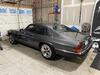
mine has a tkx, its great, drives beautifully. looks like it came like this from the factory. Totally different driving experience than the boring 3 speed, the auto handicaps the car.
it is a heavy car though, could use another 100hp
is the swap worth it? 100%
as long as you swap a mechanically sound xjs, its not going to fall apart simply because it is manual.
mine has a tkx, its great, drives beautifully. looks like it came like this from the factory. Totally different driving experience than the boring 3 speed, the auto handicaps the car.
it is a heavy car though, could use another 100hp
is the swap worth it? 100%

Member
Joined: Nov 2022
Posts: 34
Likes: 44
From: Melbourne
Yes yes yes
Hi everyone,
I often feel like our beautiful V12 is being held back by the automatic transmission. I've always wondered how it would perform with a manual swap. From what I’ve seen, it’s a $10k+ project using the simply performance TREMEC kit.
Does anyone here have experience with this kind of conversion? Is it truly worth the investment in terms of driving experience and performance? I'd love to hear your thoughts!
I often feel like our beautiful V12 is being held back by the automatic transmission. I've always wondered how it would perform with a manual swap. From what I’ve seen, it’s a $10k+ project using the simply performance TREMEC kit.
Does anyone here have experience with this kind of conversion? Is it truly worth the investment in terms of driving experience and performance? I'd love to hear your thoughts!


Veteran Member

Joined: Aug 2019
Posts: 1,240
Likes: 426
Hi everyone,
I often feel like our beautiful V12 is being held back by the automatic transmission. I've always wondered how it would perform with a manual swap. From what I’ve seen, it’s a $10k+ project using the simply performance TREMEC kit.
Does anyone here have experience with this kind of conversion? Is it truly worth the investment in terms of driving experience and performance? I'd love to hear your thoughts!
I often feel like our beautiful V12 is being held back by the automatic transmission. I've always wondered how it would perform with a manual swap. From what I’ve seen, it’s a $10k+ project using the simply performance TREMEC kit.
Does anyone here have experience with this kind of conversion? Is it truly worth the investment in terms of driving experience and performance? I'd love to hear your thoughts!
My current project has a 5 speed ( no overdrive) so the gear ratios are very close together. That allows me to switch gear ratios very quickly.
The car goes into the pits up on stands, I pull the rear plate off and slide the gears out. Choose which gears I want for the track I’m on. Slide them out and change which gears work better. Slide them back in, put the rear plate back on, refill the lube and 15 minutes after you arrive in the pits you’re ready to go back on track.
It’s a dog ring, designed to shift without the clutch. Throttle only.
Last edited by Mguar; Dec 10, 2024 at 08:14 AM.
Trending Topics

Veteran Member
Joined: Mar 2008
Posts: 25,529
Likes: 11,724
From: Pacific Northwest USA
And I agree.
But....it would depend a lot on just how fast you drive and just how hard to press the machinery.
Cheers
DD
Senior Member
Joined: Jan 2022
Posts: 430
Likes: 203
From: Ontario Canada
I think you have to be realistic. These are cars that were designed in the 70’s
it will never drive like a modern car. It is as good(or bad) as other cars of this era.
but with a manual, it is much more enjoying to drive.
it will never drive like a modern car. It is as good(or bad) as other cars of this era.
but with a manual, it is much more enjoying to drive.
Veteran Member
Joined: Apr 2012
Posts: 2,291
Likes: 1,466
From: New York City
Modern Transmission like the TKX shift with such clarity, precision and authority that it would quickly create mechanical dissonance with the rest of the XJS and it's designed in squishiness or lower levels of precision. Some enthusiast may not be bothered by this but some (many) would. The older 90's T5's and Getrag 265's were / are lot less precise and were a fine companion for the XJS as it was.
The 5.3 V12 if well tuned approximates 90% of the torque and power of the much more modern 5.3 LS. They're basically the same until 5000 RPM where the LS keeps building power for another 800 RPM. One could get the XJS to stretch and hang in there another 400 RPM with a free'r flowing exhaust.
The XJS suspension is very capable with some upgrades like those done to the DB7 which are mostly stiffer shocks and springs, stiffer bushing with shoulders and chassis braces. All difficult to apply as nothing off the shelf is available. The fundamentals of good suspension geometry haven't changed all that much since the 70's and the XJS suspension can be modernized but it will take creativity, time and money. Jag understood and applied these fundamentals very well at the time the XJS was developed becasue of their extensive success in racing during the 20 years prior. Case in point...., Consider the 2004 Aston Martin DB7 GT and it's still respectable 8:41 Nordschleife time. That was better than many full sports cars of the day. The suspension on that DB7 GT car is an slight evolution of the suspension in the XJS. You'd have to look hard to find the differences. Tire technology has continued to evolve considerably and I believe with modern tires that Nord'Ring time would be 30 seconds lower. DB7 GT or Vantage used the TR6060 and by all accounts was mechanically cohesive.
Brakes are also a difficult problem to solve as there's nothing bolt on for a XJS except for uprated pads and out board brakes from later XJ. Both would help greatly and reasonably practical to do.
Last edited by icsamerica; Dec 11, 2024 at 05:32 PM.

Junior Member
Joined: Oct 2024
Posts: 8
Likes: 1
From: Alicante
Congratulations. It is one of the most sincere and consistent testimonies I have read.
Accelerating faster and better is very satisfying. That the slippage that the gearbox brings with the stock car disappears and changing when the maximum torque is reached is a great feeling.
But... driving sportily and taming a v12 engine in a vehicle that behaves like a boat is another story.
Perhaps after trying the experience of improving thrust, there will be more enthusiasts who take the step of converting a passenger car into a car with more racing temperament than the original one.
Lived, the XJS is a sensational car
Accelerating faster and better is very satisfying. That the slippage that the gearbox brings with the stock car disappears and changing when the maximum torque is reached is a great feeling.
But... driving sportily and taming a v12 engine in a vehicle that behaves like a boat is another story.
Perhaps after trying the experience of improving thrust, there will be more enthusiasts who take the step of converting a passenger car into a car with more racing temperament than the original one.
Lived, the XJS is a sensational car
Senior Member
Joined: Jan 2022
Posts: 430
Likes: 203
From: Ontario Canada
I have a TKX in mine, I was definitely one of the first to do this(has anyone else installed one yet?)
The TKX works very well.
like i said earlier, make sure your car is in tip top shape and you wont have issues.
everything must be as new before you undertake one of these conversions otherwise your vehicles troubles will be magnified, not because of the manual swap but because you are likely driving it harder than you did with the auto box.
The TKX works very well.
like i said earlier, make sure your car is in tip top shape and you wont have issues.
everything must be as new before you undertake one of these conversions otherwise your vehicles troubles will be magnified, not because of the manual swap but because you are likely driving it harder than you did with the auto box.
Last edited by nickr76; Dec 12, 2024 at 07:13 AM.
Veteran Member
Joined: Aug 2019
Posts: 1,240
Likes: 426
Congratulations. It is one of the most sincere and consistent testimonies I have read.
Accelerating faster and better is very satisfying. That the slippage that the gearbox brings with the stock car disappears and changing when the maximum torque is reached is a great feeling.
But... driving sportily and taming a v12 engine in a vehicle that behaves like a boat is another story.
Perhaps after trying the experience of improving thrust, there will be more enthusiasts who take the step of converting a passenger car into a car with more racing temperament than the original one.
Lived, the XJS is a sensational car
Accelerating faster and better is very satisfying. That the slippage that the gearbox brings with the stock car disappears and changing when the maximum torque is reached is a great feeling.
But... driving sportily and taming a v12 engine in a vehicle that behaves like a boat is another story.
Perhaps after trying the experience of improving thrust, there will be more enthusiasts who take the step of converting a passenger car into a car with more racing temperament than the original one.
Lived, the XJS is a sensational car
For a modest fee just about any transmission shop can convert it from automatically shifting to one you have to select the next gear. ( no a clutch isn’t involved ) you just move the lever when you want to shift. Don’t be fooled, it’s still a 3 speed but a 3 speed with a torque converter.( the GM Turbo 400 only has a 2% slippage so it’s pretty crisp.
The 5 speed conversion gives you a lower 1st. Gear to help with the starts and an overdrive ( or 2) to slow the engine down while cruising. Probably gets better gas mileage.
Jegs, Summit racing, Speedway all sell the kit.
I don’t buy the kit because I just drop the valve body and do it in the bench. Go to U TUBE and enter manual conversion of a GM TURBO 400. There are several sites that show you how easy it is
A phone call to your local transmission shop will tell you if you need to buy the kit for them. And what they charge.
No, they don’t need to pull the transmission, just drop the pan, remove the valve body, and pull the modulator.
If they are asking more than $200 call someone else. Yes it’s reversible. Plus you’ll get a fluid change out of it which you’re supposed to do every 65,000 miles anyway. Oops, I probably should have aded the cost of several quarts of transmission fluid.
Last edited by Mguar; Dec 12, 2024 at 03:20 AM.
Veteran Member
Joined: Aug 2019
Posts: 1,240
Likes: 426
The XJS 'could' drive like a much more modern car with thoughtful upgrades to all systems. The fundamental's like good suspension geometry and a rigid chassis are there. This is not the case for other GT cars of the time. The problem is when you total up the time and money involved it just starts to make sense to choose a more modern 6 speed manual GT car so long as you don't 'need' that manual V12 experience. If you need the V12 manual experience and love the form of the XJS then upgrading all the other systems it's worth while.
Modern Transmission like the TKX shift with such clarity, precision and authority that it would quickly create mechanical dissonance with the rest of the XJS and it's designed in squishiness or lower levels of precision. Some enthusiast may not be bothered by this but some (many) would. The older 90's T5's and Getrag 265's were / are lot less precise and were a fine companion for the XJS as it was.
The 5.3 V12 if well tuned approximates 90% of the torque and power of the much more modern 5.3 LS. They're basically the same until 5000 RPM where the LS keeps building power for another 800 RPM. One could get the XJS to stretch and hang in there another 400 RPM with a free'r flowing exhaust.
The XJS suspension is very capable with some upgrades like those done to the DB7 which are mostly stiffer shocks and springs, stiffer bushing with shoulders and chassis braces. All difficult to apply as nothing off the shelf is available. The fundamentals of good suspension geometry haven't changed all that much since the 70's and the XJS suspension can be modernized but it will take creativity, time and money. Jag understood and applied these fundamentals very well at the time the XJS was developed becasue of their extensive success in racing during the 20 years prior. Case in point...., Consider the 2004 Aston Martin DB7 GT and it's still respectable 8:41 Nordschleife time. That was better than many full sports cars of the day. The suspension on that DB7 GT car is an slight evolution of the suspension in the XJS. You'd have to look hard to find the differences. Tire technology has continued to evolve considerably and I believe with modern tires that Nord'Ring time would be 30 seconds lower. DB7 GT or Vantage used the TR6060 and by all accounts was mechanically cohesive.
Brakes are also a difficult problem to solve as there's nothing bolt on for a XJS except for uprated pads and out board brakes from later XJ. Both would help greatly and reasonably practical to do.
Modern Transmission like the TKX shift with such clarity, precision and authority that it would quickly create mechanical dissonance with the rest of the XJS and it's designed in squishiness or lower levels of precision. Some enthusiast may not be bothered by this but some (many) would. The older 90's T5's and Getrag 265's were / are lot less precise and were a fine companion for the XJS as it was.
The 5.3 V12 if well tuned approximates 90% of the torque and power of the much more modern 5.3 LS. They're basically the same until 5000 RPM where the LS keeps building power for another 800 RPM. One could get the XJS to stretch and hang in there another 400 RPM with a free'r flowing exhaust.
The XJS suspension is very capable with some upgrades like those done to the DB7 which are mostly stiffer shocks and springs, stiffer bushing with shoulders and chassis braces. All difficult to apply as nothing off the shelf is available. The fundamentals of good suspension geometry haven't changed all that much since the 70's and the XJS suspension can be modernized but it will take creativity, time and money. Jag understood and applied these fundamentals very well at the time the XJS was developed becasue of their extensive success in racing during the 20 years prior. Case in point...., Consider the 2004 Aston Martin DB7 GT and it's still respectable 8:41 Nordschleife time. That was better than many full sports cars of the day. The suspension on that DB7 GT car is an slight evolution of the suspension in the XJS. You'd have to look hard to find the differences. Tire technology has continued to evolve considerably and I believe with modern tires that Nord'Ring time would be 30 seconds lower. DB7 GT or Vantage used the TR6060 and by all accounts was mechanically cohesive.
Brakes are also a difficult problem to solve as there's nothing bolt on for a XJS except for uprated pads and out board brakes from later XJ. Both would help greatly and reasonably practical to do.
With upgrades to the suspension you trade off a civilized ride for the rough, jarring race car ride. But you are still in a 4600 pound car.
To get it down to race weight everything needs to go. And below about 3500 pounds it gets damn crude. With a lot of metal replaced with carbon fiber and no HVAC at all
The potential power increase of a modern car engine is there. Properly done it will start, idle, and run smoothly.
The cost though is a function of time more than expensive parts. It’s done with a lap top and sorting through the various tables
MEGASQUIRT is a self learning system and will start and run as soon as everything is properly hooked up. ( easier than it sounds) getting maximum power is very straight forward. The hard part is all the transition stuff. I’ve never worked with A/C so I can’t even comment about those issues.
Last edited by Mguar; Dec 12, 2024 at 03:46 AM.
Veteran Member
Joined: Mar 2008
Posts: 25,529
Likes: 11,724
From: Pacific Northwest USA
It's a fair bet that anyone doing a manual trans conversion is interested in a higher performance driving experience....but that doesn't necessarily mean turning an XJS into a track car or driving at "9/10ths" at all times.
Whether manual or automatic an old XJS will benefit from suspension overhaul, brake system overhaul, etc.
These cars respond very well to minor upgrades which, IMO, would satisfy most owners. But, if you demand ever-increasingly more performance from the car then the weak areas of the design will become more apparent.
Cheers
DD

Veteran Member
Joined: Apr 2012
Posts: 2,291
Likes: 1,466
From: New York City
Here. In AMERICA you can buy Wilwood calipers and rotors. They sell everything from a slight upgrade to NASCAR Road Racing stuff YES it can be a simple bolt on TO A STATE OF THE ART RACING BRAKING SYSTEM.
With upgrades to the suspension you trade off a civilized ride for the rough, jarring race car ride. But you are still in a 4600 pound car.
To get it down to race weight everything needs to go. And below about 3500 pounds it gets damn crude. With a lot of metal replaced with carbon fiber and no HVAC at all
The potential power increase of a modern car engine is there. Properly done it will start, idle, and run smoothly.
The cost though is a function of time more than expensive parts. It’s done with a lap top and sorting through the various tables
MEGASQUIRT is a self learning system and will start and run as soon as everything is properly hooked up. ( easier than it sounds) getting maximum power is very straight forward. The hard part is all the transition stuff. I’ve never worked with A/C so I can’t even comment about those issues.
With upgrades to the suspension you trade off a civilized ride for the rough, jarring race car ride. But you are still in a 4600 pound car.
To get it down to race weight everything needs to go. And below about 3500 pounds it gets damn crude. With a lot of metal replaced with carbon fiber and no HVAC at all
The potential power increase of a modern car engine is there. Properly done it will start, idle, and run smoothly.
The cost though is a function of time more than expensive parts. It’s done with a lap top and sorting through the various tables
MEGASQUIRT is a self learning system and will start and run as soon as everything is properly hooked up. ( easier than it sounds) getting maximum power is very straight forward. The hard part is all the transition stuff. I’ve never worked with A/C so I can’t even comment about those issues.
Wilwood may have a caliper that kinda' fits but it wont be any batter then stock in anything other than appearance.
Top tip... if you want these cars to stop the low hanging fruit is in the rear setup. Jag setup the rear to basically be along for the ride so inexperienced drivers would be less apt to spin the car with a panic stab at the brake pedal. In modern cars setup for improved braking, ABS take care of that but Jag didn't up the rear brake bias all that much as they could have with the addition of ABS.
Last edited by icsamerica; Dec 12, 2024 at 09:06 AM.
Veteran Member
Joined: Jan 2013
Posts: 5,252
Likes: 3,512
From: Calgary, Canada
I'm thinking of this for my Daimler DS420, which needs all the brake it can get as it weighs an extra 2000 lbs over an XJ. Unfortunately I can't use the outboard brakes of the later cars, due to the semi fender skirt on the body. Anything bigger than the inboard hub carrier and I don't have enough clearance to install or remove the wheel. As it is now, on full droop I only have about 1/4" clearance between the tire and the fender to change a wheel.
Veteran Member
Joined: Aug 2019
Posts: 1,240
Likes: 426
Could you elaborate on what you might do? Is it simply adjusting the brake balance, or changing calipers in the rear?
I'm thinking of this for my Daimler DS420, which needs all the brake it can get as it weighs an extra 2000 lbs over an XJ. Unfortunately I can't use the outboard brakes of the later cars, due to the semi fender skirt on the body. Anything bigger than the inboard hub carrier and I don't have enough clearance to install or remove the wheel. As it is now, on full droop I only have about 1/4" clearance between the tire and the fender to change a wheel.
I'm thinking of this for my Daimler DS420, which needs all the brake it can get as it weighs an extra 2000 lbs over an XJ. Unfortunately I can't use the outboard brakes of the later cars, due to the semi fender skirt on the body. Anything bigger than the inboard hub carrier and I don't have enough clearance to install or remove the wheel. As it is now, on full droop I only have about 1/4" clearance between the tire and the fender to change a wheel.
There are remote bleeder kits available for the every 2 years brake fluid drain. Moss motors sells one.
The stock front brakes are fine for normal driving. Don’t go swapping in different calipers for some imagined superior braking. Unless you frequently race the car or tow heavy loads in mountains regularly.
Veteran Member
Joined: Apr 2012
Posts: 2,291
Likes: 1,466
From: New York City
Could you elaborate on what you might do? Is it simply adjusting the brake balance, or changing calipers in the rear?
I'm thinking of this for my Daimler DS420, which needs all the brake it can get as it weighs an extra 2000 lbs over an XJ. Unfortunately I can't use the outboard brakes of the later cars, due to the semi fender skirt on the body. Anything bigger than the inboard hub carrier and I don't have enough clearance to install or remove the wheel. As it is now, on full droop I only have about 1/4" clearance between the tire and the fender to change a wheel.
I'm thinking of this for my Daimler DS420, which needs all the brake it can get as it weighs an extra 2000 lbs over an XJ. Unfortunately I can't use the outboard brakes of the later cars, due to the semi fender skirt on the body. Anything bigger than the inboard hub carrier and I don't have enough clearance to install or remove the wheel. As it is now, on full droop I only have about 1/4" clearance between the tire and the fender to change a wheel.
Last edited by icsamerica; Dec 13, 2024 at 10:59 AM.

Veteran Member
Joined: Apr 2014
Posts: 4,579
Likes: 3,528
From: Kent, UK
If you're looking to change to outboard rear brakes, remember that the early outboard 4.0 cars have solid, not vented, rear discs. They only changed to vented ones in October 1994 at VIN 198335.
Paul
Paul