When you click on links to various merchants on this site and make a purchase, this can result in this site earning a commission. Affiliate programs and affiliations include, but are not limited to, the eBay Partner Network.
1. It needs the master brake cylinder replaced. The shop is telling me this would be about $1,400.
2. Most seriously, the transmission (GM 400) apparently has an internal leak that is affecting it working in reverse. It is very slow to go into reverse, jerks considerably and makes lots of unpleasant noises. None of the transmission shops around me will even consider working on it because of the age of the car.
I have no capability to "lift" the car to even get to the transmission, yet alone the slightest bit of knowledge on how to repair a transmission.
Is it time to say goodbye? And if so, how do people move a car in this condition along? Salvage yard, sell it as a parts car???
You can get a brand new master cylinder from Rock Auto for about $175. It is super simple to change as there is no ABS to worry about. Just change it, and bleed the brakes. Probably 1.5 hrs of labor, and another $20 for brake fluid. Any decent mechanic could do the work.
Any transmission shop can work on the tranny. Just tell them it's a TH400 GM transmission. One of the most common GM transmissions there was.
I have no capability to "lift" the car to even get to the transmission, yet alone the slightest bit of knowledge on how to repair a transmission.
Is it time to say goodbye? And if so, how do people move a car in this condition along? Salvage yard, sell it as a parts car???
Thanks,
John
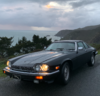
1987 XK-S V12
How's the rest of the car? If it is rusty, needs paint, and the interior is shot.....well, it's probably a basket case in terms of market value versus repair cost.
If the rest of the car is in good shape it might make a good project for a DIYer.
Generally, 'tis the cosmetics that put these cars over the edge as viable projects. The mechanicals are usually easier and much less expensive to sort out, assuming DIY labor.
Thanks for that! It gives me hope. I've never done a master cylinder before, but for that price I'll have a go at it.
I do tell each and every tranny shop I call that it's a GM400, but what seems to ward them off is the age of the car. I constantly hear "we don't work on anything earlier than 19XX".
Cosmetically it's in good shape. I just had it repainted 3 years ago. The bottom certainly has some rust issues, but I think it will be awhile before those are of major concern.
I guess if I get the brakes working property I can drive it and park it where I can pull straight out, which is probably safer anyway from a not-running-over-someone point of view.
There are a lot of Youtube videos on replacing a master cylinder. It's not hard at all, you just have to learn how to bleed them (bench bleeding being a good start before putting it back on the car followed by an additional bleed at the line connections. (Wash with water after to prevent the spillage from attacking the paint).
And yes the transmissioni is a specially cased GM TH400. I.e. all the guts are the SAME (although the external case isn't') as the most common cheapest easily rebuildable transmission in history (still will be near $1K for a full rebuild usually). The Torque Converter used on it is of the "Big Block" type with 6 lugs, and rebuilder supply that thing for around $160 if I recall correctly.
Check with a local Jag club to find a decent mechanic who will take the GM400 out.
If no Jag club in Indiana sure to be one in Chicago, not far away.
Once the GM400 is out of the car any transmission shop can fix it and they are not worried about the liability of dealing with an "old" car.
Then the mechanic can put it back in.
Only drawback is there are two entities you deal with if something goes wrong.
The easiest and most Stress Free Way that I have found to Bleed the Brakes on any XJS especially if you are doing it all on your own, though always start the the Caliper Bleed Nipple furthest away from the Master Cylinder
Also the same for those of you with the Teves MK1V ABS Master Cylinder Actuator, though if the Reservoir has Run Dry You Do Need to Bleed the Low Pressure Side of the System before you Bleed the Calipers or you won't be able to Bleed the Calipers properly if at all
I took my trans out just using jack stands and a jack. And a lot of cursing. Check out my build thread. But yes a real transmission shop (not an auto garage) can do it no problem. It's the labour not the parts that cost most of it.
I also put I a bigger stall torque converter as well and put in a kit to make it shift like a manual.
First off I'm going to concentrate on the master cylinder. Mine has a GIRLING unit in it. Rock Auto and the usual Jaguar places don't have master cylinders in stock.
In looking at the thing closer, the only place I can see a leak is where the front hose connects (see photo). It's not out of the question that the leak is at the hose/nipple connection. I'm not well versed on how master cylinders work (although I'm about to lean a lot), so I tried pumping the brake and watch that area to see if any fluid would come out. It didn't, but it may not work that way. Thinking about it more, since this is an unpressurized connection the leak the mechanic was taking about may be an internal one.
A typical failure of a master cylinder is not about leaks at the joints. It's about the cylindrical seals inside the chamber that fail. In simple terms, when you push the pedal a piston is then pushed down the master cylinder which forces fluid out of the ports to the wheel circuits. In order to have an interference fit there are rubber seals which force the fluid to pushed forward but then allow the piston to withdraw back via spring pressure when you release the pedal. Over time the seals will deteriorate this not making a tight fit in the cylinder. Then when you push the pedal it will just go soft as there is no resistance as the fluid is just running back over the seal and not being forced down the cylinder and out of the ports.
That's a typical failure, so you don't see anything on the outside.
Replacing the master in a non-abs car is not hard. Make sure all the bleeders are free before you start. Also bench bleed the master before you install it.



 time to give up on it???





 Indiana calling...