When you click on links to various merchants on this site and make a purchase, this can result in this site earning a commission. Affiliate programs and affiliations include, but are not limited to, the eBay Partner Network.
Technically the word is 'hygroscopic'.
As giandanielxk8 says the Brake fluid should be renewed every two years.
Even the 'included maintenance' that Jaguar provided in certain years got the 2 year renewal.
I can't seem to find any 2001MY onward Vehicle Maintenance Checklists but I do have them UP TO 2000MY.
We had to check off all items and present it to the service writer for the customer and service records.
Here is a 2000MY Vehicle Maintenance Checklist form number S,18,00.
Well you learn something new every day. . . I've been saying hydro (as in water) all my life - ouch. Hygro ( as in moisture in the air) is 100% correct.
You can check the moisture content of your brake fluid with an inexpensive tester. Here's a video showing OTC's version in use, but very similar testers are available for under $10 at eBay and Amazon:
With all the semantics of the root being from the Greek hygro (moisture) rather than hydro (water), the important thing to remember is the brake fluid specification is SuperDOT 4(non-mineral polyglycol based brake fluid) and not DOT 5 (silicone based) or DOT 5.1 (glycol based).
We could proceed to a "best brake fluid" competition but I'll just stick with Castrol.
... the important thing to remember is the brake fluid specification is SuperDOT 4(non-mineral polyglycol based brake fluid) and not DOT 5 (silicone based) or DOT 5.1 (glycol based).
Just to add to Graham's excellent point, some of the Jaguar service documentation refers to DOT 4+ brake fluid, but as far as I can tell, this nomenclature has been superseded by the term Super DOT 4, and the key difference vs. DOT 4 appears to be higher dry and wet boiling points. I've noticed that European suppliers carry Castrol React Performance DOT 4, which appears to be an equivalent to Super DOT 4, but I have not studied the MSDSs to confirm since I haven't found the Castrol product available from my normal U.S. suppliers. Pentosin Super DOT 4 is stocked by NAPA, Advance Auto and other chain stores in the U.S.
DOT 4LV is a low-viscosity fluid and so far I have not serviced a Jaguar for which it is specified.
DOT3 was introduced in 1967 but was superseded by DOT4 beginning with the 2006 model year. DOT 4 is today’s standard. Also polyethylene glycol-based with borate ester added which significantly raised the boiling points and added some lubricating properties. It also added corrosion protection by raising the fluid’s pH level. I'm REALLY liking the full syn Castrol.Oh, and 'wet' is just a 3% water content!
My understanding is that neither the ISO, SAE nor DOT has issued standards for DOT 4+/Super DOT 4, but several automakers specify its use in many of their vehicles, including Jaguar, Audi, Mercedes-Benz, Porsche, BMW/Mini and Land Rover. The apparent reason is that Super DOT 4 has significantly higher boiling points compared to DOT 4. Here's an excerpt from the Pentosin Super DOT 4 data sheet:
Note that the dry boiling point of Pentosin Super DOT 4 is 265C compared to the Castrol DOT 4 rating of 230C, and the wet boiling point is 165C vs. 155C.
Mr Bentwrench makes a great observation that it only takes 3% moisture to be "wet." As the numbers above prove, the difference in boiling point between dry and wet is not something to be ignored, and the reason most manufacturers dictate that brake fluid should be changed every two years regardless of mileage.
Absolutely, 2 years. Maybe stretch to 3 in a dry climate. I restore classic cars and I've lost count of how many brake master cylinders, wheel cylinders, clutch master and slave cylinders, calipers, that I've tossed in the scrap metal bin because they were too far gone to rebuild. And I'm guilty too. I have more cars than I can take care of; they're like potato chips. I can't just eat a few, rather I tend to polish off the whole bag. Last summer I found my Supra was pulling to the right during its monthly exercise. I could have sworn I'd flushed the brakes in 2016 and come to check the records, nope it was way back in 2012. That doesn't seem very long ago, especially as the car just sits in warehouse, but that was long enough to rust up the front calipers. Brake fluid is one to keep on top of.



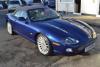
 Brake fluid change frequency


















 That doesn't seem very long ago, especially as the car just sits in warehouse, but that was long enough to rust up the front calipers. Brake fluid is one to keep on top of.
