


Explain 4.2 vs. 4.0 electric systems.


Thread Starter
|
Veteran Member


Joined: Jan 2018
Posts: 3,738
Likes: 2,332
From: on the road in NE Oklahoma
 Explain 4.2 vs. 4.0 electric systems.
Explain 4.2 vs. 4.0 electric systems…. like what is a VID Block, its purpose ?
Is the 4.2 X-100 electrical system really more complicated than the 4.0 system?
what about the immobilizer ? Does that have the power of life or death to the X-100’s ? Do all the cars have that “feature” ?
talk to me like you’re dealing with an average 7 year old
Z
Is the 4.2 X-100 electrical system really more complicated than the 4.0 system?
what about the immobilizer ? Does that have the power of life or death to the X-100’s ? Do all the cars have that “feature” ?
talk to me like you’re dealing with an average 7 year old
Z

Veteran Member

Joined: Apr 2014
Posts: 4,812
Likes: 3,025
From: Jersey, Channel Islands
OK, I'll have a stab...
In some areas, yes.
Here's three for starters.
Fuel delivery.
In our cars, the main pump runs flat out continually, and excess fuel does a round trip back to the fuel tank. In the 4.2L, the fuel pressure is sensed by the engine control module, which tells the fuel pump control module to adjust the power to the fuel pump to maintain a constant pressure. This means that the pump is only running hard enough to meet the demand.
IMO it's good engineering practice as it reduces overall power consumption and should extend the pump's working life. If only Jaguar had made the damn things easier to replace when they do finally croak
HID headlamps
There are ride height sensors back and front so the headlamps can auto-adjust dependent on the car's ride attitude. This is mandated by law.
Radiator fans
4.0L are two speed controlled by a trio of relays, 4.2L variable via a fan control module.
All cars bar the US '97 do. If the key isn't recognised, the car won't start. It is proof to some extent against theft/module swopping. In the 4.2L, it's taken to the next level of complexity.
I'm having a baptism of fire learning about this, so hopefully someone will chime in here if I've got something wrong.
The VID block is a data store that resides inside the ECM.
It contains the car's VIN, some configuration data specific to the ECM itself, configuration data for specific control modules, and also the VCATS code. This latter code is the vehicle's 'identity' e.g. model #, right or left hand drive, coupe or convertible, whether various options are fitted, etc. etc.
This information is programmed into each car on the assembly line.
In theory, the stored module configuration information is there to make it easier for the tech to program replacement modules - it's not used by the car for day-to-day running. The problem arises if that data gets corrupted. The car doesn't care unless or until that corrupted data gets programmed into a replacement module...
...which is probably where I'm at with this XKR
Here's three for starters.
Fuel delivery.
In our cars, the main pump runs flat out continually, and excess fuel does a round trip back to the fuel tank. In the 4.2L, the fuel pressure is sensed by the engine control module, which tells the fuel pump control module to adjust the power to the fuel pump to maintain a constant pressure. This means that the pump is only running hard enough to meet the demand.
IMO it's good engineering practice as it reduces overall power consumption and should extend the pump's working life. If only Jaguar had made the damn things easier to replace when they do finally croak
HID headlamps
There are ride height sensors back and front so the headlamps can auto-adjust dependent on the car's ride attitude. This is mandated by law.
Radiator fans
4.0L are two speed controlled by a trio of relays, 4.2L variable via a fan control module.
I'm having a baptism of fire learning about this, so hopefully someone will chime in here if I've got something wrong.
The VID block is a data store that resides inside the ECM.
It contains the car's VIN, some configuration data specific to the ECM itself, configuration data for specific control modules, and also the VCATS code. This latter code is the vehicle's 'identity' e.g. model #, right or left hand drive, coupe or convertible, whether various options are fitted, etc. etc.
This information is programmed into each car on the assembly line.
In theory, the stored module configuration information is there to make it easier for the tech to program replacement modules - it's not used by the car for day-to-day running. The problem arises if that data gets corrupted. The car doesn't care unless or until that corrupted data gets programmed into a replacement module...
...which is probably where I'm at with this XKR
Last edited by michaelh; Apr 7, 2026 at 03:56 PM.


Thread Starter
|
Veteran Member
Joined: Jan 2018
Posts: 3,738
Likes: 2,332
From: on the road in NE Oklahoma
OK, I'll have a stab...
In some areas, yes.
Here's three for starters.
Fuel delivery.
In our cars, the main pump runs flat out continually, and excess fuel does a round trip back to the fuel tank. In the 4.2L, the fuel pressure is sensed by the engine control module, which tells the fuel pump control module to adjust the power to the fuel pump to maintain a constant pressure. This means that the pump is only running hard enough to meet the demand.
IMO it's good engineering practice as it reduces overall power consumption and should extend the pump's working life. If only Jaguar had made the damn things easier to replace when they do finally croak
HID headlamps
There are ride height sensors back and front so the headlamps can auto-adjust dependent on the car's ride attitude. This is mandated by law.
Radiator fans
4.0L are two speed controlled by a trio of relays, 4.2L variable via a fan control module.
All cars bar the US '97 do. If the key isn't recognised, the car won't start. It is proof to some extent against theft/module swopping. In the 4.2L, it's taken to the next level of complexity.
I'm having a baptism of fire learning about this, so hopefully someone will chime in here if I've got something wrong.
The VID block is a data store that resides inside the ECM.
It contains the car's VIN, some configuration data specific to the ECM itself, configuration data for specific control modules, and also the VCATS code. This latter code is the vehicle's 'identity' e.g. model #, right or left hand drive, coupe or convertible, whether various options are fitted, etc. etc.
This information is programmed into each car on the assembly line.
In theory, the stored module configuration information is there to make it easier for the tech to program replacement modules - it's not used by the car for day-to-day running. The problem arises if that data gets corrupted. The car doesn't care unless or until that corrupted data gets programmed into a replacement module...
...which is probably where I'm at with this XKR
In some areas, yes.
Here's three for starters.
Fuel delivery.
In our cars, the main pump runs flat out continually, and excess fuel does a round trip back to the fuel tank. In the 4.2L, the fuel pressure is sensed by the engine control module, which tells the fuel pump control module to adjust the power to the fuel pump to maintain a constant pressure. This means that the pump is only running hard enough to meet the demand.
IMO it's good engineering practice as it reduces overall power consumption and should extend the pump's working life. If only Jaguar had made the damn things easier to replace when they do finally croak
HID headlamps
There are ride height sensors back and front so the headlamps can auto-adjust dependent on the car's ride attitude. This is mandated by law.
Radiator fans
4.0L are two speed controlled by a trio of relays, 4.2L variable via a fan control module.
All cars bar the US '97 do. If the key isn't recognised, the car won't start. It is proof to some extent against theft/module swopping. In the 4.2L, it's taken to the next level of complexity.
I'm having a baptism of fire learning about this, so hopefully someone will chime in here if I've got something wrong.
The VID block is a data store that resides inside the ECM.
It contains the car's VIN, some configuration data specific to the ECM itself, configuration data for specific control modules, and also the VCATS code. This latter code is the vehicle's 'identity' e.g. model #, right or left hand drive, coupe or convertible, whether various options are fitted, etc. etc.
This information is programmed into each car on the assembly line.
In theory, the stored module configuration information is there to make it easier for the tech to program replacement modules - it's not used by the car for day-to-day running. The problem arises if that data gets corrupted. The car doesn't care unless or until that corrupted data gets programmed into a replacement module...
...which is probably where I'm at with this XKR
Sounds like a mixed bag of complexity for the 4.2 vs. 4.0 . I’m very surprised that my 4.0 XKR’s original fuel pumps are still pumping away given the primary fuel pump is going full blast all the time for 205,300 miles. I’ve got detailed records but no mention of a fuel pump replacement.
Knock on wood.
back to the VID block, the 4.0 cars don’t have that feature, yes ? If that’s correct, what do the 4.0 cars have another way of cataloguing that data ?
I know the 4.0 XK8’s have some transmission reliability issues (A drum ?) but what about the 4.2 ? Did the new transmission come with more reliability, IDK, just curious.
Are the 4.2 fans on all the time to some degree, or only when the coolant temp (or A/C selection) requires it?
Z
Last edited by zray; Apr 7, 2026 at 06:52 PM.
Veteran Member
Joined: Apr 2014
Posts: 4,812
Likes: 3,025
From: Jersey, Channel Islands
I suspect that the VID block is an alien artefact - but it's a mechanism that allows Jaguar to ship out replacement modules unprogrammed rather than having to provide bespoke.
Not infallible, though
The 6HP of the 4.2L is better - I haven't read of many failures, although whether it quite matches the robustness of the Merc box, not sure.
*without the space. There appears to be a bug in the forum editor which drops in the odd space here and there. I've seen it in picture links where it breaks the URL.
Last edited by michaelh; Apr 7, 2026 at 07:49 PM.

Veteran Member

Joined: Oct 2010
Posts: 2,078
Likes: 1,033
From: Spain
The VID block does appear to contain all the information from the VCATS label (module part number plus 3 digit code) along with any options that have been programmed into the car. If Jaguar had made this an unerasable write once, read only bomb proof data block, that would have allowed people to "factory reset" their cars if something went wrong, or add a new module and update it to the correct configuration for the car. The way it does work it appears to be easy to corrupt that VID block, after which replacing a module becomes, well, impossible. In those circumstances the documentation talks about sending a floppy disc off to Jaguar to get the configuration file, hence why backing the VID block up when you have a working car is a very good idea.
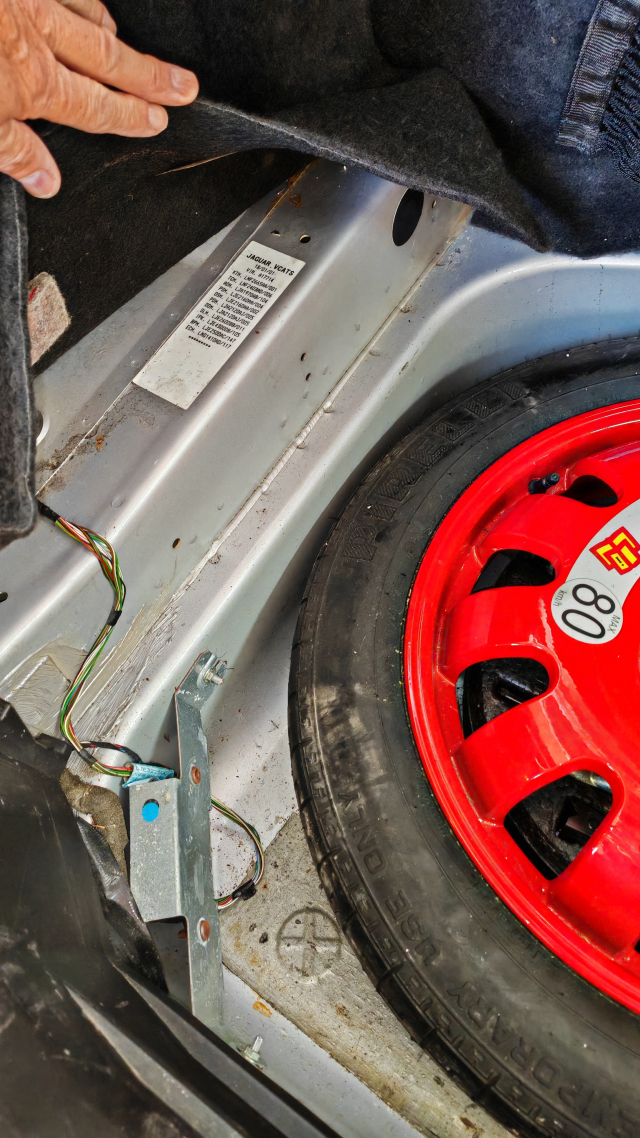
For 4.0 car owners our backup should consist of taking a photo of the VCATS label in the boot, or if you are old fashioned, writing it all down somewhere.
For 4.0 car owners our backup should consist of taking a photo of the VCATS label in the boot, or if you are old fashioned, writing it all down somewhere.
Thread Starter
|
Veteran Member
Joined: Jan 2018
Posts: 3,738
Likes: 2,332
From: on the road in NE Oklahoma
Z
Last edited by zray; Apr 8, 2026 at 06:37 AM.
Trending Topics


Thread
Thread Starter
Forum
Replies
Last Post
Currently Active Users Viewing This Thread: 1 (0 members and 1 guests)