


Lean codes across both banks RESOLVED


Veteran Member


Joined: May 2018
Posts: 2,156
Likes: 763
From: california

As far as egr goes, i am pretty sure the ecm does not command it's operation until the engine is under load...sitiing at idle or throttling up will not make it open...hook up a scan reader and watch how it works...i did it with my i930 because i was sceptical too...it also closes on decel and hard acceleration....mostly operational at light load and cruising

Thread Starter
|
Senior Member


Joined: Oct 2013
Posts: 735
Likes: 286
From: Las Vegas, NV, USA
As far as egr goes, i am pretty sure the ecm does not command it's operation until the engine is under load...sitiing at idle or throttling up will not make it open...hook up a scan reader and watch how it works...i did it with my i930 because i was sceptical too...it also closes on decel and hard acceleration....mostly operational at light load and cruising
I cannot confirm its functionality 100% but I can say that the monitor located in the Jag SDD software shows no movement despite what load is being placed on the engine.
I have some new information to add to the thread to see if maybe it points directly to the issue or maybe helps someone further down the road.
Today I was messing with the car for a while but wasn't at my shop so limited things to try to kill some time.
Currently, the car has a new Delphi MAF / IAT sensor in it and this sensor shows good balanced mixture under load and lean condition at idle.
So while I was noodling today I had the hood opened (of course) and my handheld code reader out in the engine bay area. As I watched, I noticed that the trims were settling back to quasi normal state both STFT and LTFT.
Puzzled by this, I decided to take her for a spin as maybe something fixed itself or I have an intermittent issue. Out of pure dumb luck, I noticed that once I closed the hood, the STFT's starting climbing quickly positive and of course the LTFT's followed along, eventually getting into the high teens. I thought something might be getting pinched by the hood and when I opened the hood up, the trims all start going negative back down to low, single digit numbers. I then lowered the hood without letting it contact anything and also monitored the IAT sensor and as the accumulated heat inside the engine bay got mixed into the equation, the trims all started going back up. Open the hood, settles back down, close the hood, they go back up. I checked everywhere for a possible answer to this but found none.
So I decided to swap back in the old Denso, MAF with anticipated results.
The Denso shows trims at idle in small, single digit numbers and then fuel added when engine is under load. The exact opposite to the Delphi sensor.
The other major factor in the Denso performance is the repeatable engine knock when under load. This did not happen with the Delphi sensor but both ultimately throw the lean codes. I suspect one does it at idle and the other does it under load.
In a total hissy-fit, I decided to disconnect the MAF altogether to see if the car would go into a pre-programmed MAF failure mode and it did. On first starting the car, it stalled immediately but fired up the second time.
Code reader showed -40 on the IAT and of course 0 on the MAF. What was very interesting were the trims. The STFT's were running up to double-digit number routinely but the LTFT number never got above 3.0 +/-. At idle, bank 1 showed 0.8 LTFT and bank 2 showed 2.4 LTFT. So this difference between banks could be explained by some additional vacuum leaks. I also noticed no knocking whatsoever under load and I also felt the idle was smoother but that may be a placebo.
Summary
Original Denso = acceptable LTFT at idle but unacceptable under load + engine knock under load (opened or closed hood did not affect trims)
New Delphi = double digit negative LTFT numbers at idle but acceptable numbers under load + LTFT and STFT numbers settle down with hood open but rise when hood closed at idle.
MAF disconnected = Best LTFT numbers at idle, no engine knocking and Best LTFT numbers under load. The STFT numbers do move around quite a bit but probably part of the programming.
My general assumption right now is that both the Denso and the new Delphi MAF sensors are bad since the trims with the MAF connected are within acceptable limits and the car runs and idles well.
Thoughts?
Last edited by razorboy; Feb 28, 2019 at 10:46 PM.
Veteran Member
Joined: May 2018
Posts: 2,156
Likes: 763
From: california
I have read and experienced myself about how these cars are finicky about the engine management system....if it is a denso sustem use denso parts....i had the pre cat o2 sensor acting up...i crossed it to a bosch that was available locally and installed it...after startup and 30 seconds running, it starting coughing and missing...i shut it off and had all of bank 1 with lean codes....did some searching and came across a few threads saying stick with oem parts...put the old one back in and ordered the more expensive denso from rock auto, and when installed, everything good again...i read up on the bosch sensor and it had the same functionality as the denso....strange to say the least...something is wrong with egr, but it not opening is more of an emmisions issue....i have read where some block off the egr and the car runs cooler
Last edited by scottjh9; Mar 1, 2019 at 03:59 PM. Reason: Addition
Thread Starter
|
Senior Member
Joined: Oct 2013
Posts: 735
Likes: 286
From: Las Vegas, NV, USA
I have read and experienced myself about how these cars are finicky about the engine management system....if it is a denso sustem use denso parts....i had the pre cat o2 sensor acting up...i crossed it to a bosch that was available locally and installed it...after startup and 30 seconds running, it starting coughing and missing...i shut it off and had all of bank 1 with lean codes....did some searching and came across a few threads saying stick with oem parts...put the old one back in and ordered the more expensive denso from rock auto, and when installed, everything good again...i read up on the bosch sensor and it had the same functionality as the denso....strange to say the least...something is wrong with egr, but it not opening is more of an emmisions issue....i have read where some block off the egr and the car runs cooler
My VVT seals came in yesterday (Ford parts) and I put them in. I then did some smoking and found some additional vacuum leaks around the throttle body so I did some work on that and got it pretty much tightened up. I felt that I tightened up enough of the leaks that I should see some improvement in the trims but nope - exactly the same and this is getting frustrating and time consuming now. If the vacuum leaks are accumulative, I believe I should have seen at least a small improvement. The ready answer would be that there is a vacuum leak big enough to override any small improvements but I tell you there isn't a leak big enough anywhere or else I would have found it by now.
Since I have a cold-air intake on my car, it is normal that the IAT temps will rise and fall due to the engine heat getting pulled into the system.
When I display my LTFT's and the IAT temp, I can watch the trims go up in line with the IAT temp. If I open the hood and let the intake suck in cooler air, the IAT temp drops and so do the LTFT trims. Hood open and my trims are down in the single digits but with the hood closed the trims just keep rising until I get up to the high teens. In closed loop but prior to the engine being fully up to temp (not much hot air in bay), my trims are really low (1% and 2.4% bank 1 / bank 2). Once the engine is at full operating temperature and soaking in heat, my trims are getting up to 16 and even 18% ! What I also notice is that my LTFT's are very quick to rise but very slow to drop. What I mean is if I drive the car while monitoring the trims, the short and long trims drop right into +/- 0 to 1 or 2%. If the STFT's show positive, the LTFT goes positive with it very quickly but if the STFT's go negative, the LTFT's don't follow quickly the other way. One other point I noticed was after disconnecting the battery and touching the cable leads together to erase the trims in the ECM, I started the car and watched the trims and both STFT's went very quickly to +25% while the LTFT's stayed at zero. Of course they eventually started balancing out but I was a bit taken back by how quickly the STFT's snapped to +25%. Although I am convinced I have vacuum leaks still, I don't think that there are enough to cause this type of activity. Even though the old Denso MAF is messed up for sure, I don't see this kind of LTFT rise based on IAT temps.
Most would simply take the car into a shop at this point and have it dealt with but I tell you, I am obsessed with finding the root cause here because like my transmission issues which plagued me for a long time before finally figuring out the issue (was wheel bearings), I feel that there is a code to crack here and a part that is simply malfunctioning. If it were solely based on a vacuum leak at this point, I would expect to hear a large sucking sound somewhere based on this trim activity
Stay tuned
Thread Starter
|
Senior Member
Joined: Oct 2013
Posts: 735
Likes: 286
From: Las Vegas, NV, USA
The 120.00 o-ring
RESOLVED!
I honestly don't even feel excited about this as the issue was so bloody convoluted from the beginning but at least I have a car that I can get through smog.
Here is a really quick summary. If you are having lean codes, there is a lot of data in the entire thread which may or may not be helpful but that's the way I roll. I document as much as I can for people down the road as finding quick answers to problems can be difficult.
So if you just scrolled right to the bottom here, I can tell you in brief fashion what happened.
1- Lean across both banks and codes thrown. This means I can't smog the car and I have a restricted performance warning coupled with some engine knocking under load. Not good
2- So begins the forum research looking for any ideas as to common problem areas.
3- Had new cam-cover gasket kit so went ahead and installed that thinking it was the issue. Hadn't done a lot of looking into the root cause of the problem at this point - no change
4- Now I went in and started to look at live data to watch trims. At idle, LTFT was great but would go lean as fuel was applied - so simple, i have a unmetered air leak
5- Searched and searched but couldn't find anything obvious so on a hunch went a purchased a new MAF sensor. Not original Denso but Delphi
6- Installed sensor and everything went to ****. Now I got high LTFT at idle but normal trims on throttle? Bizarre so I guess my old MAF was really messed up. I have a vacuum leak, not a unmetered air leak?
7- For hours and hours, I sought out vacuum leaks. I made a smoke machine to check the integrity of the system and did indeed find some smoke leaking out. Most notably at the lines on the throttle body, the VVT seals and the o-ring on the dipstick. All fixed up with zero change to the trims - WTF?
8- Could not find any other leaks and if I were being paid to do this, I would have amassed a fortune by now.
9- Kept going between the 2 MAF sensors wondering why the results were so different. Surely the old Denso was bad and the new part was giving me the proper intel right?
10- This morning after I wrote the post above, I decided to check one more time. I wanted to verify that the the trim number on the LTFT went up on both MAF's when the engine bay got soaked with engine heat. I knew for certain that was the case for the new Delphi MAF but I wasn't completely sure for the old Denso. I got to swapping the old unit back into the car.
11- In putting the old Denso back into the casing, I noticed that I struggled with it to slide it back in. There is a o-ring on it to make the seal and for whatever reason, I couldn't get it to slide in without a struggle. The new Delphi went in and out without issues so as I stood there, I had yet another automotive epiphany - could it really be?
12- Took the new o-ring off of my "non-returnable" new Delphi and placed it on the old Denso unit. Miraculously, the unit slid in nicely with the new o-ring so I buttoned it up and my brain was on-fire now.
13- Disconnected the battery and reset the ECM. Fired the car up and waited
14- Car got to nominal operating temp with trims sitting at 0.5 on bank one and 2.4 on bank two. Ok so maybe a little vacuum leak still somewhere on bank 2 but the issue won't reveal itself until I give the car pedal.
15- Pulled out of the drive and yup - you guessed it! Fuel trims never got over +/- 4%
So the issue all along was the o-ring on the MAF sensor itself. Now maybe it was leaking all along but it took some other leaks to develop on the engine before there was enough to force a code to be thrown. There is some margin on the trims +/- to account for an aging vehicle. What I had was a pretty large unmetered air leak right there at the MAF so how did this go undetected you ask? Its called redirect my friends. The purchase of the new Delphi unit which turned out to be a total piece of ****, sent me in a completely different direction, chasing down vacuum leaks while distracting me away from the real problem which was unmetered air at the intake. The smoke being pumped into the car would never have found the issue because I take the entire intake off and block the throttle body opening to put smoke pressure in the engine.
I don't know what advice to give anyone else other than to say that I will never - and I mean NEVER purchase a aftermarket sensor for this or any other car. The cost of time that went into this tail chasing problem, if calculated by what my time is worth, would have been enormous. I could have purchased dozens and dozens of new Denso MAF sensors with the money. There is a big difference in approach when looking for vacuum vs unmetered air leaks. So as stated on the Delphi package, once opened - the device cannot be returned so I will keep the o-ring from it which ultimately cost me 120.00 and way too much personal time.
Hopefully I have saved someone else time instead
I honestly don't even feel excited about this as the issue was so bloody convoluted from the beginning but at least I have a car that I can get through smog.
Here is a really quick summary. If you are having lean codes, there is a lot of data in the entire thread which may or may not be helpful but that's the way I roll. I document as much as I can for people down the road as finding quick answers to problems can be difficult.
So if you just scrolled right to the bottom here, I can tell you in brief fashion what happened.
1- Lean across both banks and codes thrown. This means I can't smog the car and I have a restricted performance warning coupled with some engine knocking under load. Not good
2- So begins the forum research looking for any ideas as to common problem areas.
3- Had new cam-cover gasket kit so went ahead and installed that thinking it was the issue. Hadn't done a lot of looking into the root cause of the problem at this point - no change
4- Now I went in and started to look at live data to watch trims. At idle, LTFT was great but would go lean as fuel was applied - so simple, i have a unmetered air leak
5- Searched and searched but couldn't find anything obvious so on a hunch went a purchased a new MAF sensor. Not original Denso but Delphi
6- Installed sensor and everything went to ****. Now I got high LTFT at idle but normal trims on throttle? Bizarre so I guess my old MAF was really messed up. I have a vacuum leak, not a unmetered air leak?
7- For hours and hours, I sought out vacuum leaks. I made a smoke machine to check the integrity of the system and did indeed find some smoke leaking out. Most notably at the lines on the throttle body, the VVT seals and the o-ring on the dipstick. All fixed up with zero change to the trims - WTF?
8- Could not find any other leaks and if I were being paid to do this, I would have amassed a fortune by now.
9- Kept going between the 2 MAF sensors wondering why the results were so different. Surely the old Denso was bad and the new part was giving me the proper intel right?
10- This morning after I wrote the post above, I decided to check one more time. I wanted to verify that the the trim number on the LTFT went up on both MAF's when the engine bay got soaked with engine heat. I knew for certain that was the case for the new Delphi MAF but I wasn't completely sure for the old Denso. I got to swapping the old unit back into the car.
11- In putting the old Denso back into the casing, I noticed that I struggled with it to slide it back in. There is a o-ring on it to make the seal and for whatever reason, I couldn't get it to slide in without a struggle. The new Delphi went in and out without issues so as I stood there, I had yet another automotive epiphany - could it really be?
12- Took the new o-ring off of my "non-returnable" new Delphi and placed it on the old Denso unit. Miraculously, the unit slid in nicely with the new o-ring so I buttoned it up and my brain was on-fire now.
13- Disconnected the battery and reset the ECM. Fired the car up and waited
14- Car got to nominal operating temp with trims sitting at 0.5 on bank one and 2.4 on bank two. Ok so maybe a little vacuum leak still somewhere on bank 2 but the issue won't reveal itself until I give the car pedal.
15- Pulled out of the drive and yup - you guessed it! Fuel trims never got over +/- 4%
So the issue all along was the o-ring on the MAF sensor itself. Now maybe it was leaking all along but it took some other leaks to develop on the engine before there was enough to force a code to be thrown. There is some margin on the trims +/- to account for an aging vehicle. What I had was a pretty large unmetered air leak right there at the MAF so how did this go undetected you ask? Its called redirect my friends. The purchase of the new Delphi unit which turned out to be a total piece of ****, sent me in a completely different direction, chasing down vacuum leaks while distracting me away from the real problem which was unmetered air at the intake. The smoke being pumped into the car would never have found the issue because I take the entire intake off and block the throttle body opening to put smoke pressure in the engine.
I don't know what advice to give anyone else other than to say that I will never - and I mean NEVER purchase a aftermarket sensor for this or any other car. The cost of time that went into this tail chasing problem, if calculated by what my time is worth, would have been enormous. I could have purchased dozens and dozens of new Denso MAF sensors with the money. There is a big difference in approach when looking for vacuum vs unmetered air leaks. So as stated on the Delphi package, once opened - the device cannot be returned so I will keep the o-ring from it which ultimately cost me 120.00 and way too much personal time.
Hopefully I have saved someone else time instead





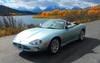
Veteran Member
Joined: May 2018
Posts: 2,156
Likes: 763
From: california
Wow...what an adventure huh...great job in keeping with it for a success....those trims are beautiful....the a/f ratio sensors switch so fast it is amazing...as you drive under varying loads they will adapt quickly...i i might have missed it, but do you have an n/a engine or supercharged

Veteran Member
Joined: Jan 2019
Posts: 1,907
Likes: 1,428
From: Bahrain
Now that’s perseverance... or stubbornness
Congrats,
totally agree with you on problems with after market parts. Basically with all the hours you put in, you spent USD120 for an O Ring. This must make you fume (pardon the smoking pun).
totally agree with you on problems with after market parts. Basically with all the hours you put in, you spent USD120 for an O Ring. This must make you fume (pardon the smoking pun).

Veteran Member

Joined: Jan 2009
Posts: 13,083
Likes: 4,740
From: Raleigh, NC
Denso MAF sensors are relatively inexpensive on amazon.com. I ordered a spare one a couple of years ago for about $62. I know it will eventually be needed. Never even considered another brand. As you discovered, it is simply not worth the pain and aggravation....
Here's hoping that your troubles are over and you will now enjoy many miles of trouble-free operation....
Here's hoping that your troubles are over and you will now enjoy many miles of trouble-free operation....

Veteran Member
Joined: Oct 2010
Posts: 2,086
Likes: 1,039
From: Spain
Did you notice any change in this behaviour when you were fault finding? My car revs to over 1400rpm on a cold start (when the air temp is around 17`C or so), which is higher than the elevated idle speed is supposed to be.

Veteran Member
Joined: Jan 2018
Posts: 3,751
Likes: 2,343
From: on the road in NE Oklahoma
The XK8 Denso's are relatively common, and reasonable priced as you point out. Too bad the Denso MAF's for the XKR are not as reasonable. But after reading this tale, I'm not going to stray into u known territory with a part of unknown quality.
Z
Z

Member
Joined: May 2019
Posts: 41
Likes: 21
From: Sunapee, NH
I have had my 2000 XK8 coupe with 72000 miles for about four weeks. Shortly after purchase I got the famous “reduced performance” message and check engine light. Performed scan test and found both P0171 and P0174 which were lean codes for bank 1 and 2. After reading through this Forum And finding many instances of owners with these lean codes I first checked for vacuum leaks used carb cleaner at first then set up a propane torch and continued leak tests. Didnt find anything definitive but noted oil leak at VVC solenoid seals on the cam covers. I replaced the seals and cleared the codes, the car would run anywhere from 15 minutes to an hour but then would go into fault mode for lean condition. I then cleaned the MAF sensor cleared codes again and car would go a bit further before setting codes again. I just replaced the MAF sensor with a Denso unit, cleared codes and now car is running great and no check engine light nor reduced performance. Can’t say enough about the value of this Forum if one owns an XK8 or XKR.

Thread
Thread Starter
Forum
Replies
Last Post
enhancedvibes
XJ XJ6 / XJ8 / XJR ( X350 & X358 )
10
Jul 1, 2018 03:06 AM
KarmaPolice
XJ XJ6 / XJ8 / XJR ( X350 & X358 )
35
Mar 17, 2016 08:05 PM
tuffy_tech
XJ XJ8 / XJR ( X308 )
2
Aug 17, 2008 07:58 PM
Currently Active Users Viewing This Thread: 1 (0 members and 1 guests)