When you click on links to various merchants on this site and make a purchase, this can result in this site earning a commission. Affiliate programs and affiliations include, but are not limited to, the eBay Partner Network.
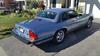
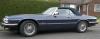
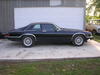
Who would have thought that the main challenge with driving a Jaguar XJS in the winter is that I can’t get into the @#$%%! car. I have a great touchless car wash nearby (5 miles) that gets all the ice, snow and salt off the car including an underbody wash. Unfortunately, both of my door locks are now frozen solid and while I can get a key in them, it is impossible to turn the key. Spraying WD40 into the key hole does not help either. When I locked the car last night, it felt that there was 'a click missing', so while the doors are shut, something did not engage and now it is jammed (metal on metal).
So I will spend my evening with an extension cord and a hair dryer in the driveway.
Now my question: Is there anything I can stick into the door locks before going to the car wash to keep the water out? It is a touchless carwash with pressure washers on steroids. I was thinking of a rubber plug or a piece of medical tape to cover the key opening. Any ideas? Or will the water get in through the door handle anyway?
I've held my key partially in the lock whilst using a cigarette lighter on the other end and freed many a frozen lock.... as for preventing water ingress something as simple as duct tape over the whole handle just before you drive in the car wash??
I'm not entirely sure what a touchless car wash is but here's a tip; don't!
Bucket, water, sponge.
Warm water, cold water, Evian: your choice.
What ever era of Jaguar that you have, or wherever that you live, do not subject it to pressurised water.
That way only tears and madness arise.
Buy some lock de-icer. Or the extreme way: spray some antifreeze into the lock. Then DON'T use WD40. WD40 is NOT a lubricant. Instead get some graphite spray and spray some of that in there. Done. Easiest was would be to avoid car washes in winter anyway and go when the temperatures are above freezing (dunno how many 'hundred' degrees Fahrenheit that would be, as only America uses that...). I managed to get frozen into my Volvo one time. After that, I made sure that I either dried the car off before driving away OR didn't wash until warm.
WD40 is only a rust solvant. It will not lubricate for long. And even then there are better products out there. I like to use Güsol, an aerospace and Airbus approved solvent which will undo ANY screw and nut... Just for te record.
WD40 has a wide reputation for usefulness. Most of the uses are not the best use of the product.
Poor at best as a rust preventative or lubricant.
It dates back to DOD spec's. A desicant. I have some in GI form.
It's been a while since I washed either of my steeds. Not going to, in the cold. although, a real freeze is seldom seen around here. A few night when the night dew on hard surfaces became a very thin layer of ice. Melted rapidly.
And, yes, graphite is the lube of choice for locks. Although, my local locksmith counseled, "clean and dry", no lube needed. I took my NOS
ignition switch with me when I had a duplicate key made.
Couple of suggestions. Not saying either of these work for this application but I'm throwing it out there anyway...
1) Covering a lock cylinder: Silly Putty. Since you said touchless car wash, that is. If it's truly touchless (meaning no rotating brushes) I think the silly putty will hold. Plumber's putty should also, but it doesn't come off as cleanly. Just grab a big handful, cover the lock and part of the handle before you roll into the wash.
2) Lubricating a lock: Gun oil. Make sure it's one-stage, though. I realize locksmiths preach dry graphite but I fixed the old locks on the building I work in (a bank) with a spray can of gun oil, purchased from a local Wal-Mart. About $6 for a can, I think, and that was two years ago and our locks work great. I've used the same product in several cars, Jags and not, with great results. It smells like WD-40 but it's something different. And I have no idea whether it will prevent freeze-up. The important part about getting a one-stage versus a two-stage oil is the two-stage will separate in the can. It's still better than nothing, though.
Take the little plastic plug you use to stick in electrical wall receptacles to child proof them and cut one of the plastic tangs off. The other tang should slide into the key slot, and the flat part will completely cover the lock area of the door handle. Second don't ever spray the water directly into the lock portion of a door handle as your only asking for trouble.



 Wanted: Trick for Covering Door Locks in Car Wash