When you click on links to various merchants on this site and make a purchase, this can result in this site earning a commission. Affiliate programs and affiliations include, but are not limited to, the eBay Partner Network.
I should have also mentioned that you can view Jaguar factory parts diagrams at jaguarclassiparts.com, the parts service of the Jaguar Daimler Heritage Trust.
You can download and install the Jaguar Electronic Parts Catalog (EPC) by following the directions in this thread:
Also, SNG Barratt has published really nice catalogs with parts diagrams in both print and pdf versions - check their website or email their customer service for details.
Ok, back to it. With work, 2 kids, and other projects (including rebuilding a trailer to use on the farm) I haven't been doing much with the Jag for a while, but now, it's on my to do list, finally.
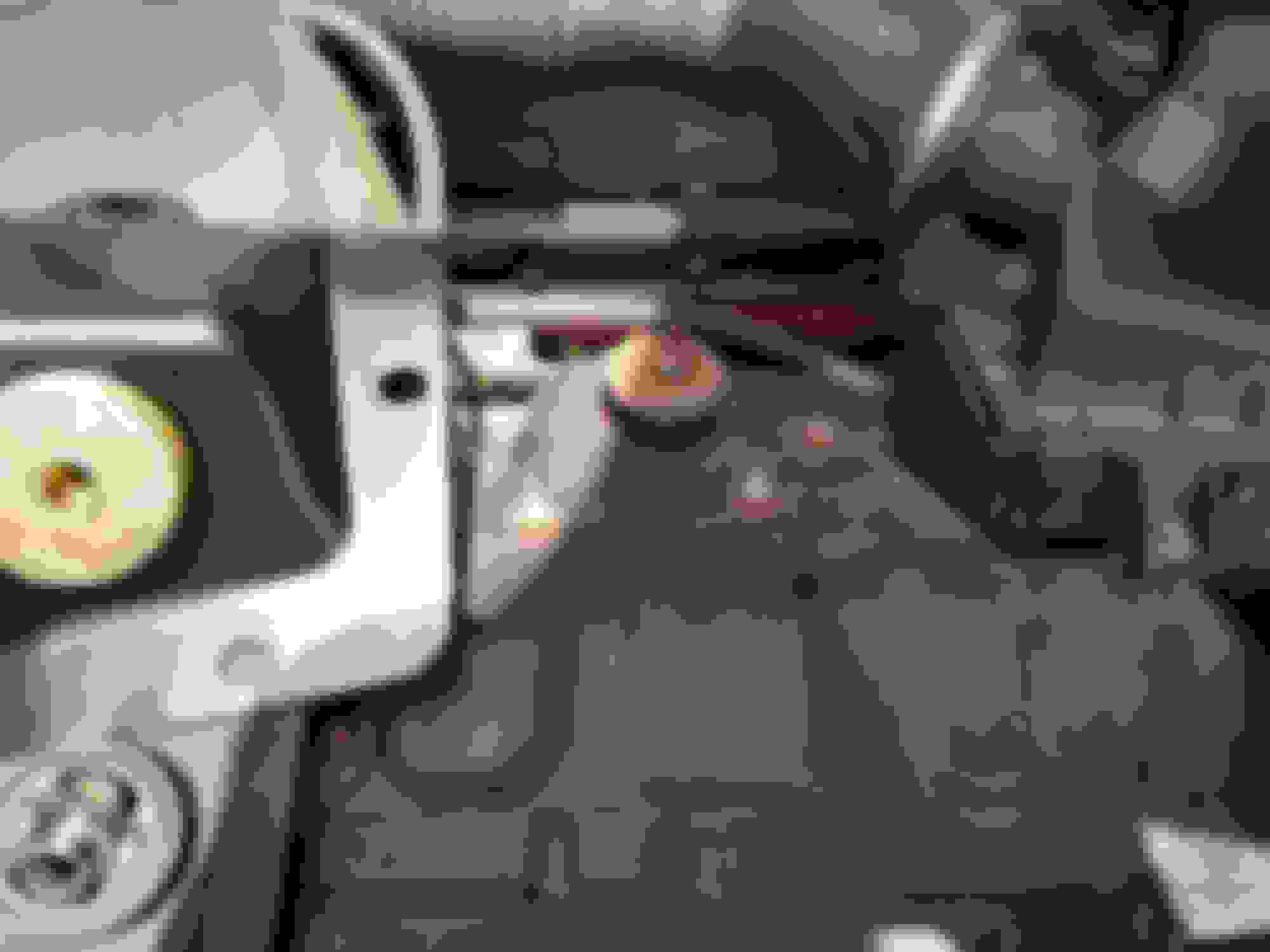
So, today, it was replacing the strut mounts. You can see from the before pics why they needed to be replaced. One question, for all the experts; do those top bolts require any specific torque or do they just tighten down snug? Also, do I need to use threadlocker on those? Thanks.
Something missing? I think you lose a little road feel with the dirt dauber nests. They don't really provide much support or shock absorption. Much nicer. The white is corn starch, there's a reason for that, I promise you.
I have lots of questions, hopefully you more educated guys can give me some answers. My mechanical ability is basic, oil changes, simple spark plug replacements, stuff like that.
I've got some coolant hoses to replace. All the bleed hoses on top are broken or brittle, so I have to change those so water stays IN the cooling system; I don't believe it does much to cool the engine pouring out onto the valve cover. I'm ordering the hoses from SNG Barratt. They have "aftermarket reproductions" for $24 and the OEM is $35+. Is there enough quality difference to justify the cost or are the less expensive ones just as good?
There's a big coolant leak that seems to be coming from the driver's side, below the coolant reservoir. Any ideas what that might be (I think it's a header tank, but I haven't dug into it down there yet)?
It's an '03. I've seen on some thread that it has metal timing chain tensioners and guides; is that so? Do I need to replace them as a prophylactic measure? If so is that (probably so) way beyond my ability?
That's all for now, I'll have some more questions as I go, but hopefully these will keep me busy for now.
...do those top bolts require any specific torque or do they just tighten down snug? Also, do I need to use threadlocker on those? Thanks.
Hi jjyergler,
It's great to see that you've been able to make progress on the Jag again!
There is an official torque specification for the shock absorber top nuts, but since most DIY mechanics and many pros do not own a torque wrench with box-end/ring-spanner or open-end wrench attachments, it's not feasible to hold the top of the shock shaft with a wrench and also fit a socket on the nut to apply the correct torque. So most of us just run the nuts all the way down till we feel the nut bottom out at the point it will no longer thread down any further, then just give it a good snug. If I recall, the torque spec is modest, about like snugging a spark plug. The nuts should have a Nylon insert to prevent them from backing off, so you should not need any threadlocker.
Originally Posted by jjyergler
All the bleed hoses on top are broken or brittle, so I have to change those so water stays IN the cooling system; I don't believe it does much to cool the engine pouring out onto the valve cover. I'm ordering the hoses from SNG Barratt. They have "aftermarket reproductions" for $24 and the OEM is $35+. Is there enough quality difference to justify the cost or are the less expensive ones just as good? [snip]
There's a big coolant leak that seems to be coming from the driver's side, below the coolant reservoir. Any ideas what that might be (I think it's a header tank, but I haven't dug into it down there yet)?
I've used plenty of the less-expensive aftermarket hoses and they seem to hold up just fine. The most likely culprit for your driver's side leak is what Jaguar humorously calls the "Lower Radiator Hose," but which owners commonly refer to as the "Octopus Hose," which is a far more appropriate name when you see what the beast looks like:
Originally Posted by jjyergler
It's an '03. I've seen on some thread that it has metal timing chain tensioners and guides; is that so?
I believe all '03s should have the 3rd generation tensioners from the factory; the VIN from which they were installed is known so I'll see if I can look it up if someone else doesn't beat me to it.
Thanks Don B., I'll be ordering that today, with the thermostat and housing and all the bleed hoses.
The bolts securing the strut mount I just tightened them down fully and the top nut I snugged down all the way.
I've been reading about the TransGo fix for the transmission. It seems like that's a semi-official consensus of the forum that for a transmission that isn't acting up, that is a must have is that so? I was going to have the transmission shop do a drain and fill and filter change. Should I talk to them about installing the TransGo kit while I'm at it?
It's an '03. I've seen on some thread that it has metal timing chain tensioners and guides; is that so? Do I need to replace them as a prophylactic measure? If so is that (probably so) way beyond my ability.
Originally Posted by Don B
I believe all '03s should have the 3rd generation tensioners from the factory; the VIN from which they were installed is known so I'll see if I can look it up if someone else doesn't beat me to it. Cheers,Don
The cutoff date is August 31st 2001. Engines built after that date are reported to have the MKIII metal tensioners. This is determined by the date the engine was manufactured, not the VIN of the car. The engine number is stamped on the left side of the engine block, and is visible with a flashlight upon removing the left front wheel. The engine number spells out the date and time of day of manufacture of the engine. (e.g. 310803 18:15 would indicate August 31 2003 @ 6:15pm) (UK lists day/month/year, not month/day/year as in the US). As yours is a 2003 it should be safely assumed that you have the metal tensioners, but it would be a good idea to check by removing the right valve cover and inspecting the upper tensioner on that side.
Originally Posted by jjyergler
I've been reading about the TransGo fix for the transmission. It seems like that's a semi-official consensus of the forum that for a transmission that isn't acting up, that is a must have is that so? I was going to have the transmission shop do a drain and fill and filter change. Should I talk to them about installing the TransGo kit while I'm at it?
I would, it is an easy install seeing as they will have the pan and filter removed during the transmission service. The Transgo pressure relieve valve is an inexpensive safeguard against "A" drum failure and many forum members have had this done.
Bleed hoses replaced. I ran it for about half an hour and couldn't find any leaks, there was still water in the tank. I drove it around the neighborhood and temp (according to my cheap Chinese OBD reader) never got over 200F.
Don B, mine doesn't have the "Octopus" hose, just a top and bottom hose. Of course, the "bottom" radiator hose goes from about halfway up the radiator to the thermostat housing, so I'm not sure why it is called the "bottom" hose. She's full of water/coolant and runs well.
Next step is the transmission drain and fill/TransGo installation. My local transmission shop is going to do that. Before I take her anywhere, though, I have to get that engine bay cleaned. So, that, along with a coolant flush is this weekend.
Cheers and Thanks to everyone who has given me advice. With your help, I'll get her back in shape.
Well, I drove her to work today (with a ride ready in case of a breakdown). Check engine light came back on, and "Restricted Performance" message was constant. I assume it needs a fuel filter after sitting so long, but that message would display before she sat for years. I'm going to run this tank dry and fill it with new. The good news is that the "Engine Coolant Low" never appeared and the temperature got up to normal operating temp and stayed constant, just under halfway between C and H. Also, replacing those strut mounts did wonders for the feel on the road and reduced the clanging from the front end while driving.
Rear shocks are gone and need replacement, valve cover gaskets are leaking, and I'll get the TransGo installed soon. So, I'm thinking that this old cat might be back on the road for good (or at least until something else breaks).
Now that I've got the front suspension quiet and safe, time to tackle the rear. It sounds and feels the same in the rear as the front did before I replaced the front shock mounting plates. Is there a similar mounting plate in the rear, I'm hoping to avoid needing brand new shocks right now. If there aren't shock mounting plates in the back, is there something else that will make the rear suspension rattle severely when going over bumps and feel a little loose?
Now that I've got the front suspension quiet and safe, time to tackle the rear. It sounds and feels the same in the rear as the front did before I replaced the front shock mounting plates. Is there a similar mounting plate in the rear, I'm hoping to avoid needing brand new shocks right now. If there aren't shock mounting plates in the back, is there something else that will make the rear suspension rattle severely when going over bumps and feel a little loose?
Hi jjyergler,
There is a mounting plate on the rears, but the bushings are not bonded to it, so normally it is just the bushings that need to be replaced. In the diagram below the assembly on the left is for the standard suspension, the one on the right is for the electronically adaptive CATS suspension. Parts 14/22 and 13/21 are cylindrical yellow foam rubber "isolators," and part 5 is the large yellow foam "spring isolator," often called the "donut." The lower shock "spherical joint" bushings, part 12/20, are also a known failure point. Unfortunately, these spherical joints have become harder to find and much more expensive, usually more per individual joint than for an entire new Bilstein shock that comes with the spherical joint and the upper cylindrical bushings, so it makes sense to just replace the entire shocks. Rock Auto currently has the standard non-CATS Bilsteins for $93.79 each and the Rein donut "coil spring seat/insulator" bushings for $20.79 each, plus shipping and tax. Two of each is all you usually need to rebuild the rears. The CATS shocks are almost three times the price of the standard ones.