


Sump tank - Vent Tube Conversion Kit


Thread Starter
|
Senior Member


Joined: Mar 2016
Posts: 318
Likes: 141
From: Hampshire, UK
 Sump tank - Vent Tube Conversion Kit
Does anyone know anything about this, why it was introduced, or if it's necessary?
Parts can be seen on the Jaguar parts catalog here, item 21:
Fuel Sump Tank - Parts For XJS from (V)139052 to (V)179736 | Jaguar Classic Parts UK
My car has this fitted, however I twisted the small pipe slightly when removing it form the sump tank so ordered what I thought was the replacement, but it doesn't have the vent tube option (I ordered part 15 instead of 22)
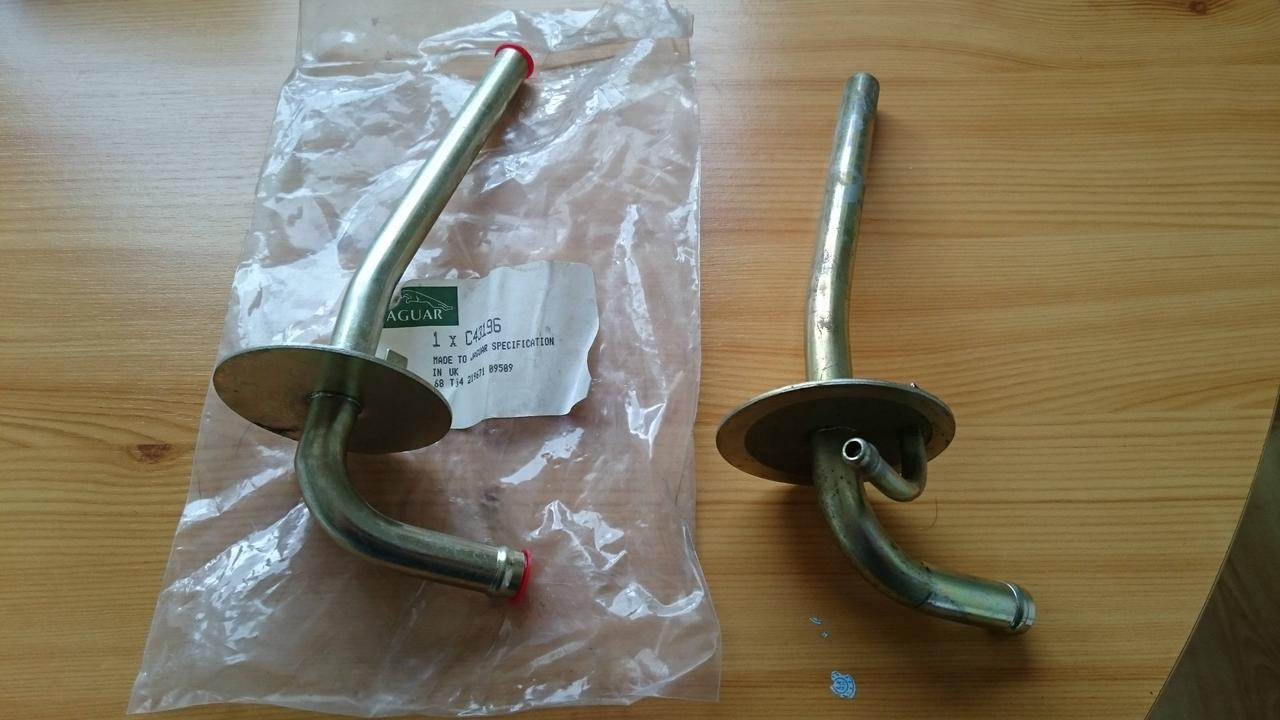
I think I get the theory, keep the sump tank purged of air, but in practice is it necessary? Or is it just emissions related?
I'm going to get rid of all the EVAP hardware in the offside rear buttress anyway as the Rochester valve leaks and the canister is rusted. I was going to tee all the vent lines together & vent outside the car.
Parts can be seen on the Jaguar parts catalog here, item 21:
Fuel Sump Tank - Parts For XJS from (V)139052 to (V)179736 | Jaguar Classic Parts UK
My car has this fitted, however I twisted the small pipe slightly when removing it form the sump tank so ordered what I thought was the replacement, but it doesn't have the vent tube option (I ordered part 15 instead of 22)
I think I get the theory, keep the sump tank purged of air, but in practice is it necessary? Or is it just emissions related?
I'm going to get rid of all the EVAP hardware in the offside rear buttress anyway as the Rochester valve leaks and the canister is rusted. I was going to tee all the vent lines together & vent outside the car.

Veteran Member
Joined: Jan 2012
Posts: 14,592
Likes: 10,788
From: France
Does anyone know anything about this, why it was introduced, or if it's necessary?
Parts can be seen on the Jaguar parts catalog here, item 21:
Fuel Sump Tank - Parts For XJS from (V)139052 to (V)179736 | Jaguar Classic Parts UK
My car has this fitted, however I twisted the small pipe slightly when removing it form the sump tank so ordered what I thought was the replacement, but it doesn't have the vent tube option (I ordered part 15 instead of 22)
I think I get the theory, keep the sump tank purged of air, but in practice is it necessary? Or is it just emissions related?
I'm going to get rid of all the EVAP hardware in the offside rear buttress anyway as the Rochester valve leaks and the canister is rusted. I was going to tee all the vent lines together & vent outside the car.
Parts can be seen on the Jaguar parts catalog here, item 21:
Fuel Sump Tank - Parts For XJS from (V)139052 to (V)179736 | Jaguar Classic Parts UK
My car has this fitted, however I twisted the small pipe slightly when removing it form the sump tank so ordered what I thought was the replacement, but it doesn't have the vent tube option (I ordered part 15 instead of 22)
I think I get the theory, keep the sump tank purged of air, but in practice is it necessary? Or is it just emissions related?
I'm going to get rid of all the EVAP hardware in the offside rear buttress anyway as the Rochester valve leaks and the canister is rusted. I was going to tee all the vent lines together & vent outside the car.
Q1: Where does fuel line no. 25 in the diagram go to in your car? If it is just a vent to the outside the fuel would just pour out, I think; but IF it is, then it I cannot see how it can matter as long as pipe 11 and the breather valve (see below) is OK. If it is not a vent, then please post again with where pipe 25 goes to.
Q2: As long as you have pipe 11 (which vents the sump tank to the top of the main tank via an invisible internal pipe in the main tank) you should be Ok subject to Q1's answer.
Getting rid of the evap stuff good plan, but it might be easier and better to block two of the three main tank outlets on the top RHJS and just use one of them. HOWEVER (and apologies if you already know this) it is very important to use a vacuum release/pressure release breather valve in that outlet, and best to get one with a rollover cutoff in case of turning over the car, mounted vertically above the tank top eg: https://www.merlinmotorsport.co.uk/p...-tails-m-trl88
Greg
Thread Starter
|
Senior Member
Joined: Mar 2016
Posts: 318
Likes: 141
From: Hampshire, UK
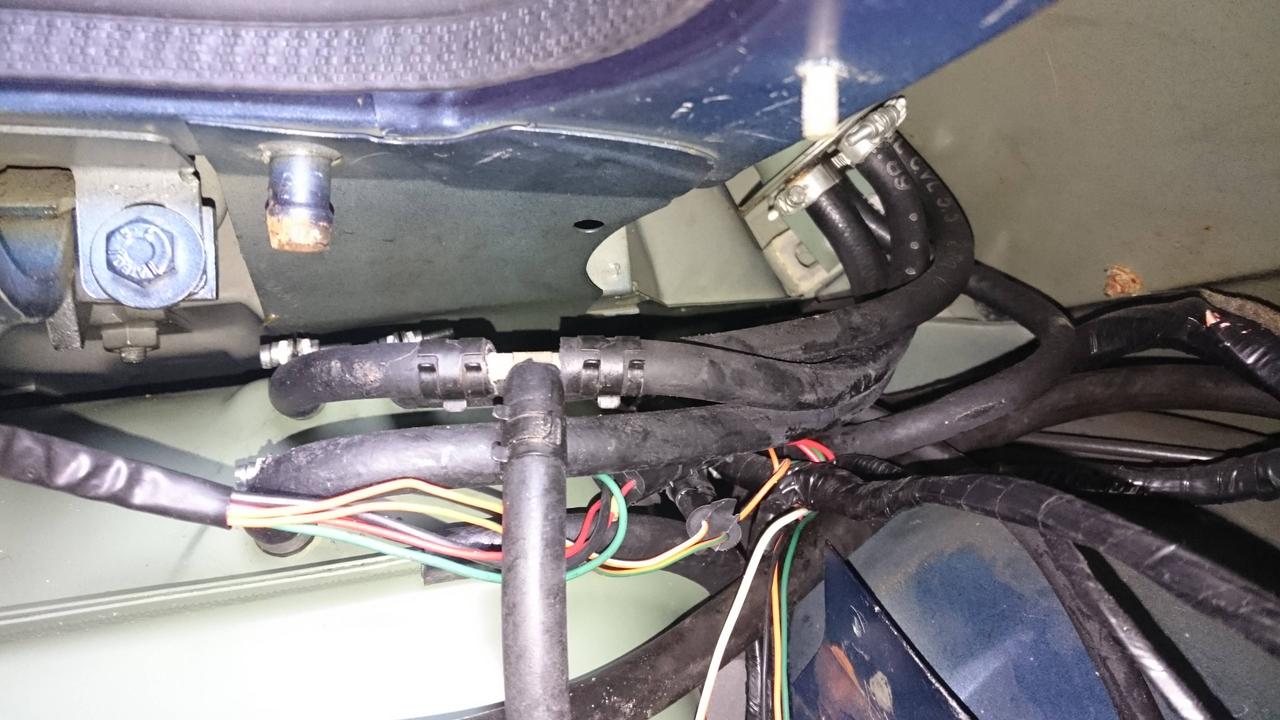
Fuel line 25 Tees into one of the 3 vent pipes in the top corner of the tank, between the tank & the small canister. Luckily I took lots of photos during disassembling everything in case I forgot something!:
I didn't realise pipe 11 was a vent, looks like pipe 25 doesn't do much then. Seems strange that Jaguar went to the trouble of adding it.
Greg, do all 3 of those vent pipes just open out into the top of the tank? I wasn't sure if one of them was a 'drain back' or not which ran internally to the bottom of the tank (and thus if I inadvertently chose it for a vent & blocked off the other two, I would just vent liquid fuel), so was going to tee them all together as a single high point & vent from that to be on the safe side.
Good tip on that valve, I didn't realise you could get purpose built ones.
I didn't realise pipe 11 was a vent, looks like pipe 25 doesn't do much then. Seems strange that Jaguar went to the trouble of adding it.
Greg, do all 3 of those vent pipes just open out into the top of the tank? I wasn't sure if one of them was a 'drain back' or not which ran internally to the bottom of the tank (and thus if I inadvertently chose it for a vent & blocked off the other two, I would just vent liquid fuel), so was going to tee them all together as a single high point & vent from that to be on the safe side.
Good tip on that valve, I didn't realise you could get purpose built ones.
Veteran Member
Joined: Jan 2012
Posts: 14,592
Likes: 10,788
From: France
Fuel line 25 Tees into one of the 3 vent pipes in the top corner of the tank, between the tank & the small canister. Luckily I took lots of photos during disassembling everything in case I forgot something!:
I didn't realise pipe 11 was a vent, looks like pipe 25 doesn't do much then. Seems strange that Jaguar went to the trouble of adding it.
Greg, do all 3 of those vent pipes just open out into the top of the tank? I wasn't sure if one of them was a 'drain back' or not which ran internally to the bottom of the tank (and thus if I inadvertently chose it for a vent & blocked off the other two, I would just vent liquid fuel), so was going to tee them all together as a single high point & vent from that to be on the safe side.
I didn't realise pipe 11 was a vent, looks like pipe 25 doesn't do much then. Seems strange that Jaguar went to the trouble of adding it.
Greg, do all 3 of those vent pipes just open out into the top of the tank? I wasn't sure if one of them was a 'drain back' or not which ran internally to the bottom of the tank (and thus if I inadvertently chose it for a vent & blocked off the other two, I would just vent liquid fuel), so was going to tee them all together as a single high point & vent from that to be on the safe side.
AFAICS there should be no problem at all just blocking off the pipe 25 exit from the sump tank and forgetting about it. Also AFAICS, that no 25 vent pipe up to the canister from the sump would be full of fuel to the same level as the fuel level in the main tank, quite a good plan to get rid of it! To be 100% sure all will be OK, detach pipe 11 from the sump tank and blow though it just to check it is not blocked inside the tank.
Greg
Last edited by Greg in France; Jun 17, 2016 at 02:25 PM.

Veteran Member

Joined: May 2010
Posts: 1,591
Likes: 439
From: S.E.LONDON
Its to make hot start problems less of a problem. I have some of the vented ones in stock which are no longer available from jag. If you do away with yours make sure you sort the T piece pipe out.
Last edited by rgp; Jun 17, 2016 at 04:56 PM.
Veteran Member
Joined: May 2010
Posts: 1,591
Likes: 439
From: S.E.LONDON
Q1: Where does fuel line no. 25 in the diagram go to in your car? If it is just a vent to the outside the fuel would just pour out, I think; but IF it is, then it I cannot see how it can matter as long as pipe 11 and the breather valve (see below) is OK. If it is not a vent, then please post again with where pipe 25 goes to.
Q2: As long as you have pipe 11 (which vents the sump tank to the top of the main tank via an invisible internal pipe in the main tank) you should be Ok subject to Q1's answer.
Getting rid of the evap stuff good plan, but it might be easier and better to block two of the three main tank outlets on the top RHJS and just use one of them. HOWEVER (and apologies if you already know this) it is very important to use a vacuum release/pressure release breather valve in that outlet, and best to get one with a rollover cutoff in case of turning over the car, mounted vertically above the tank top eg: https://www.merlinmotorsport.co.uk/p...-tails-m-trl88
Greg
Q2: As long as you have pipe 11 (which vents the sump tank to the top of the main tank via an invisible internal pipe in the main tank) you should be Ok subject to Q1's answer.
Getting rid of the evap stuff good plan, but it might be easier and better to block two of the three main tank outlets on the top RHJS and just use one of them. HOWEVER (and apologies if you already know this) it is very important to use a vacuum release/pressure release breather valve in that outlet, and best to get one with a rollover cutoff in case of turning over the car, mounted vertically above the tank top eg: https://www.merlinmotorsport.co.uk/p...-tails-m-trl88
Greg
wont come out of the breather as it would be at the top. Lol
Veteran Member
Joined: Jan 2012
Posts: 14,592
Likes: 10,788
From: France
The valves you are talking about Greg are only suitable for middle range fuel consumption cars and can cause breathing probs on motorways etc.i actually just run straight pipe out throu the floor now and if I turn the car on its roof, shudder the thought, fuel
wont come out of the breather as it would be at the top. Lol
wont come out of the breather as it would be at the top. Lol
But, there again, there is no substitute for experience! I guess that as long as your bare outlet has a small ID like the OEM, the evaporative losses would not be too bad, say 2 mm? What diameter are you using?
Greg
Trending Topics
Veteran Member
Joined: May 2010
Posts: 1,591
Likes: 439
From: S.E.LONDON
That is interesting, has a starvation actually happened to you Rex? I only ask because the OEM standard pipe, that on our UK models vents to air via the Rochester valve, has an absolutely tiny ID. I would have guessed that as long as you can blow through the inline valve pretty easily, it will be fine. All the racers have to use them as a safety matter or fail scrutineering. I know some of the valves that bolt directly to the tank have this flow-rate warning, but I had not heard that decent quality larger inline ones were a problem.
But, there again, there is no substitute for experience! I guess that as long as your bare outlet has a small ID like the OEM, the evaporative losses would not be too bad, say 2 mm? What diameter are you using?
Greg
But, there again, there is no substitute for experience! I guess that as long as your bare outlet has a small ID like the OEM, the evaporative losses would not be too bad, say 2 mm? What diameter are you using?
Greg
Actually I have the 2 small breather outlets joined with a brass T 6mm pipe going through the floor where the battery breather would have gone, but you've got me worried now whether I should go down in size for the outlet,
Last edited by rgp; Jun 18, 2016 at 03:46 AM.
Veteran Member
Joined: Jan 2012
Posts: 14,592
Likes: 10,788
From: France
Rex
I have just phoned Merlin on my free-at-the-point-of-use telephone. This one flows 0.6 of a litre a second, so that will take care of even a V12 at full chat!
https://www.merlinmotorsport.co.uk/p...-tails-m-trl88
Greg
I have just phoned Merlin on my free-at-the-point-of-use telephone. This one flows 0.6 of a litre a second, so that will take care of even a V12 at full chat!
https://www.merlinmotorsport.co.uk/p...-tails-m-trl88
Greg
Veteran Member
Joined: May 2010
Posts: 1,591
Likes: 439
From: S.E.LONDON
Rex
I have just phoned Merlin on my free-at-the-point-of-use telephone. This one flows 0.6 of a litre a second, so that will take care of even a V12 at full chat!
https://www.merlinmotorsport.co.uk/p...-tails-m-trl88
Greg
I have just phoned Merlin on my free-at-the-point-of-use telephone. This one flows 0.6 of a litre a second, so that will take care of even a V12 at full chat!
https://www.merlinmotorsport.co.uk/p...-tails-m-trl88
Greg
update
just lined the 6mm pipe with 4mm od windscreen washer tubing it fits perfectly in the T and reduces the pipe to 2mm give or take,
Last edited by rgp; Jun 19, 2016 at 03:41 AM.

Thread
Thread Starter
Forum
Replies
Last Post
simeonbalsam
XK / XKR ( X150 )
2
Mar 27, 2016 09:33 AM
Uncle Fishbits
F-Type ( X152 )
2
Mar 24, 2016 06:20 PM
Currently Active Users Viewing This Thread: 1 (0 members and 1 guests)

