When you click on links to various merchants on this site and make a purchase, this can result in this site earning a commission. Affiliate programs and affiliations include, but are not limited to, the eBay Partner Network.
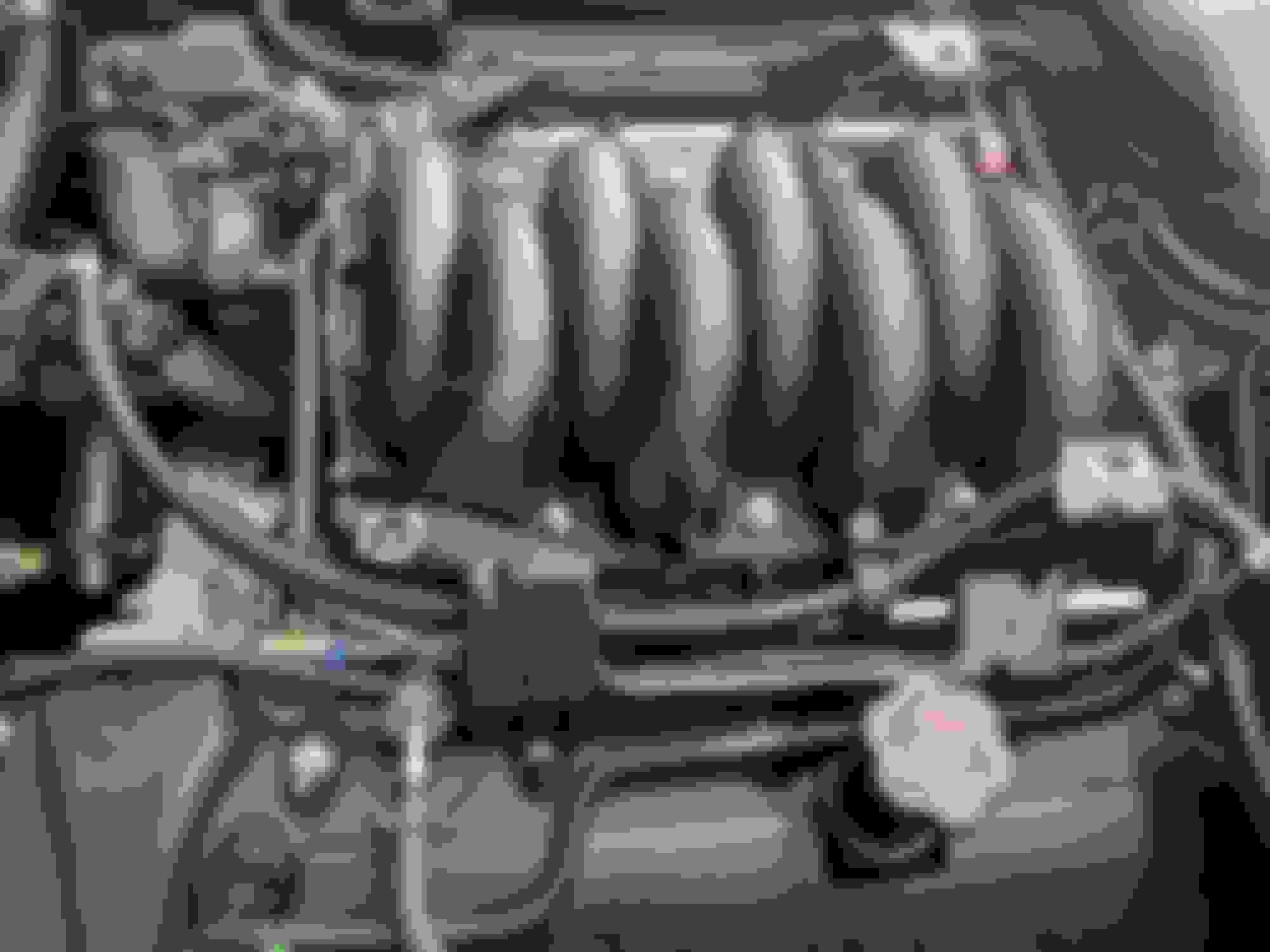
Regarding the hose that runs from the coolant reservoir, forward to the thermostat housing. What could be the reason for this design?
It’s 5 inches of rubber fuel line, then a plastic hose that gets brittle, then 5 inches of rubber fuel line. And, 4 hose clamps.
They could have used a rubber fuel line for the entire length, and use 50% less hose clamps.
Less labor too, since you wouldn’t have to have a worker assemble the hose.
What do you think?
There’s a lot of really smart people on this forum. Please help me understand this.
Not sure that is original? I have a section of clear garden hose like material in my coolant line if that helps and that obviously isn't standard, it works though.
Yes, it’s the factory hose. I’ve ordered a new one from the dealer and it is the same. You’d think there’s some reason for this design. I want to know what that reason is.
Yes, the plastic gets brittle, but the rubber wears and degrades worse.
my hose(s) are all original and still in good condition. I try to extend their longevity by opening the hood when the car is at rest and engine off so the hoses don’t heat soak. I also wipe the rubber hoses down with a cloth sprayed with a silicone spray. That helps with oxidation. Thats no help with the plastic hose, but often it’s rough disassembly that cracks them. Sometimes it can’t be helped to break one , but just as often a little care will be helpful. I was fortunate that my reservoir came off without stressing the hoses too much.
On my wife's 2006 XK8, I threw that brittle hose assembly away years ago and replaced it with the proper length and diameter of rubber coolant hose. That replacement hose lasted perhaps five years before it cooked enough in the engine bay heat to become hard and inflexible. I replaced it again with more rubber coolant hose perhaps two years ago which is still holding up for now....
Yes, the plastic gets brittle, but the rubber wears and degrades worse.
my hose(s) are all original and still in good condition. I try to extend their longevity by opening the hood when the car is at rest and engine off so the hoses don’t heat soak. I also wipe the rubber hoses down with a cloth sprayed with a silicone spray. That helps with oxidation. Thats no help with the plastic hose, but often it’s rough disassembly that cracks them. Sometimes it can’t be helped to break one , but just as often a little care will be helpful. I was fortunate that my reservoir came off without stressing the hoses too much.
Z
I have always opened my hood every time I return to my house! I’ve always believed that it helps extend the life of everything under the hood. I even removed the engine cover because it holds in heat and I prefer to see the engine.
I broke the plastic line because the rubber hose would not release from the reservoir.
Yes, it does seem like something that would look and function better if it was made out of metal...
It can't be too hard to mandrel bend a tube of metal and use hose ends like the original to attach it to the thermostat tower and expansion tank. Copper seems like it would be easy to use, however, I worry about the effect of copper ions in the cooling system.
“…..I broke the plastic line because the rubber hose would not release from the reservoir.
sometimes one just needs a little luck, but that could be helped along by parts that would last 30 years instead of 10. I doubt the Jag designers had us in mine when they put a longevity timer on these cars.
They do it because they are easy to manufacture, very cheap to manufacture, and will last the life of the warranty. That's it. Beyond the warranty is somebody else's problem.
I see this stuff all the time with cars, especially the high-end Euromobiles. Porsche has some real head scratchers. Cheap-a$$ plastic parts, where a metal one would be much better, on a car that costs six figures.
There is no answer to your question. Engineers make decisions based on the information available at the time, the standards of the company, and the constraints of the project.... maybe there were cost constraints, maybe this part was re-used from another vehicle to save making new tooling, maybe they didn't have enough time to design something better, or maybe this was the best option they had available. Maybe there's nothing wrong with the part according to Jaguar standards and your expectations of a 20-year-old plastic part are too high.
Second guessing the why behind an engineering decision made 20 years ago is a fruitless endeavour and just breeds cynicism like the post before mine.. a decision was made and you've got the part you've got. The 'why' doesn't help anything, just replace it and move on.
When I replaced the water pump on my 4.2L that plastic line broke during the process so I replaced it with a proper hose, protective casings and a clamp to hold it in place.
When I replaced the water pump on my 4.2L that plastic line broke during the process so I replaced it with a proper hose, protective casings and a clamp to hold it in place.



 Why did Jaguar use this hose?