When you click on links to various merchants on this site and make a purchase, this can result in this site earning a commission. Affiliate programs and affiliations include, but are not limited to, the eBay Partner Network.
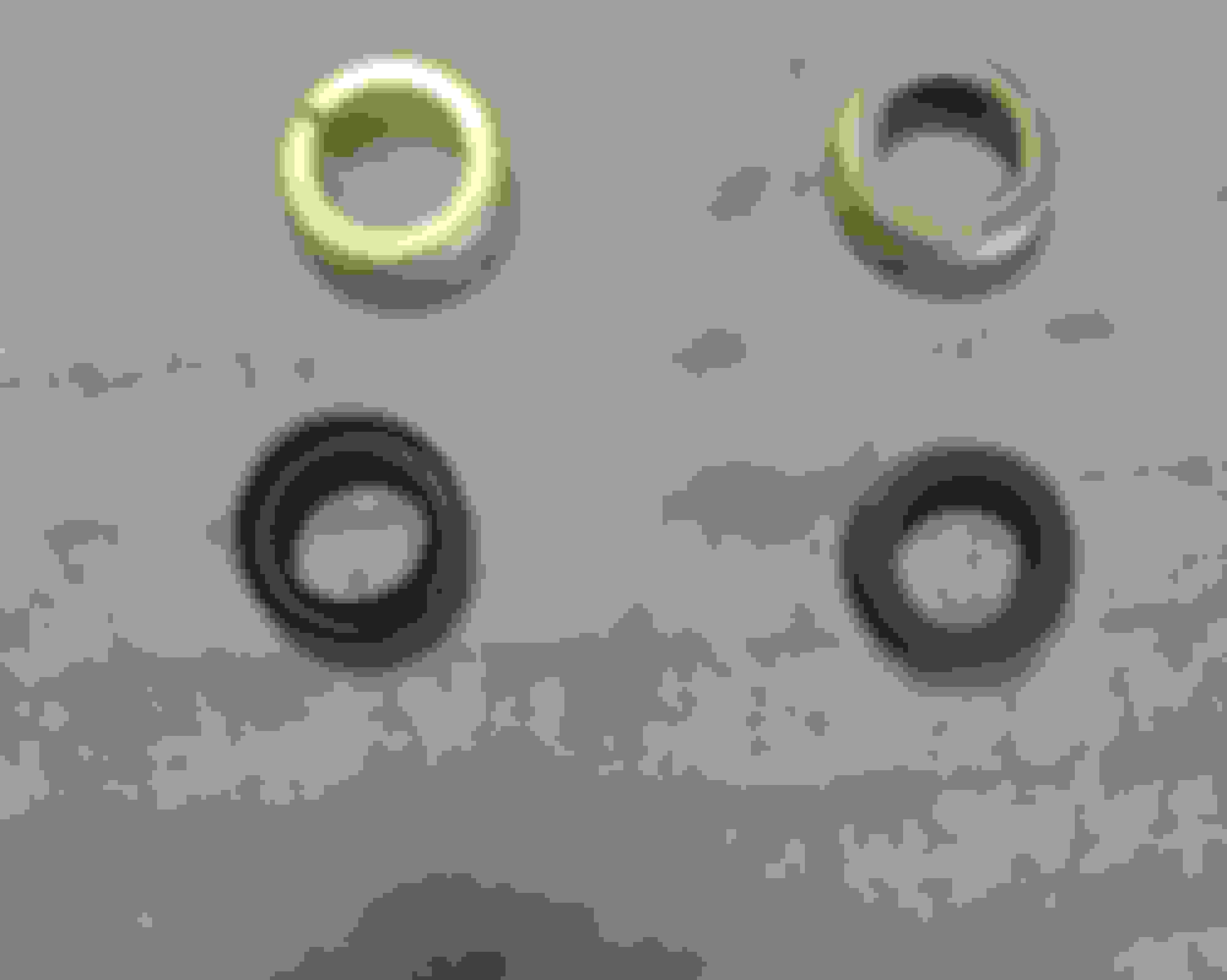
I have a vacuum leak in one of the throttle spindle seals on one of the CD175's on my 1975 XJ6C. I have new seals to install in both carbs, but I have conflicting information as to how they are orientated into the bore. Once source (from a Triumph TR6 site - same carbs) says they should be installed "flat side out". That seems counterintuitive to me as they appear to be "lip seals". Meaning the angle of the lip should be facing towards the direction of the flow it's supposed to be stopping. In this case vacuum pulling IN against the seal. Whereas "flat side out" would be orienting the lip in the wrong direction (in my humble opionion). Anybody have any experience here, specifically with this seal on the CD175's?
XJTom - Much appreciated! I actually have all those three in my library also. But none of them indicates anything about these throttle seals and their orientation.
Anyone else know anything about these seals. I do have a email into MOSS where I bought the new seals and caps. Hopefully they will help.
Hello, Interesting topic, I think your trying to prevent the positive pressure of the atmosphere from entering thru the worn bore into the negative area caused by the piston going downward on the intake stroke.
Hense the lip should face outward.
Larry - that's my take on it also. And I've fired three emails out to MOSS, Joe Curto and Burlen.co.uk (at Greg in France recommendation - thank you Greg). Hopefully one or more of them will set me straight.
xjtom - not to be argumentative or insulting, But... recommended by whom? I did find that same recommendation by Buckeye Ohio Triumphs:
Replacing Throttle Shaft (Spindle) Seals
The throttle shaft seals prevent air from leaking into the intake manifold. Small leaks around the throttle shaft are of no consequence when the throttle is at least partially open. However, the leaks can cause a rough idle. It is doubtful that the seals wear out because the typical Triumph gets very little use, especially here in the mid west. However, the seals are subject to deterioration due to age. If the seals have not been changed for 10 or 15 years it’s probably a good idea to do so when the carb is off.
The seals are located in the outside ends of the holes that hold the throttle shaft. The seals are removed by inserting an awl or scribe along the edge of the seal and then lifting the seal out as shown in the photo.
The new seals are inserted with fingers, flat side outand positioned as necessary with a blunt screwdriver. The seals are then lubricated and the throttle shaft is then carefully inserted and the spring end is positioned as pointed to by scribe in the photo. The spring should be under tension and the shaft held firmly against the idle adjustment screw.
But I still challenge that, as it goes against what I know about LIP SEALS. Flat Side Out means the lip seal is angled the wrong way, and would allow vacuum flow to flow IN. Which is what you don't want.
i agree with your theory but the amount of atmosphere trying to come in is so minimal it would hardly have enough to force it's way past the seal, long as the shaft isn't grooved it should work as it should.......easy way to test is spray water mist there while running......
Bill
I don't think it was intended to be a lip seal with differential pressure adding any sealing value. I would say it is a cantilevered seal with compression sealing, allowing wear over time without a reduction in sealing force. Installing inward just keeps it cleaner longer. The brass sleeve is for depth positioning correctly, angular alignment, and seal protection. Checked a few of those U-Tube ZS rebuilds ., and saw the shiny brass out, but U-tuber never commented on the way he put it in.
Monday Morning Quarterbacks are almost always right compared to ref's on the Sunday Game of the day.... look forward to your Next Post!!!
Rgds
David
JOE CURTO says the seals get installed FLAT SIDE IN, LIP SIDE OUT. Which confirms my theory of them being a lip seal. I believe Joe over anyone else. This is his business; his craft.
Just to close this thread out - my final assessment is that the lip seal faces outward, with the smooth side inward. Replacing these seals made all the difference in the world to the idle of my carbureted 4.2. It had a lumpy idle for years that I could never find a vacuum leak. It now purrs at idle. No lumping whatsoever. Well worthwhile and satisfactory project.
i agree with your theory but the amount of atmosphere trying to come in is so minimal it would hardly have enough to force it's way past the seal, long as the shaft isn't grooved it should work as it should.......easy way to test is spray water mist there while running......
I don't have any figures to back it up, but I do know that when you whack open the door to a carb (or throttle body ftm) venturi, there's a fair bit of suction going on, and I would bet that those seals are in fact designed to operate like any other lipped seal - lip faces pressure.



 Seals for Throttle Spindle on Stromberg CD175's