When you click on links to various merchants on this site and make a purchase, this can result in this site earning a commission. Affiliate programs and affiliations include, but are not limited to, the eBay Partner Network.
How Hot Does An Exhaust Pipe Get at the bottom bend of the down pipe?
Hi Guys
Got a Problem with the Exhaust Pipe/Down Pipe on '50 Shades' my Grey XJS V12
This started with an Exhaust Leak at the bottom of the Down Pipe, where the Sealing Ring is Clamped in place by 3 Bolts, which was leaking enough Exhaust Gas to cause a Flat Spot Hesitation on Take Off
Having re-positioned this, it has been ok for a while although unfortunately its started leaking again, so this time I am planning to bed the Ring in place with RTV Silicone, as I'm reluctant to use exhaust paste which can go hard and crack
I've got some Bathroom RTV which I am thinking of using, so any thoughts on whether this would do the Job
Alex
The temp inside the combustion chamber is about 2,500 C. according to wikipedia.
Exhaust temp in the manifold is about 1,500 degrees C
I reckon the bottom of the downpipe will be 900 once the car gets going.
I think you have a flange problem, which requires welding, a bodge will not do it. How sure are you that this is the cause of the flatspot? Cn you hear and feel the leak.
Silicone will melt above 350 C. Exhaust paste and bandage will hold it for a bit, and it will come apart easily enough.
Alex
The temp inside the combustion chamber is about 2,500 C. according to wikipedia.
Exhaust temp in the manifold is about 1,500 degrees C
I reckon the bottom of the downpipe will be 900 once the car gets going.
I think you have a flange problem, which requires welding, a bodge will not do it. How sure are you that this is the cause of the flatspot? Cn you hear and feel the leak.
Silicone will melt above 350 C. Exhaust paste and bandage will hold it for a bit, and it will come apart easily enough.
I think you mean 1500 degrees F at the exhaust port (800 C) and this would be under heavy load high speed. The manifold exit is a little hotter. I would SWAG that idle is a 500 F with normal driving getting to 900-1200 F.
I managed to find some Exhaust paste which can handle Temps of 1,000/c but decided not to use it as from what I've been reading it apparently cures rock hard, which could cause a problem if I ever wanted to replace a part of the Exhaust
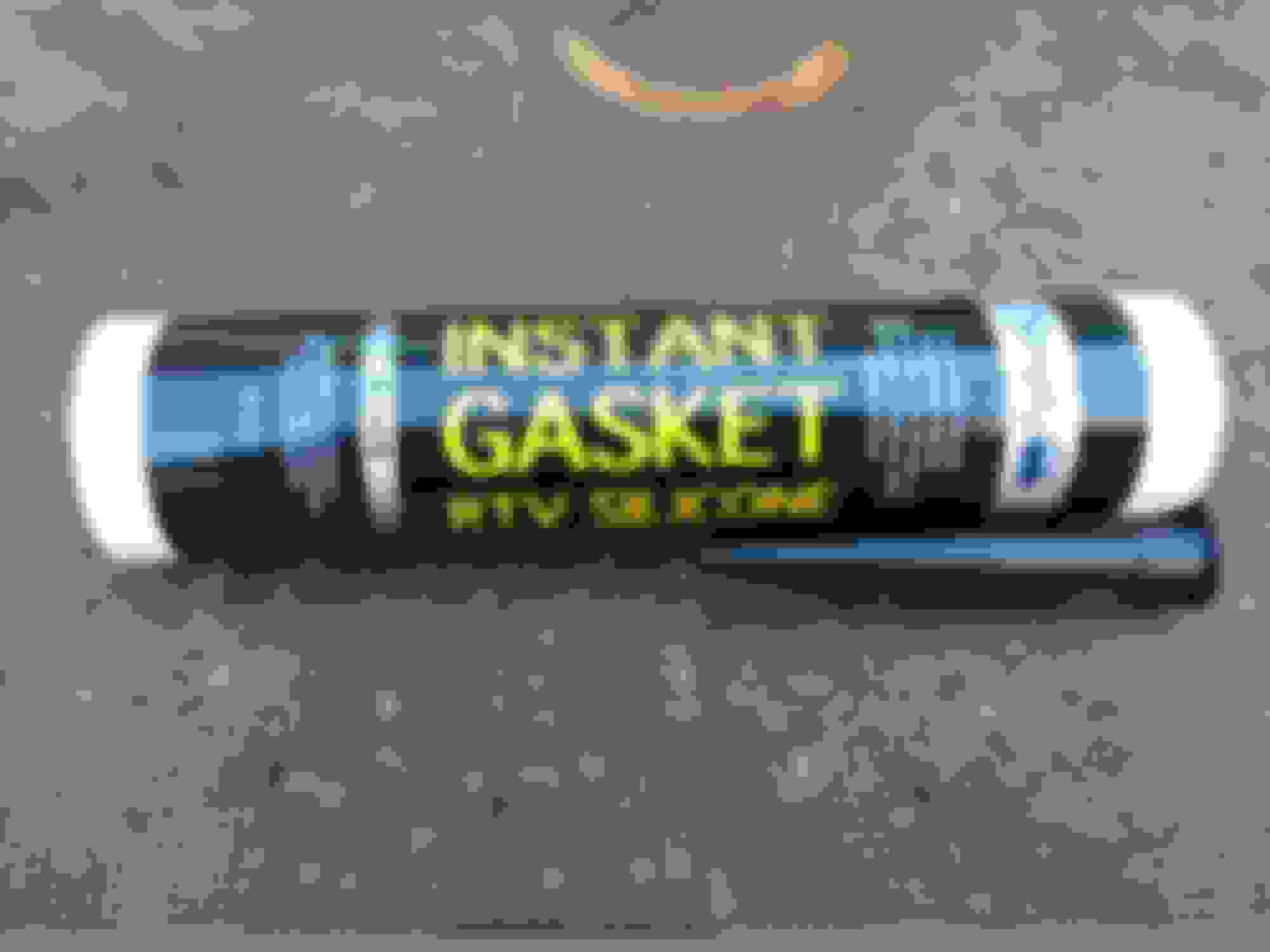
So instead I also managed to find some RTV Silicone that can handle Temps up to 180/c which may be just enough to do the job, as its only a very small leak around that donut joining ring, though more than enough to throw the Engine off kilter during take off
It was only £4 for a great big Tube, so I will give that a try and see what happens
The exhaust temps vary considerably. I have measured mine and at idle it is usually around 300C, at highway cruise about 600-700C and under sustained load going up a steep mountain grade I pegged my gauge at 1100C, but I have no idea how much hotter it really was.
It's going to be a compromise as to whatever I use, so I will give it a try with this Stuff which will hopefully stop the leak or at least cut it down enough to prevent the Engine from sounding like it is about to stall at very low Revs
Exhaust leaks don't cause flat spots. Retarded ignition, faulty advance, manifold air leaks, incorrect fuel grade, fuel pressure to name a few but not exhaust.
Back pressure is an urban myth that just won't die. To get proper scavenging of the cylinder you need exhaust velocity at the lowest pressure possible - search for pulse scavenging -
The exhaust temps vary considerably. I have measured mine and at idle it is usually around 300C, at highway cruise about 600-700C and under sustained load going up a steep mountain grade I pegged my gauge at 1100C, but I have no idea how much hotter it really was.
wow the engines I have worked with have a valve temp limit of 800C and a catalyst midbed melting temp of 800C. 1100C sounds reeeaallly hot. Like the enrichment or spark advance wasn't working.
wow the engines I have worked with have a valve temp limit of 800C and a catalyst midbed melting temp of 800C. 1100C sounds reeeaallly hot. Like the enrichment or spark advance wasn't working.
I had also put an AFR gauge on and I was running a nice 12.5 AFR, so on the rich side. That was going up a steep mountain grade where it's full throttle for about 20 km and I climb from sea level to about 4500' elevation in the process. Locally that piece of road is called "The Smasher" for a good reason, because it's so hard on vehicles.
I had mounted the probe right at the end of the exhaust manifold, so the downpipe will be a bit cooler.
Exhaust leaks don't cause flat spots. Retarded ignition, faulty advance, manifold air leaks, incorrect fuel grade, fuel pressure to name a few but not exhaust.
Back pressure is an urban myth that just won't die. To get proper scavenging of the cylinder you need exhaust velocity at the lowest pressure possible - search for pulse scavenging -
If you have a flat spot you have an issue elsewhere too.
Maybe we should clarify, upstream of the O2 sensor or just a little downstream it will cause performance issues, past a foot downstream it will not.
it's a good catch though, and I realize I don't know where he's taking about. At the manifold exit to the first catalyst? My only 3 bolt flange is at the IRS.
You could well be right, or maybe I just didn't explain what happens as well as I could have done
She idles perfect at 750 RPM but when you hit the Throttle, the Revs momentarily dip before She picks up but once the Engine gets hot that almost doesn't happen at all and when I went around the Three Bolts that sandwiches the donut ring and tightened them up a bit more, that also made an improvement
So I will refit the donut ring with some RTV and then report back with the findings
What you describe sounds like retarded timing to me but it would be interesting to check mixture - is it better when hot or cold ?.
May be worth making sure those balance weights on the dizzy aren't siezed. Of course then theres all the other stuff like making sure the throttle bodies are synchronised - so many things this can be - A blowing exhaust needs fixing either way, I don't know so much about things on the V12's, later cars that I've seen with thesear donut type seals to accommodate movement are spring loaded - or at least aided. I've also seen these type of joints over tightened and once you do that they never seal properly as it distorts the exhaust.
I'm happy enough to have a Jaguar old enough to have no such BS as cats and o2 sensors, exra air and copious complexity all in the name of emmissions - but I do have a big cat with them and am having no end of issues with this 'emmissions' stuff currently - working on a car without is refreshingly simple ...
You could well be right, or maybe I just didn't explain what happens as well as I could have done
She idles perfect at 750 RPM but when you hit the Throttle, the Revs momentarily dip before She picks up but once the Engine gets hot that almost doesn't happen at all and when I went around the Three Bolts that sandwiches the donut ring and tightened them up a bit more, that also made an improvement
So I will refit the donut ring with some RTV and then report back with the findings
I really don't think the RTV is going to last more than a few minutes. If it doesn't happen when warm, I wonder if either your air temp or coolant temp sensor is bad. The ECU is receiving a false reading that the engine is warm when it isn't, so it is cutting back the fuel. when the engine wams up it is reading a correct number even if it hasn't moved, so the fuel is correct and runs right. You can check the resistance of both hot and cold and if either reads the same hot and cold, you found a problem.
But, if the leak is upstream of the O2 sensor, I think that might have an impact but I would think it would be hot and cold.
Just out of interest here - why RTV ? - I don't know if anything will work on a joint that isn't entirely rigid by design, this type of joint shouldn't need any kind of assembly paste - have you tried to find new seals ? part cac4336 I believe ?




 How Hot Does An Exhaust Pipe Get at the bottom bend of the down pipe?