


Anyone used this sort of hydraulic spring compressor


Thread Starter
|
Senior Member


Joined: Nov 2022
Posts: 402
Likes: 181
From: Netherlands
 Anyone used this sort of hydraulic spring compressor
Hi.
I have had the good top mounts (Steve/Wayne) for a while now and it is time that I mounted them.
I have been looking at all the spring compressor types out there. I have dismissed the simple ones as widow makers.
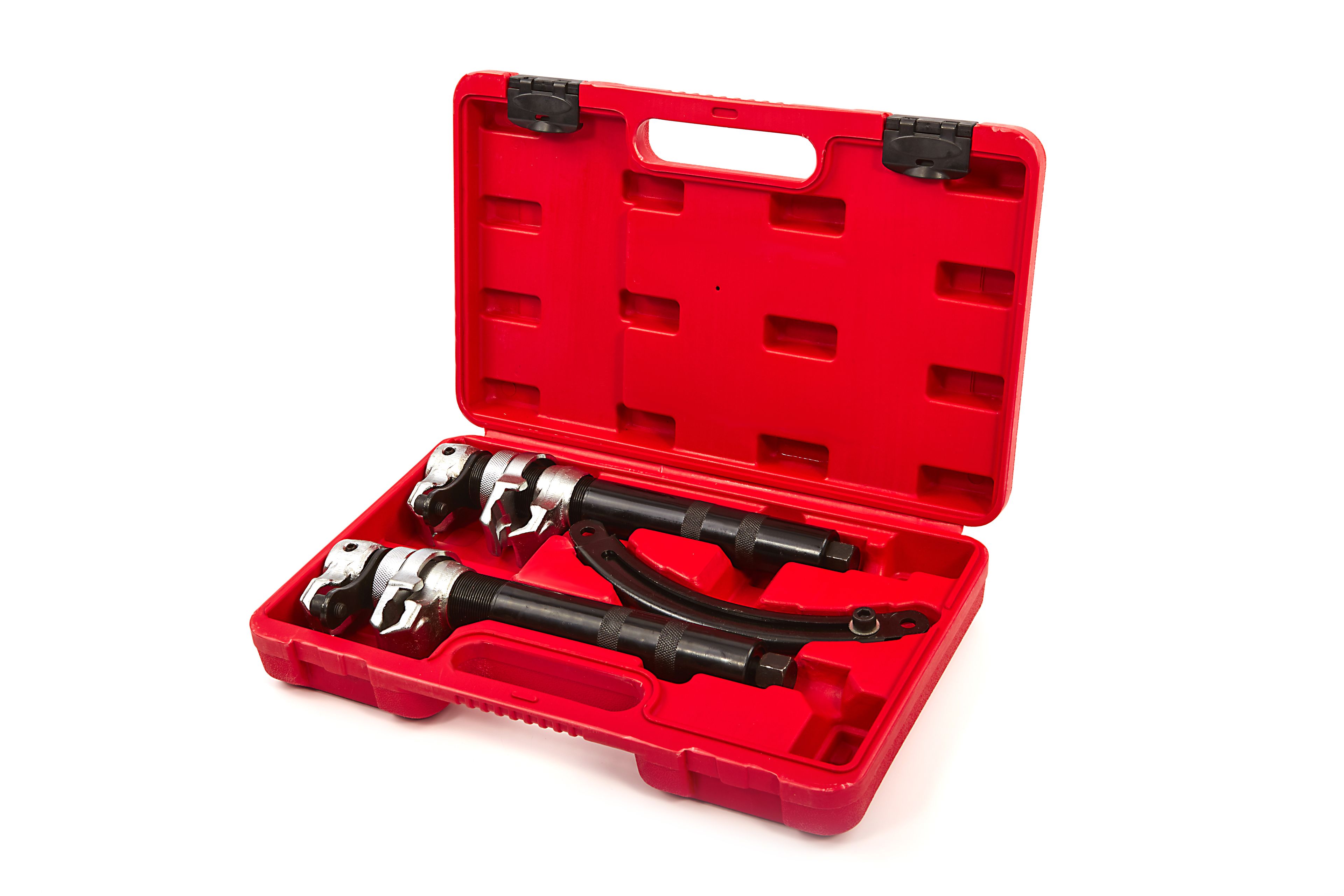 Next are the McPherson types. Seem much safer.
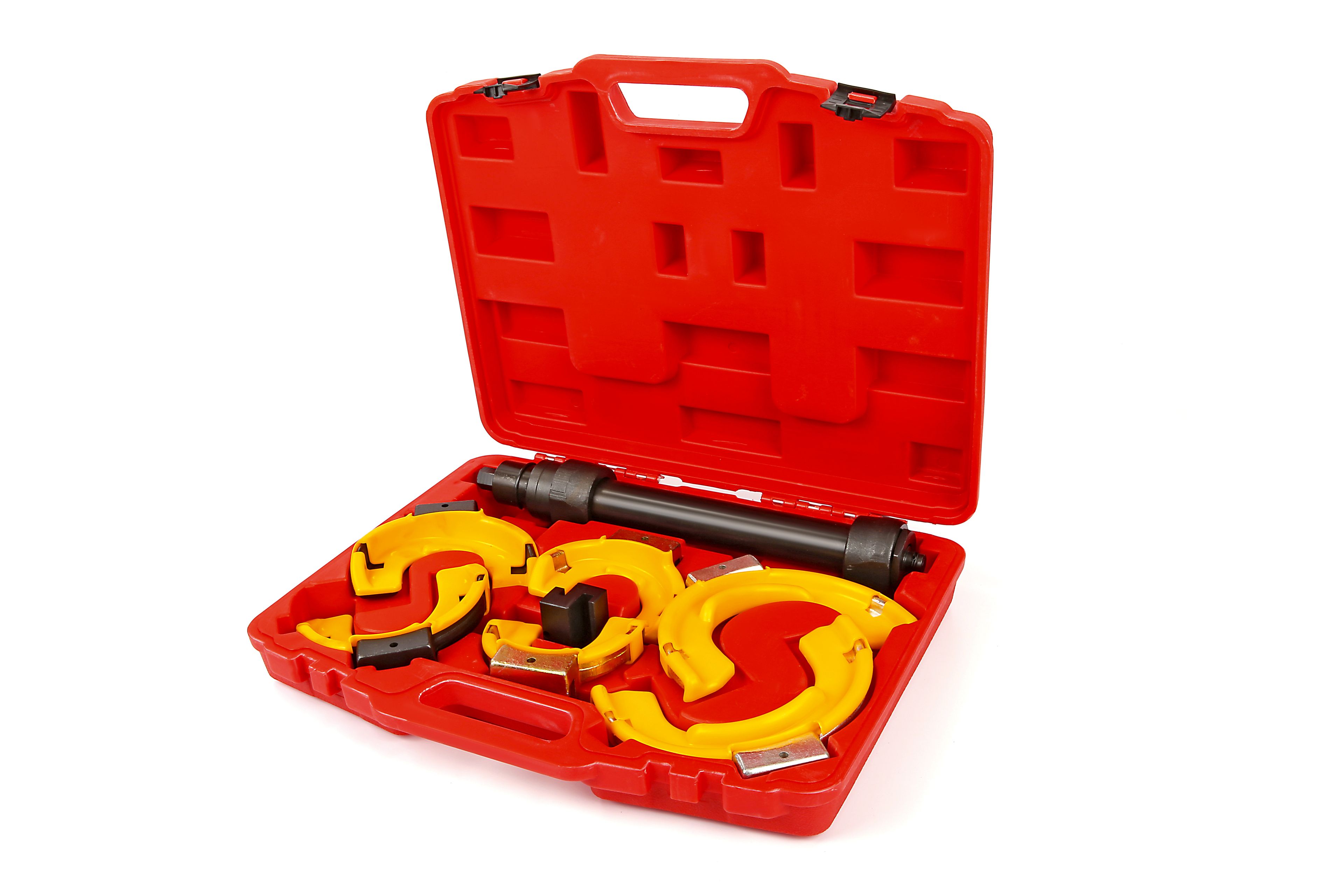
Then there is this option which is surprisingly affordable.

Anybody tried the "cheap" hydraulic option? I get get them from Vevor for about Euro 100.
I have had the good top mounts (Steve/Wayne) for a while now and it is time that I mounted them.
I have been looking at all the spring compressor types out there. I have dismissed the simple ones as widow makers.
Next are the McPherson types. Seem much safer.Then there is this option which is surprisingly affordable.
Anybody tried the "cheap" hydraulic option? I get get them from Vevor for about Euro 100.

Veteran Member

Joined: Dec 2011
Posts: 2,924
Likes: 1,565
From: Spencer, NC
I have had the top one and the bottom one and you will be much happier with the top one.
On any get the top one place in a position where the spring doesn't interfere with the bottom of the mount is something you need to pay attention too. When releasing any of them make a visual on the area when it gets next to the mount on a couple of things, the mount doesn't rock, that indicates it's not all the way down on the shelf and that the spring doesn't push it out of a 90 degree with the shaft, well, as much as possible. If it ***** the mount, you will never get the spring coils to be in a near straight line. Let the springs come in contact with the mount slowly and release from side to side.
I put the nut on the shock stem when the spring is down far enough to push it all the way down to the shelf, in fact not a bad idea to just stick it on the shock before you start the install to make sure the washer is going down the shaft and no rocking is accruing.
If you do the whole thing with the shock in a horizonal position and have the bottom of the shock bushing running parallel with the floor, have one mount stem at the top or 90 degrees from level, you will be very close to that one being in the correct position when mounted to the inside stud position. Very little adjustment if any will be needed for the bottom bolt.
Be safe and be sure to use some rubber or towels in the vise and just enough pressure to hold it in place.
On any get the top one place in a position where the spring doesn't interfere with the bottom of the mount is something you need to pay attention too. When releasing any of them make a visual on the area when it gets next to the mount on a couple of things, the mount doesn't rock, that indicates it's not all the way down on the shelf and that the spring doesn't push it out of a 90 degree with the shaft, well, as much as possible. If it ***** the mount, you will never get the spring coils to be in a near straight line. Let the springs come in contact with the mount slowly and release from side to side.
I put the nut on the shock stem when the spring is down far enough to push it all the way down to the shelf, in fact not a bad idea to just stick it on the shock before you start the install to make sure the washer is going down the shaft and no rocking is accruing.
If you do the whole thing with the shock in a horizonal position and have the bottom of the shock bushing running parallel with the floor, have one mount stem at the top or 90 degrees from level, you will be very close to that one being in the correct position when mounted to the inside stud position. Very little adjustment if any will be needed for the bottom bolt.
Be safe and be sure to use some rubber or towels in the vise and just enough pressure to hold it in place.


Senior Member

Joined: Apr 2017
Posts: 175
Likes: 63
From: Linkoeping
I have used the the ones in the box with the yellow springgrabbers.. did the rear springs on my 1998 XJ Daimler and the rear springs on my 2003 XK when replacing shocks/rubberdoughnuts.
Feels safe when installed properly. It never slipped.
Its a matter of creating access and getting it in to position, witch can be a PIA though..
/E
Feels safe when installed properly. It never slipped.
Its a matter of creating access and getting it in to position, witch can be a PIA though..
/E


Veteran Member

Joined: Oct 2010
Posts: 2,012
Likes: 960
From: Spain
I've never needed to use a spring compressor to change the shock mounts either, because I pay the local garage to do it (and press the new bushings in). Its a lot easier than DIY.

Senior Member
Joined: Jul 2020
Posts: 221
Likes: 95
From: Northern CA Santa Cruz
I've done this job more than once, unfortunately, and the suspension tower comes out without needing to be compressed (front and rear).
I've never needed to use a spring compressor to change the shock mounts either, because I pay the local garage to do it (and press the new bushings in). It’s a lot easier than DIY.
I've never needed to use a spring compressor to change the shock mounts either, because I pay the local garage to do it (and press the new bushings in). It’s a lot easier than DIY.
Trending Topics
Veteran Member
Joined: Oct 2010
Posts: 2,012
Likes: 960
From: Spain

You have to unbolt the plate under the car that is in the way so it bends down. Afterwards it all just bolts back up without any damage.
ETA: This is Rothwell's thread where he shows how to do this (and explains it better than I do):-
https://www.jaguarforums.com/forum/x...5/#post1928458
Last edited by dibbit; Aug 25, 2025 at 09:24 AM.

Senior Member
Joined: Jun 2024
Posts: 213
Likes: 78
From: Pittsburgh, PA
I have used the the ones in the box with the yellow springgrabbers.. did the rear springs on my 1998 XJ Daimler and the rear springs on my 2003 XK when replacing shocks/rubberdoughnuts.
Feels safe when installed properly. It never slipped.
Its a matter of creating access and getting it in to position, witch can be a PIA though..
/E
Feels safe when installed properly. It never slipped.
Its a matter of creating access and getting it in to position, witch can be a PIA though..
/E

Member
Joined: Oct 2024
Posts: 94
Likes: 23
From: Argyll
Simple ‘widow makers’ worked fine for me with struts off the car. just ensure safety rail is mounted, you mount them at an angle 90 degrees to the spring and you don’t try to use them too close toward the end of the spring (else you can’t get them out when you’ve finished). Good luck.


Thread
Thread Starter
Forum
Replies
Last Post
Currently Active Users Viewing This Thread: 1 (0 members and 1 guests)